Ne Zha 2: the ancient philosophies behind China’s record-breaking new animated film

On the surface, Ne Zha 2: The Sea’s Fury (2025), the sequel to the 2019 Chinese blockbuster Nezha: Birth of the Demon Child, is a high-octane, action-packed and visually stunning animated spectacle, full of hilarious moments and thrilling fight scenes.

But beneath all that, it’s something much deeper: a bold re-imagining of Chinese traditional mythology, cultural history and philosophies.

Unlike Hollywood’s classic hero’s journey, Ne Zha 2 is rooted in Chinese thought, weaving together ideas from Buddhism, Confucianism, Daoism, Mohism, Legalism and more.

Through the story of a baby-faced warrior god who battles demons, it channels centuries of Chinese tradition into something refreshing, relevant and undeniably global.

The film’s success speaks for itself. Directed by Yang Yu (aka Jiao Zi), Ne Zha 2 has shattered multiple global box office records, pulling in more than US$1 billion in China in just one week.

It has entered the top 10 highest-grossing films of all time, and has become the highest-grossing animated film – outperforming Inside Out 2 (2024).

But what makes Ne Zha 2 so compelling beyond its visual spectacle? At its heart, it’s an inspiring story about identity, free will, self-determination and rebellion – ideas that resonate far beyond China.

A child hero forged in myth and philosophy

Ne Zha is a rebellious deity in traditional Chinese folklore – a boy born with immense superpower, who defies both divine and social expectations.

Most people who know of Ne Zha will trace his legend back to Fengshen Yanyi, or Investiture of the Gods, a Ming Dynasty novel that blends mythology with historical elements.

Ne Zha’s true origins, however, trace back to India.

“Ne Zha” is a shortened transliteration of the Sanskrit Nalakuvara (or Nalakūbara), an Indian mythological figure who appears in Buddhist and Hindu mythology.

As Buddhism spread to China during the Tang Dynasty, Ne Zha evolved from an intimidating guardian deity into the rebellious, fire-wheeled warrior we know today.

In Ne Zha 2, this “fighting spirit” against authority and hierarchy is taken even further, turning the story into a deeper philosophical exploration of morality, fate, self-worth and power.

Good and evil – a Daoist perspective

One of the most thought-provoking aspects of Ne Zha 2 is how it challenges the idea of good and evil.

In Daoist philosophy, evil and good, often known as Yin and Yang, are not absolute, but are rather shifting, interconnected forces.

Through its two protagonists: the “Demon Pill” (Ne Zha) and his noble dragon prince buddy, “Spirit Pearl” (Ao Bing), the film beautifully reflects this Daoist idea of balance and self-discovery.

Their merging further blurs the line between hero and villain and brings to life a core concept from the 2,400-year-old text Dao De Jing (Tao Te Ching), written around 400 BC by Chinese philosopher Laozi (also called Lao Tzu).

Laozi emphasises that righteousness and villainy aren’t always what they seem. “When the world knows beauty as beauty, there arises ugliness,” he says.

Those we assume to be noble may turn out to be dark inside, while those deemed evil might be fighting for what is right.

Ne Zha’s character in the film embodies this Daoist philosophy. Echoing the Xisheng Jing, The Scripture of Western Ascension, he declares, “My fate is up to me, not the Heaven.”

He is the demon child who is willing to die fighting for his own destiny, proving that even the smallest, most underestimated individual can change the world.

Beyond family bonds: rebirth of Confucianism

In one scene, Ne Zha is struck by the “heart-piercing curse”, a brutal spell that covers his body in ten thousand thorns, causing unbearable pain and keeping him under control by targeting his heart. Ne Zha’s human mother, Lady Yin, clings to him as his thorns pierce her skin – yet she refuses to let go.

It’s a moment of heartbreak, parental love and inner awakening. As his mother takes her final breath, in Ne Zha’s grief, his body shatters into a million pieces. And then, he is reborn.

This is the film’s emotional climax, in which the so-called demon child awakens to “Rén” (benevolence), a core Confucian virtue.

Confucianism teaches that true morality isn’t imposed by rules but arises naturally from within. Ne Zha doesn’t just seek revenge, he awakes to fight for those who have been oppressed, embracing his identity with unwavering resolve.

But perhaps the most profound transformation comes from the dragon prince Ao Bing. As the last hope of his people, burdened by centuries of expectation, he finally makes a choice, not for legacy, not for his ancestors, but for himself.

In this moment, his once-imposing father Dragon King releases his grip: “Your path is yours to forge.”

The weight of tradition gives way to something new, reflecting a changing China where younger generations are defining their own paths.

Wisdom of Legalism and Mohism

Beyond Daoist and Confucian ideals, Ne Zha 2 also weaves in Legalist reform and Mohist resistance. These philosophies challenge rigid hierarchies (or in Ne Zha’s case, “divine order”) and advocate for collective justice.

Across Ne Zha’s three major trials and the climactic celestial-demon war, a brutal truth emerges: those deemed unworthy – whether groundhogs, mystical beings, or ordinary humans – are sacrificed to uphold the elite’s rule.

Take the small groundhogs. Dressed in patched clothes, surviving on pumpkin porridge. They’ve never harmed anyone. Yet, they are mercilessly crushed in the name of celestial balance.

Then there’s Shiji Niangniang, or Lady Rock, a recluse who harms no one. She indulges only in her own beauty and speaks to her enchanted mirror. Yet the heavens brand her a demon, sealing her fate.

A similar cruelty befalls the Dragon Clan and the people of Chentangguan, all caught in a war where they are mere pawns on a celestial chessboard.

Even the last battle is not just Ne Zha’s fight, but a battlefield showing the Chinese spirit of collectivism. Dragons, shrimp soldiers, crab generals, octopus warriors, humans and millions of goblins stand side by side to rewrite destiny.

The celestial-demon war itself plays out like a lesson in Sun Tzu’s Art of War, which states that “All warfare is based on deception.” War is about strategy, resilience and the unstoppable will to rise.

Ne Zha carries the weight of Eastern cultural essence: Daoist balance, Confucian ethics, Mohist resistance, Legalist reform and the strategic wisdom of The Art of War. It is a truly Chinese story, igniting next year’s Oscar buzz and sparking a global awakening to Eastern culture.

Just as Ne Zha is reborn in flames, so too does Chinese animation rise, not by breaking from its past, but by forging a bold future. The Conversation

Yanyan Hong, PhD Candidate in Communication and Media Studies, University of Adelaide

This article is republished from The Conversation under a Creative Commons license. Read the original article.

Read More........

A beautiful, animated Ramayana, says Nirmala Sitharaman as Ramayana anime gears up for release

Chennai, (IANS): The Indo-Japanese animation film 'Ramayana: The Legend of Prince Rama', which is to hit screens on January 24 this year, seems to have caught the attention of not just film buffs and film critics but even India’s Finance Minister Nirmala Sitharaman!

Sharing the trailer of the film on her X timeline, Finance Minister Nirmala Sitharaman wrote, “A beautiful animated Ramayana. Fondly remember watching this Japanese cultural treasure sometime back. Was screened at (the) International Film Festival of India (IFFI) in 1993. It now releases on the big screen.”

The landmark anime looks to highlight a number of significant points such as the victory of good over evil, harmony between nature and living beings, and the power of friendship and trust. It is based on sage Valmiki's Ramayana.

'Ramayana: The Legend of Prince Rama' has triggered huge excitement among audiences, who are eager to experience the timeless tale on the big screen in Ultra HD 4K.

India’s Finance Minister termed the film as a "Japanese cultural treasure" and remembered its screening at the International Film Festival of India (IFFI) in 1993. Now, the film is set to release on the big screen in its remastered 4K form, offering audiences a chance to watch this iconic masterpiece in cinemas.

‘Ramayana : The Legend of Prince Rama’ will be distributed theatrically in India by Geek Pictures India along with AA Films and Excel Entertainment.While the original English version was conceived by Yugo Sako and Vijay Nigam, directed by Koichi Sasaki and Ram Mohan and produced by Atsushi Matsuo, Yugo Sako and Kenji Yoshii, the new Hindi, Tamil and Telugu versions have been produced by Arjun Aggarwal, Cibi Karthic and Tamotsu Kosano. A beautiful, animated Ramayana, says Nirmala Sitharaman as Ramayana anime gears up for release | MorungExpress | morungexpress.com
Read More........

Jill Cervel: A young woman who rewrites her destiny!

Jill Cervel is a central character in the anime series The Do-Over Damsel Conquers the Dragon Emperor.

She's a young woman who, after a tragic fate, is given a second chance to rewrite her destiny.

Here are some key points about Jill:
  1. Age: 16 years old
  2. Background: Daughter of a minor noble family
  3. Personality: Determined, resourceful, and quick-witted
  4. Tragic Past: Originally, Jill was betrothed to a cruel prince, Gerald der Kratos, who framed her for a crime she didn't commit. She was sentenced to death but was given a second chance.
  5. Time-Traveling Heroine: Jill's second chance involves time travel, allowing her to go back to a point before her tragic engagement.
  6. Complex Relationship with Hadis: A major plot point is Jill's relationship with Hadis Teos Rave, a powerful and enigmatic figure who, despite his dark reputation, shows kindness to Jill.
  7. Strong-Willed and Determined: Jill is a determined and resourceful character, refusing to be a victim of fate. She actively seeks to change her destiny and protect those she cares about.
  8. Character Development: As the series progresses, Jill undergoes significant character development, evolving from a naive young woman to a strong and independent individual.
Overall, Jill is a captivating character who defies expectations and challenges traditional tropes of female protagonists in anime. Her journey of self-discovery and resilience make her a compelling figure in the series.Gossips4fans - Bollywood, Hollywood and Tollywood Latest Information for you: Jill Cervel: A young woman who rewrites her destiny
Read More........

Dwayne Johnson says ‘Moana 2’ is based on the idea that it’s okay to think beyond


Mumbai, (IANS): Hollywood star Dwayne Johnson, who voices the character of Maui in “Moana 2”, revealed that the film is based on the idea that it’s okay to think beyond and explore.

Johnson says: “There’s this idea that it's OK to think beyond—in this case, beyond the reef, and it's OK to think outside of how society may box you in. It’s OK to feel like there’s more. It’s okay to ask, ‘well, what if? ‘What if there’s more out there that I want to look for and explore and discover?’ And that, to me, is the most powerful thing. It transcends the movie.”

“Moana”, which first released in 2016, is an American animated musical fantasy adventure film produced by Walt Disney Animation Studios. The film was directed by John Musker and Ron Clements, and is based on a story conceived by Clements, Musker, Williams, Hall, Pamela Ribon, and the writing team of Aaron Kandell and Jordan Kandell.

The film also stars Auliʻi Cravalho in her film debut as the voice of the eponymous character and also features the ensemble voices of Rachel House, Temuera Morrison, Jemaine Clement, Nicole Scherzinger, and Alan Tudyk.

The film is set in ancient Polynesia and tells the story of Moana, the strong-willed daughter of a chief of a coastal village, who is chosen by the ocean itself to reunite a mystical relic with the goddess Te Fiti. When a blight strikes her island, Moana sets sail in search of Maui, a legendary demigod, in hopes of returning the relic to Te Fiti and saving her people. The plot is original, but takes inspiration from Polynesian myths.

The second installment picks up where the first film left off, Moana returns home from a three-day journey, only to discover a mysterious object that holds the key to an ancient island with "angry gods."

This newfound discovery sets the stage for a perilous quest as Moana embarks on a mission to break the curse and reconnect with her people. Joining her on this epic adventure is the ever-reliable Maui, who once again teams up with Moana to face an unknown threat.“Moana 2” premieres in theatres in India from November 29. Dwayne Johnson says ‘Moana 2’ is based on the idea that it’s okay to think beyond | MorungExpress | morungexpress.com
Read More........

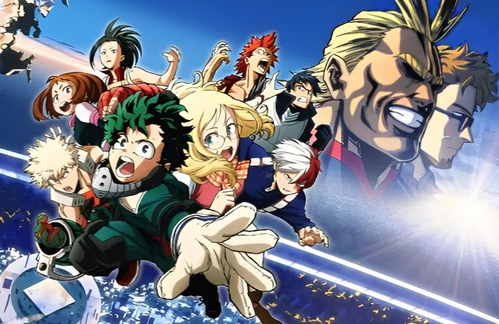
Hit anime series 'My Hero Academia' to be dubbed in 5 Indian languages

Mumbai, August 25, 2023 (IANS): The popular anime series ‘My Hero Academia’ is now getting five language Indian dub on Cartoon Network upon its premiere, as the series will now be featured with quality Hindi, Tamil, Kannada, Telugu and Malayalam dubbing.

The voice actors voicing the main characters in Hindi include Vidit Kumar, who will be voicing Izuku Midoriya, Sahil Vinod Kulkarni will voice Katsuki Bakugo, and Mohak Ninadvoices give the voice for All Might.

The Indian TV premiere of the show will mark a celebration of Japanese animation's distinctive flair.

The broad narrative of the ‘My Hero Academia’ universe revolves around a world where superpowers are a common fact, and those who possess them are called ‘Quirks’. The world reshaped itself according to their appearance.

Now people with Quirks not only help keep everyone safe, but also support society in growing and developing. Among the many ‘Quirks’, a few get chosen as ‘Heroes’ who collaborate with various government authorities to tackle the threat of enemies called ‘Villains’.

The series traces protagonist Izuku Midoriya's transition from being a ‘Quirk’ to becoming a ‘Hero’ as he gains a spot at U.A. High School—an esteemed institution for aspiring heroes. This narrative cornerstone unveils a world of intricate hero-villain dynamics, encapsulating the evolution of "Heroes" and the triumphant ascent over adversity.

Overtime, as Izuku meets various people, and grows as a person, his outlook too around the superhero world is transformed and he begins to understand the many ‘grey shades’ of the superhero world.

Even for non-anime watchers this is a good opportunity to experience firsthand the world of anime, as they can now watch and immerse themselves in the saga of the show’s protagonist Izuku Midoriya.

The anime will be a part of Cartoon Network’s 'Super Sunday' special, and this long time anime classic will premiere on September 10 on Sunday at 1:00 PM to begin the TV journey of the series. This will be continued with weekly installments every weekend thereafter.

For those unfamiliar, 'My Hero Academia' is a sci-fi superhero anime series based on the manga series of the same name written and illustrated by Kohei Horikosh featuring enthralling battles, comedy, drama and bonds of friendship, all the while exploring the many ‘grey’ aspects of the superhero genre which are not often addressed in Marvel or DC comics.

Talking about the show’s premiere, Uttam Pal Singh, Head of Kids Cluster, South Asia, Warner Bros. Discovery, said, “Cartoon Network has consistently led in presenting unique and popular narratives to its audiences. As part of our fan-centric strategy, our anime lineup has garnered tremendous response, and we are elated to offer Indian fans yet another sensational storytelling experience that has taken the global stage."

He added: “Our high-quality dubs of ‘My Hero Academia’ in multiple languages will fully submerge fans into this heroic saga. The series' universal themes of courage, camaraderie, and the voyage to heroism align seamlessly with Cartoon Network's core values."

Cartoon Network has been the channel that has defined the childhood of many kids across India with iconic shows such as ‘Flintstones’, ‘Dragon Ball Z’, ‘SWAT Cats’, ‘Teenage Mutant Ninja Turtles’, ‘Tom and Jerry’ among many more. To watch the Cartoon Network premiere of ‘My Hero Academia’ audiences can mark their calendars for September 10, 2023. Hit anime series 'My Hero Academia' to be dubbed in 5 Indian languages | MorungExpress | morungexpress.com
Read More........

Anime ‘Konosuba God’s Blessing on This Wonderful World’ headed for Season 3 in 2024

The popular adventure-comedy anime 'KonoSuba-God's Blessing on This Wonderful World!' will return to screens in 2024 with Season 3.

The series is renowned for its great animation and mix of comedy, fantasy, and unique characters. Popular particularly with fans of the Isekai and comedy genres, Season 3 has been highly anticipated.

The release date announcement for season 3 was accompanied by a key visual on Twitter, which shows Kazuma and his party embarking on another adventure.

Along with the video, the Konosuba anime in Japanese wrote: "Yes, let's go on an adventure. A blessing to this wonderful world! 3. TV anime will be broadcast in 2024! ! ! ! Ultra teaser visual released. Please look forward to the continuation of the adventure woven by Kazuma, Aqua, Megumin, and Darkness."

The series follows protagonist Kazuma Sato after his death in Japan from embarrassing circumstances. After his death he wakes up in front of a beautiful blue haired girl before him called Aqua.

The Goddess of the Axis cult makes him an offer, that rather than going to heaven if he would instead like to reincarnate in an MMORPG (Massively Multiplayer Online Role Playing Game) based world as an adventurer Ato fight the Demon King, and is allowed to bring only one thing with him.

After insulting him for a short time, Kazuma decides to bring the goddess herself as his weapon and the two are transported to a fantasy world filled with adventure and action.

However, Aqua who becomes the arch-priestess proves to be more of a nuisance than of any actual assistance, so Kazuma who is disappointed with the world only wants to live in peace, but Aqua wants to beat the demon king to return home.

Forming a party with fellow adventurers, the crusader Darkness and arch-wizard Megumin, both of whom prove equally useless.

Kazuma leads the highly dysfunctional party of four as they go around on various adventures and level up in the fantasy based world, coming across all sorts of weird enemies and people.

Based on the Japanese light novel series of the same name written by Natsume Akatsuki and illustrated by Kurone Mishima, Season 3 is being helmed by series director Takaomi Kanasaki and directed by Yujiro Abe with Japanese studio Drive overseeing the animation.

Makoto Uezu and Koichi Kikuta will also return as series composer and character designer, respectively.

Season 1 of the anime adaptation by Studio Deen aired in Japan between January and March 2016, while Season 2 aired between January and March 2017.

The show also has a spinoff anime, titled 'Konosuba: An Explosion On This Wonderful World!', produced by Drive, aired from April 2023 to June 2023.Source: IANS Anime ‘Konosuba God’s Blessing on This Wonderful World’ headed for Season 3 in 2024 | MorungExpress | morungexpress.com
Read More........

Frozen offered a new way to look at Disney princesses. But the best leader was the villain

The recent release of Frozen in te reo Māori, along with the film’s impending ten-year anniversary, is putting Elsa and Anna back into focus.

Frozen’s 2013 release marked a significant shift in the way Disney told stories about princesses to explore modern gender values and a richer mix of personal anxieties.

But, in making its princesses more relatable, Disney forgot to also make them powerful and effective leaders.

Driven by their personal turmoil, Anna and Elsa forget to lead the people of Arendelle. That job falls to the film’s villain, Hans, who provides the best, albeit self-serving, example of a good leader.

Flipping the script

Unlike the Disney princesses of earlier films, Frozen flipped the audience’s expectations of the genre.

Queen Elsa did not need a romantic male partner to complete her journey and Princess Anna’s handsome Prince Hans turned out to be a villain. Love at first sight is shown to be an illusion, replaced by the power of sisterly love and self-acceptance.

Elsa’s need to break free from parental and societal expectation has found resonance in communities as diverse as those with eating disorders and Japanese kyariaūman (career women).

The LGBTQ+ community identified strongly with Elsa’s struggle and celebrated the movie’s queer subtext. In contrast, it was decried by some Christian conservatives.

Absent leaders

While the story retained many of the elements of Disney’s canon – royalty, magic and Anna’s romance – it also expanded the emotional experiences of Disney’s princesses to be more directly relatable to a modern global audience.

Yet Elsa and Anna’s story moves so far beyond the traditional elements of a Disney fairytale that their status as royalty is almost irrelevant to the narrative.

From the perspective of leadership, Elsa and Anna provide questionable role models.

Elsa is so afraid of what people will think of her she runs away from her own coronation. Anna’s impulsiveness is so apparent even Kristoff openly questions her judgment.

Elsa is convinced she cannot help anyone but herself. Anna gives both her hand in marriage and control of the kingdom to a man she just met.

Most of the male characters offer similarly poor examples of leadership. The Duke of Weselton is presented as a snivelling villain with a Napoleon complex. King Agnarr is a well-meaning parent but raises his daughters in isolation from their subjects and from each other.

Self-interested prince as the best ruler

The best depiction of leadership is provided by Prince Hans.

When Elsa’s magic generates an eternal winter, it is Hans who ensures the people are warm and fed. When he finds Elsa, he implores her to be better than the henchmen sent by Weselton to kill her.

Given the existential threat to the kingdom and having exhausted all other options, Hans’s decision to kill Elsa in the hope of breaking the spell and saving the kingdom is not unreasonable.

Of course, his motivations are revealed to be sinister. His good deeds were intended to fool Anna and the audience. He does not love Anna and leaves her for dead.

Hans’s downfall comes once Anna is found alive and Elsa learns how to break the spell of winter herself. His motivations are certainly not good, but this is irrelevant from the perspective of the people of the kingdom.

Unlike Elsa and Anna, Hans is focused on the danger to the kingdom. Elsa and Anna abdicate their responsibilities in favour of their personal needs, whereas Hans tries to fulfil his personal needs by leading the kingdom.

Only when Hans is proven to be dishonest do the officials and foreign dignitaries reject him. We are not shown what the kingdom’s ordinary people think of his actions.

Inexplicably, the people of Arendelle accept Elsa’s return despite the fact she ran away and almost killed them all with her magic.

The Machiavellian approach to leadership

Hans is Machiavellian in the way most understand the term: a leader willing to do anything to achieve their goals.

However, Niccolò Machiavelli’s The Prince (1532) did not advocate for totally amoral and underhanded leadership. Instead it warned against perfectly virtuous leadership.

The early modern Italian diplomat argued successful leaders should be virtuous, but may also need to be flexible in their principles as the perfectly good will be undone by those who are not good.

[…] the way we live is very different from how we ought to live, and he who abandons the way things are done for how they ought to be done brings about his own downfall rather than his preservation: that man who wishes to be at all times good must come to grief amongst so many who are not good.

Such ideas are certainly too morally grey for a children’s story, but there are elements of successful leadership children can understand: difficult choices are inherent in life.

Real queenship (or kingship) involves personal sacrifice and a duty to the people. Disney has made princesses more than simply destined for marriage to a handsome prince, but it still needs to show princesses can truly rule as queens.The Conversation

David Belgrave, Lecturer in Politics and Citizenship, Massey University

This article is republished from The Conversation under a Creative Commons license. Read the original article.

Read More........

Ahmedabad International Children Film Festival Celebrates Its 5th Edition

An animation film being shown at the Ahmedabad International Children’s Film Festival. Photo: Teaser Video Grab

The highly-anticipated fifth edition of the Ahmedabad International Children Film Festival (AICFF) is set to take place from December 8 to 10 at the prestigious Ahmedabad Management Association in the city. AICFF is a testament to the empowerment of young talent, creativity and culture from across the globe, providing a powerful platform for the younger generation to voice their beliefs and inspire positive change in our society.

AICFF is a three-day extravaganza, following the international film festival format, featuring an array of multicultural activities. The festivities kick off on December 8 with an Opening Day filled with excitement, including a grand Red Carpet Opening Ceremony and the screening of the opening film, Balit, from Iran.

The second day is a cinematic journey through films from various countries, complemented by masterclasses. Distinguished film professionals, including directors, actors, writers and filmmakers, both from India and abroad, will grace the occasion, making it a truly global celebration of cinema.

The festival culminates on the third day with a grand Closing Ceremony, where the Closing Film, the Gujarati Mara Pappa Superhero, will be screened, and outstanding talent will be recognized through the presentation of awards.

AICFF has consistently attracted worldwide attention and contributions from various content creators. Over the past four editions, the festival has seen more than 500 films from around the globe. This year, the festival received an impressive 90-plus films from 24 countries, including entries from Iran, Italy, India, Turkey, China, Croatia, United States, Russian Federation, United Kingdom,Ukraine, Taiwan, Switzerland, Singapore, Nepal, Japan, Ireland, Germany, Czech Republic, Canada, Brazil, and the Republic of Korea.

AICFF proudly presents a range of categories and awards, recognizing excellence in various aspects of filmmaking. The categories include Best Feature Film, Best Short Film, Best Documentary Film, Best Animation Film, Best Student Film, Best Director for Feature Film, Best Director for Short Film, Best Director for Documentary Film, Best Actor in a Feature Film, Best Child Actor, Best Story and Best Background Score, along with special recognition through the Golden Kite Award, Silver Kite Award and the Bronze Kite Award.

This year, AICFF is privileged to have Manish Saini as the Festival Director, a two-time National Award winner whose film Gandhi & Co secured India’s Best Children’s Film at the National Awards. Distinguished jury members Aarti Patel, Girish Makwana and Shiladitya Bora bring their expertise to the festival, along with advisor Abhishek Jain, a renowned director and producer.

Saini expressed his commitment to nurturing the next generation through creative cinema, highlighting the festival’s role in motivating young talents. Aarti Patel, Girish Makwana and Shiladitya Bora, as jury members, shared the challenges and joys of selecting the best films every year, while Abhishek Jain, the festival’s advisor, emphasized the importance of celebrating the boundless imagination and stories of children in today’s world.

Chetan Chauhan, publicist by profession and founder of the festival says, “AICFF is one of the gestures we have started for our next generation. We strongly believe that everyone has a story, especially our new generation and every child as protagonist must be heard and we as society must provide them a platform to get their talent. We would also like to thank Milapsinh Jadeja, an angel investor in startups, who has come forward this year to support the festival.”

Dr. Savan Godiawala, President, Ahmedabad Management Association (AMA), added, “AMA means continuing education and we have been constantly supporting the education needs by various training, forums and events of all the stakeholders. The Film Festival is one such event, where we look forward to the young generation to get Education with Entertainment together. International films showcasing at AMA is a proud moment, and I wish citizens of Ahmedabad take maximum advantage of this, as AICFF is free for all of them.”

AICFF wants to be a beacon of inspiration for the next generation, and as it embarks on its fifth edition, it promises to be a celebration of talent, creativity and the power of storytelling. Ahmedabad International Children Film Festival Celebrates Its 5th Edition
Read More........

Space Animation: Sentinel-1a from Operation Copernicus

This is quite a polished video, with slick animation & bouncing background music and the whole deal. It is a nice, quick educational look at rather important that you probably didn't know was going in your world.

From the official description: The European Space Agency’s Sentinel-1a was launched at 21.02 GMT on April 3. Part of the wider Copernicus programme, the satellite will be joined by other similar satellites in the future. This computer animation shows the launch and deployment of the satellite. Credit: Youtube/ESA Sentinel-1a is a European radar imaging satellite. It inaugurates the European Space Agency's Copernicus programme. It is equipped with a C-band Synthetic Aperture Radar. 
Copernicus is a plan to assemble information from environmental satellites, air and ground stations. This information is to be used to monitor Earth conditions relating to temperature and other environmental factors. Copernicus has both environmental and nationalsecurity implications. With Copernicus, the
European Union fulfills its commitment to the Global Earth Observation System of Systems (GEOSS). Sentinel-1A was transported to Kourou, French Guiana for launch. It arrived at the launch pad on 25 February 2014. Launch took place on 3 April 2014.Source: Animated Film Reviews
Read More........

Peppa Pig to teach China's Lunar New Year traditions through film

A poster of the movie "Peppa Celebrates Chinese New Year" [Photo provided to China Plus]
Peppa Pig's movie adaptation, composed of live action and animation, is scheduled to hit Chinese theatres on Feb. 5th.

The movie "Peppa Celebrates Chinese New Year" shrouds the main characters in a Spring Festival atmosphere, including having a New Year's Dinner Party with her family and friends, a big part of Chinese New Year traditions.

Peppa Pig, the British porcine phenomenon that's taken kids by storm all around the world, was first introduced to China in 2015. Now the movie adaptation will celebrate the coming of 2019, which is the Year of Pig according to the Chinese Zodiac.
A poster of the movie "Peppa Celebrates Chinese New Year" [Photo provided to China Plus]  
Read More........