Mumbai, (IANS) The makers of ‘The Angry Birds Movie 3’ have released the official trailer on social media.
It offered a fresh glimpse into the next chapter of the animated franchise. The trailer teases a new storyline that pushes Red into unfamiliar territory, introducing unexpected challenges and a new family dynamic that adds a fresh twist to the beloved character’s journey. Paramount Pictures shared the trailer, poster, and first-look images of the upcoming film on Instagram and wrote, “Parenthood is a game-changer. Watch the new trailer for The #AngryBirdsMovie3 - only in theatres December 23.”
Having previously taken on the green pigs and protected Bird Island, Red now faces his biggest challenge yet—fatherhood. The Angry Birds Movie 3 brings in a fresh family dynamic that places him in completely unfamiliar territory. As he struggles to adjust to the demands of parenthood, he is also drawn into a global mission, discovering that being a hero at home can be just as demanding as saving the world.
Produced by John Cohen, Dan Chuba, Carla Connor, and Namit Malhotra, the film is directed by John Rice from a screenplay by Thurop Van Orman. The star-studded voice cast features Jason Sudeikis, Josh Gad, Emma Myers, Rachel Bloom, Walker Scobell, Danny McBride, Marcello Hernández, Tim Robinson, Anna Cathcart, Maitreyi Ramakrishnan, Nikki Glaser, MrBeast, Salish Matter, Psalm West, Sam Richardson, and James Austin Johnson, with Lily James and Keke Palmer.
The upcoming installment in the animated franchise is based on the hugely popular Rovio game series. The new film sees Jason Sudeikis return as Red, who is now up against an entirely different challenge—fatherhood. As per the official synopsis, “one angry bird will face his greatest challenge yet, surviving fatherhood… while saving the world!”“The Angry Birds Movie 3” will release in India in English and Hindi on 1 January 2027. ‘The Angry Birds Movie 3’ trailer pushes Red into unfamiliar territory | MorungExpress | morungexpress.com
On the surface, Ne Zha 2: The Sea’s Fury (2025), the sequel to the 2019 Chinese blockbuster Nezha: Birth of the Demon Child, is a high-octane, action-packed and visually stunning animated spectacle, full of hilarious moments and thrilling fight scenes.
But beneath all that, it’s something much deeper: a bold re-imagining of Chinese traditional mythology, cultural history and philosophies.
Unlike Hollywood’s classic hero’s journey, Ne Zha 2 is rooted in Chinese thought, weaving together ideas from Buddhism, Confucianism, Daoism, Mohism, Legalism and more.
Through the story of a baby-faced warrior god who battles demons, it channels centuries of Chinese tradition into something refreshing, relevant and undeniably global.
The film’s success speaks for itself. Directed by Yang Yu (aka Jiao Zi), Ne Zha 2 has shattered multiple global box office records, pulling in more than US$1 billion in China in just one week.
But what makes Ne Zha 2 so compelling beyond its visual spectacle? At its heart, it’s an inspiring story about identity, free will, self-determination and rebellion – ideas that resonate far beyond China.
A child hero forged in myth and philosophy
Ne Zha is a rebellious deity in traditional Chinese folklore – a boy born with immense superpower, who defies both divine and social expectations.
Most people who know of Ne Zha will trace his legend back to Fengshen Yanyi, or Investiture of the Gods, a Ming Dynasty novel that blends mythology with historical elements.
Ne Zha’s true origins, however, trace back to India.
“Ne Zha” is a shortened transliteration of the Sanskrit Nalakuvara (or Nalakūbara), an Indian mythological figure who appears in Buddhist and Hindu mythology.
As Buddhism spread to China during the Tang Dynasty, Ne Zha evolved from an intimidating guardian deity into the rebellious, fire-wheeled warrior we know today.
In Ne Zha 2, this “fighting spirit” against authority and hierarchy is taken even further, turning the story into a deeper philosophical exploration of morality, fate, self-worth and power.
Good and evil – a Daoist perspective
One of the most thought-provoking aspects of Ne Zha 2 is how it challenges the idea of good and evil.
In Daoist philosophy, evil and good, often known as Yin and Yang, are not absolute, but are rather shifting, interconnected forces.
Through its two protagonists: the “Demon Pill” (Ne Zha) and his noble dragon prince buddy, “Spirit Pearl” (Ao Bing), the film beautifully reflects this Daoist idea of balance and self-discovery.
Their merging further blurs the line between hero and villain and brings to life a core concept from the 2,400-year-old text Dao De Jing (Tao Te Ching), written around 400 BC by Chinese philosopher Laozi (also called Lao Tzu).
Laozi emphasises that righteousness and villainy aren’t always what they seem. “When the world knows beauty as beauty, there arises ugliness,” he says.
Those we assume to be noble may turn out to be dark inside, while those deemed evil might be fighting for what is right.
Ne Zha’s character in the film embodies this Daoist philosophy. Echoing the Xisheng Jing, The Scripture of Western Ascension, he declares, “My fate is up to me, not the Heaven.”
He is the demon child who is willing to die fighting for his own destiny, proving that even the smallest, most underestimated individual can change the world.
Beyond family bonds: rebirth of Confucianism
In one scene, Ne Zha is struck by the “heart-piercing curse”, a brutal spell that covers his body in ten thousand thorns, causing unbearable pain and keeping him under control by targeting his heart. Ne Zha’s human mother, Lady Yin, clings to him as his thorns pierce her skin – yet she refuses to let go.
It’s a moment of heartbreak, parental love and inner awakening. As his mother takes her final breath, in Ne Zha’s grief, his body shatters into a million pieces. And then, he is reborn.
This is the film’s emotional climax, in which the so-called demon child awakens to “Rén” (benevolence), a core Confucian virtue.
Confucianism teaches that true morality isn’t imposed by rules but arises naturally from within. Ne Zha doesn’t just seek revenge, he awakes to fight for those who have been oppressed, embracing his identity with unwavering resolve.
But perhaps the most profound transformation comes from the dragon prince Ao Bing. As the last hope of his people, burdened by centuries of expectation, he finally makes a choice, not for legacy, not for his ancestors, but for himself.
In this moment, his once-imposing father Dragon King releases his grip: “Your path is yours to forge.”
The weight of tradition gives way to something new, reflecting a changing China where younger generations are defining their own paths.
Wisdom of Legalism and Mohism
Beyond Daoist and Confucian ideals, Ne Zha 2 also weaves in Legalist reform and Mohist resistance. These philosophies challenge rigid hierarchies (or in Ne Zha’s case, “divine order”) and advocate for collective justice.
Across Ne Zha’s three major trials and the climactic celestial-demon war, a brutal truth emerges: those deemed unworthy – whether groundhogs, mystical beings, or ordinary humans – are sacrificed to uphold the elite’s rule.
Take the small groundhogs. Dressed in patched clothes, surviving on pumpkin porridge. They’ve never harmed anyone. Yet, they are mercilessly crushed in the name of celestial balance.
Then there’s Shiji Niangniang, or Lady Rock, a recluse who harms no one. She indulges only in her own beauty and speaks to her enchanted mirror. Yet the heavens brand her a demon, sealing her fate.
A similar cruelty befalls the Dragon Clan and the people of Chentangguan, all caught in a war where they are mere pawns on a celestial chessboard.
Even the last battle is not just Ne Zha’s fight, but a battlefield showing the Chinese spirit of collectivism. Dragons, shrimp soldiers, crab generals, octopus warriors, humans and millions of goblins stand side by side to rewrite destiny.
The celestial-demon war itself plays out like a lesson in Sun Tzu’s Art of War, which states that “All warfare is based on deception.” War is about strategy, resilience and the unstoppable will to rise.
Ne Zha carries the weight of Eastern cultural essence: Daoist balance, Confucian ethics, Mohist resistance, Legalist reform and the strategic wisdom of The Art of War. It is a truly Chinese story, igniting next year’s Oscar buzz and sparking a global awakening to Eastern culture.
Just as Ne Zha is reborn in flames, so too does Chinese animation rise, not by breaking from its past, but by forging a bold future.
Chennai, (IANS): The Indo-Japanese animation film 'Ramayana: The Legend of Prince Rama', which is to hit screens on January 24 this year, seems to have caught the attention of not just film buffs and film critics but even India’s Finance Minister Nirmala Sitharaman!
Sharing the trailer of the film on her X timeline, Finance Minister Nirmala Sitharaman wrote, “A beautiful animated Ramayana. Fondly remember watching this Japanese cultural treasure sometime back. Was screened at (the) International Film Festival of India (IFFI) in 1993. It now releases on the big screen.”
The landmark anime looks to highlight a number of significant points such as the victory of good over evil, harmony between nature and living beings, and the power of friendship and trust. It is based on sage Valmiki's Ramayana.
'Ramayana: The Legend of Prince Rama' has triggered huge excitement among audiences, who are eager to experience the timeless tale on the big screen in Ultra HD 4K.
India’s Finance Minister termed the film as a "Japanese cultural treasure" and remembered its screening at the International Film Festival of India (IFFI) in 1993. Now, the film is set to release on the big screen in its remastered 4K form, offering audiences a chance to watch this iconic masterpiece in cinemas.
‘Ramayana : The Legend of Prince Rama’ will be distributed theatrically in India by Geek Pictures India along with AA Films and Excel Entertainment.While the original English version was conceived by Yugo Sako and Vijay Nigam, directed by Koichi Sasaki and Ram Mohan and produced by Atsushi Matsuo, Yugo Sako and Kenji Yoshii, the new Hindi, Tamil and Telugu versions have been produced by Arjun Aggarwal, Cibi Karthic and Tamotsu Kosano. A beautiful, animated Ramayana, says Nirmala Sitharaman as Ramayana anime gears up for release | MorungExpress | morungexpress.com
She's a young woman who, after a tragic fate, is given a second chance to rewrite her destiny.
Here are some key points about Jill:
Age: 16 years old
Background: Daughter of a minor noble family
Personality: Determined, resourceful, and quick-witted
Tragic Past: Originally, Jill was betrothed to a cruel prince, Gerald der Kratos, who framed her for a crime she didn't commit. She was sentenced to death but was given a second chance.
Time-Traveling Heroine: Jill's second chance involves time travel, allowing her to go back to a point before her tragic engagement.
Complex Relationship with Hadis: A major plot point is Jill's relationship with Hadis Teos Rave, a powerful and enigmatic figure who, despite his dark reputation, shows kindness to Jill.
Strong-Willed and Determined: Jill is a determined and resourceful character, refusing to be a victim of fate. She actively seeks to change her destiny and protect those she cares about.
Character Development: As the series progresses, Jill undergoes significant character development, evolving from a naive young woman to a strong and independent individual.
Mumbai, (IANS): Hollywood star Dwayne Johnson, who voices the character of Maui in “Moana 2”, revealed that the film is based on the idea that it’s okay to think beyond and explore.
Johnson says: “There’s this idea that it's OK to think beyond—in this case, beyond the reef, and it's OK to think outside of how society may box you in. It’s OK to feel like there’s more. It’s okay to ask, ‘well, what if? ‘What if there’s more out there that I want to look for and explore and discover?’ And that, to me, is the most powerful thing. It transcends the movie.”
“Moana”, which first released in 2016, is an American animated musical fantasy adventure film produced by Walt Disney Animation Studios. The film was directed by John Musker and Ron Clements, and is based on a story conceived by Clements, Musker, Williams, Hall, Pamela Ribon, and the writing team of Aaron Kandell and Jordan Kandell.
The film also stars Auliʻi Cravalho in her film debut as the voice of the eponymous character and also features the ensemble voices of Rachel House, Temuera Morrison, Jemaine Clement, Nicole Scherzinger, and Alan Tudyk.
The film is set in ancient Polynesia and tells the story of Moana, the strong-willed daughter of a chief of a coastal village, who is chosen by the ocean itself to reunite a mystical relic with the goddess Te Fiti. When a blight strikes her island, Moana sets sail in search of Maui, a legendary demigod, in hopes of returning the relic to Te Fiti and saving her people. The plot is original, but takes inspiration from Polynesian myths.
The second installment picks up where the first film left off, Moana returns home from a three-day journey, only to discover a mysterious object that holds the key to an ancient island with "angry gods."
Mumbai, August 25, 2023 (IANS): The popular anime series ‘My Hero Academia’ is now getting five language Indian dub on Cartoon Network upon its premiere, as the series will now be featured with quality Hindi, Tamil, Kannada, Telugu and Malayalam dubbing.
The voice actors voicing the main characters in Hindi include Vidit Kumar, who will be voicing Izuku Midoriya, Sahil Vinod Kulkarni will voice Katsuki Bakugo, and Mohak Ninadvoices give the voice for All Might.
The Indian TV premiere of the show will mark a celebration of Japanese animation's distinctive flair.
The broad narrative of the ‘My Hero Academia’ universe revolves around a world where superpowers are a common fact, and those who possess them are called ‘Quirks’. The world reshaped itself according to their appearance.
Now people with Quirks not only help keep everyone safe, but also support society in growing and developing. Among the many ‘Quirks’, a few get chosen as ‘Heroes’ who collaborate with various government authorities to tackle the threat of enemies called ‘Villains’.
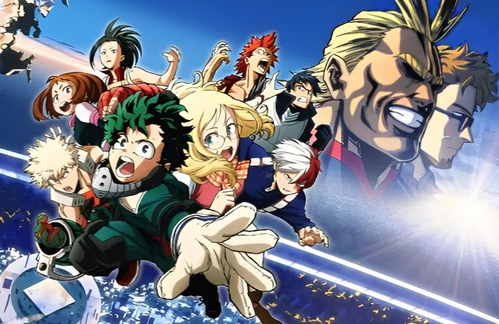
The series traces protagonist Izuku Midoriya's transition from being a ‘Quirk’ to becoming a ‘Hero’ as he gains a spot at U.A. High School—an esteemed institution for aspiring heroes. This narrative cornerstone unveils a world of intricate hero-villain dynamics, encapsulating the evolution of "Heroes" and the triumphant ascent over adversity.
Overtime, as Izuku meets various people, and grows as a person, his outlook too around the superhero world is transformed and he begins to understand the many ‘grey shades’ of the superhero world.
Even for non-anime watchers this is a good opportunity to experience firsthand the world of anime, as they can now watch and immerse themselves in the saga of the show’s protagonist Izuku Midoriya.
The anime will be a part of Cartoon Network’s 'Super Sunday' special, and this long time anime classic will premiere on September 10 on Sunday at 1:00 PM to begin the TV journey of the series. This will be continued with weekly installments every weekend thereafter.
For those unfamiliar, 'My Hero Academia' is a sci-fi superhero anime series based on the manga series of the same name written and illustrated by Kohei Horikosh featuring enthralling battles, comedy, drama and bonds of friendship, all the while exploring the many ‘grey’ aspects of the superhero genre which are not often addressed in Marvel or DC comics.
Talking about the show’s premiere, Uttam Pal Singh, Head of Kids Cluster, South Asia, Warner Bros. Discovery, said, “Cartoon Network has consistently led in presenting unique and popular narratives to its audiences. As part of our fan-centric strategy, our anime lineup has garnered tremendous response, and we are elated to offer Indian fans yet another sensational storytelling experience that has taken the global stage."
He added: “Our high-quality dubs of ‘My Hero Academia’ in multiple languages will fully submerge fans into this heroic saga. The series' universal themes of courage, camaraderie, and the voyage to heroism align seamlessly with Cartoon Network's core values."
Cartoon Network has been the channel that has defined the childhood of many kids across India with iconic shows such as ‘Flintstones’, ‘Dragon Ball Z’, ‘SWAT Cats’, ‘Teenage Mutant Ninja Turtles’, ‘Tom and Jerry’ among many more. To watch the Cartoon Network premiere of ‘My Hero Academia’ audiences can mark their calendars for September 10, 2023. Hit anime series 'My Hero Academia' to be dubbed in 5 Indian languages | MorungExpress | morungexpress.com
The popular adventure-comedy anime 'KonoSuba-God's Blessing on This Wonderful World!' will return to screens in 2024 with Season 3.
The series is renowned for its great animation and mix of comedy, fantasy, and unique characters. Popular particularly with fans of the Isekai and comedy genres, Season 3 has been highly anticipated.
The release date announcement for season 3 was accompanied by a key visual on Twitter, which shows Kazuma and his party embarking on another adventure.
Along with the video, the Konosuba anime in Japanese wrote: "Yes, let's go on an adventure. A blessing to this wonderful world! 3. TV anime will be broadcast in 2024! ! ! ! Ultra teaser visual released. Please look forward to the continuation of the adventure woven by Kazuma, Aqua, Megumin, and Darkness."
The series follows protagonist Kazuma Sato after his death in Japan from embarrassing circumstances. After his death he wakes up in front of a beautiful blue haired girl before him called Aqua.
The Goddess of the Axis cult makes him an offer, that rather than going to heaven if he would instead like to reincarnate in an MMORPG (Massively Multiplayer Online Role Playing Game) based world as an adventurer Ato fight the Demon King, and is allowed to bring only one thing with him.
After insulting him for a short time, Kazuma decides to bring the goddess herself as his weapon and the two are transported to a fantasy world filled with adventure and action.
However, Aqua who becomes the arch-priestess proves to be more of a nuisance than of any actual assistance, so Kazuma who is disappointed with the world only wants to live in peace, but Aqua wants to beat the demon king to return home.
Forming a party with fellow adventurers, the crusader Darkness and arch-wizard Megumin, both of whom prove equally useless.
Kazuma leads the highly dysfunctional party of four as they go around on various adventures and level up in the fantasy based world, coming across all sorts of weird enemies and people.
Based on the Japanese light novel series of the same name written by Natsume Akatsuki and illustrated by Kurone Mishima, Season 3 is being helmed by series director Takaomi Kanasaki and directed by Yujiro Abe with Japanese studio Drive overseeing the animation.
Makoto Uezu and Koichi Kikuta will also return as series composer and character designer, respectively.
Season 1 of the anime adaptation by Studio Deen aired in Japan between January and March 2016, while Season 2 aired between January and March 2017.
But, in making its princesses more relatable, Disney forgot to also make them powerful and effective leaders.
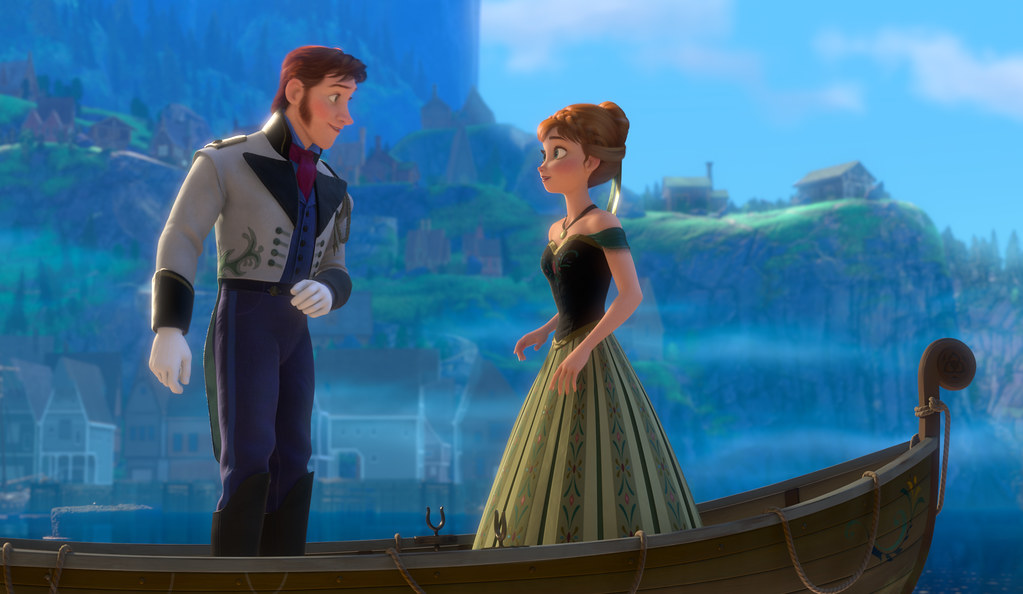
Driven by their personal turmoil, Anna and Elsa forget to lead the people of Arendelle. That job falls to the film’s villain, Hans, who provides the best, albeit self-serving, example of a good leader.
Flipping the script
Unlike the Disney princesses of earlier films, Frozen flipped the audience’s expectations of the genre.
Queen Elsa did not need a romantic male partner to complete her journey and Princess Anna’s handsome Prince Hans turned out to be a villain. Love at first sight is shown to be an illusion, replaced by the power of sisterly love and self-acceptance.
While the story retained many of the elements of Disney’s canon – royalty, magic and Anna’s romance – it also expanded the emotional experiences of Disney’s princesses to be more directly relatable to a modern global audience.
Yet Elsa and Anna’s story moves so far beyond the traditional elements of a Disney fairytale that their status as royalty is almost irrelevant to the narrative.
From the perspective of leadership, Elsa and Anna provide questionable role models.
Elsa is so afraid of what people will think of her she runs away from her own coronation. Anna’s impulsiveness is so apparent even Kristoff openly questions her judgment.
Elsa is convinced she cannot help anyone but herself. Anna gives both her hand in marriage and control of the kingdom to a man she just met.
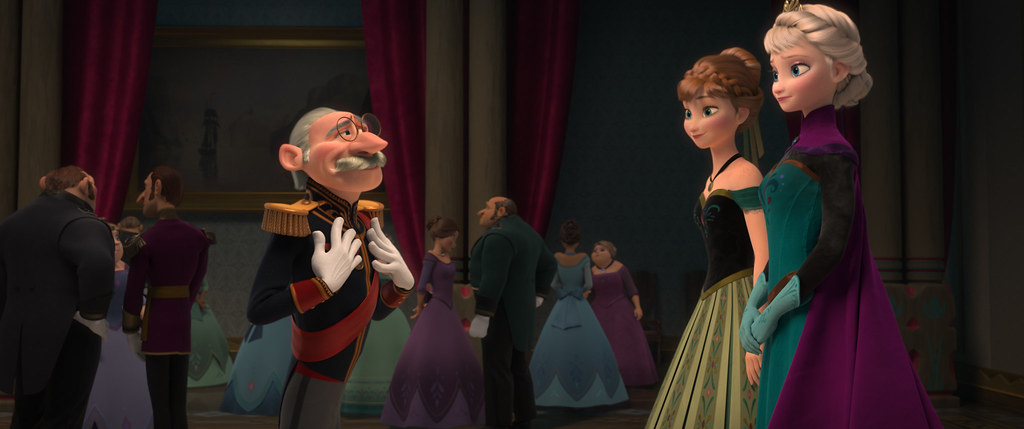
Most of the male characters offer similarly poor examples of leadership. The Duke of Weselton is presented as a snivelling villain with a Napoleon complex. King Agnarr is a well-meaning parent but raises his daughters in isolation from their subjects and from each other.
Self-interested prince as the best ruler
The best depiction of leadership is provided by Prince Hans.
When Elsa’s magic generates an eternal winter, it is Hans who ensures the people are warm and fed. When he finds Elsa, he implores her to be better than the henchmen sent by Weselton to kill her.
Given the existential threat to the kingdom and having exhausted all other options, Hans’s decision to kill Elsa in the hope of breaking the spell and saving the kingdom is not unreasonable.
Of course, his motivations are revealed to be sinister. His good deeds were intended to fool Anna and the audience. He does not love Anna and leaves her for dead.
Hans’s downfall comes once Anna is found alive and Elsa learns how to break the spell of winter herself. His motivations are certainly not good, but this is irrelevant from the perspective of the people of the kingdom.
Unlike Elsa and Anna, Hans is focused on the danger to the kingdom. Elsa and Anna abdicate their responsibilities in favour of their personal needs, whereas Hans tries to fulfil his personal needs by leading the kingdom.
Only when Hans is proven to be dishonest do the officials and foreign dignitaries reject him. We are not shown what the kingdom’s ordinary people think of his actions.
Inexplicably, the people of Arendelle accept Elsa’s return despite the fact she ran away and almost killed them all with her magic.
The Machiavellian approach to leadership
Hans is Machiavellian in the way most understand the term: a leader willing to do anything to achieve their goals.
However, Niccolò Machiavelli’s The Prince (1532) did not advocate for totally amoral and underhanded leadership. Instead it warned against perfectly virtuous leadership.
The early modern Italian diplomat argued successful leaders should be virtuous, but may also need to be flexible in their principles as the perfectly good will be undone by those who are not good.
[…] the way we live is very different from how we ought to live, and he who abandons the way things are done for how they ought to be done brings about his own downfall rather than his preservation: that man who wishes to be at all times good must come to grief amongst so many who are not good.
Such ideas are certainly too morally grey for a children’s story, but there are elements of successful leadership children can understand: difficult choices are inherent in life.
Real queenship (or kingship) involves personal sacrifice and a duty to the people. Disney has made princesses more than simply destined for marriage to a handsome prince, but it still needs to show princesses can truly rule as queens.
An animation film being shown at the Ahmedabad International Children’s Film Festival. Photo: Teaser Video Grab
The highly-anticipated fifth edition of the Ahmedabad International Children Film Festival (AICFF) is set to take place from December 8 to 10 at the prestigious Ahmedabad Management Association in the city. AICFF is a testament to the empowerment of young talent, creativity and culture from across the globe, providing a powerful platform for the younger generation to voice their beliefs and inspire positive change in our society.
AICFF is a three-day extravaganza, following the international film festival format, featuring an array of multicultural activities. The festivities kick off on December 8 with an Opening Day filled with excitement, including a grand Red Carpet Opening Ceremony and the screening of the opening film, Balit, from Iran.
The second day is a cinematic journey through films from various countries, complemented by masterclasses. Distinguished film professionals, including directors, actors, writers and filmmakers, both from India and abroad, will grace the occasion, making it a truly global celebration of cinema.
The festival culminates on the third day with a grand Closing Ceremony, where the Closing Film, the Gujarati Mara Pappa Superhero, will be screened, and outstanding talent will be recognized through the presentation of awards.
AICFF has consistently attracted worldwide attention and contributions from various content creators. Over the past four editions, the festival has seen more than 500 films from around the globe. This year, the festival received an impressive 90-plus films from 24 countries, including entries from Iran, Italy, India, Turkey, China, Croatia, United States, Russian Federation, United Kingdom,Ukraine, Taiwan, Switzerland, Singapore, Nepal, Japan, Ireland, Germany, Czech Republic, Canada, Brazil, and the Republic of Korea.
AICFF proudly presents a range of categories and awards, recognizing excellence in various aspects of filmmaking. The categories include Best Feature Film, Best Short Film, Best Documentary Film, Best Animation Film, Best Student Film, Best Director for Feature Film, Best Director for Short Film, Best Director for Documentary Film, Best Actor in a Feature Film, Best Child Actor, Best Story and Best Background Score, along with special recognition through the Golden Kite Award, Silver Kite Award and the Bronze Kite Award.
This year, AICFF is privileged to have Manish Saini as the Festival Director, a two-time National Award winner whose film Gandhi & Co secured India’s Best Children’s Film at the National Awards. Distinguished jury members Aarti Patel, Girish Makwana and Shiladitya Bora bring their expertise to the festival, along with advisor Abhishek Jain, a renowned director and producer.
Saini expressed his commitment to nurturing the next generation through creative cinema, highlighting the festival’s role in motivating young talents. Aarti Patel, Girish Makwana and Shiladitya Bora, as jury members, shared the challenges and joys of selecting the best films every year, while Abhishek Jain, the festival’s advisor, emphasized the importance of celebrating the boundless imagination and stories of children in today’s world.
Chetan Chauhan, publicist by profession and founder of the festival says, “AICFF is one of the gestures we have started for our next generation. We strongly believe that everyone has a story, especially our new generation and every child as protagonist must be heard and we as society must provide them a platform to get their talent. We would also like to thank Milapsinh Jadeja, an angel investor in startups, who has come forward this year to support the festival.”
Dr. Savan Godiawala, President, Ahmedabad Management Association (AMA), added, “AMA means continuing education and we have been constantly supporting the education needs by various training, forums and events of all the stakeholders. The Film Festival is one such event, where we look forward to the young generation to get Education with Entertainment together. International films showcasing at AMA is a proud moment, and I wish citizens of Ahmedabad take maximum advantage of this, as AICFF is free for all of them.”
This is quite a polished video, with slick animation & bouncing background music and the whole deal. It is a nice, quick educational look at rather important that you probably didn't know was going in your world.
From the official description: The European Space Agency’s Sentinel-1a was launched at 21.02 GMT on April 3. Part of the wider Copernicus programme, the satellite will be joined by other similar satellites in the future. This computer animation shows the launch and deployment of the satellite. Credit: Youtube/ESA Sentinel-1a is a European radar imaging satellite. It inaugurates the European Space Agency's Copernicus programme. It is equipped with a C-band Synthetic Aperture Radar.
Copernicus is a plan to assemble information from environmental satellites, air and ground stations. This information is to be used to monitor Earth conditions relating to temperature and other environmental factors. Copernicus has both environmental and nationalsecurity implications. With Copernicus, the
European Union fulfills its commitment to the Global Earth Observation System of Systems (GEOSS). Sentinel-1A was transported to Kourou, French Guiana for launch. It arrived at the launch pad on 25 February 2014. Launch took place on 3 April 2014.Source: Animated Film Reviews
A poster of the movie "Peppa Celebrates Chinese New Year" [Photo provided to China Plus]
Peppa Pig's movie adaptation, composed of live action and animation, is scheduled to hit Chinese theatres on Feb. 5th.
The movie "Peppa Celebrates Chinese New Year" shrouds the main characters in a Spring Festival atmosphere, including having a New Year's Dinner Party with her family and friends, a big part of Chinese New Year traditions.
Peppa Pig, the British porcine phenomenon that's taken kids by storm all around the world, was first introduced to China in 2015. Now the movie adaptation will celebrate the coming of 2019, which is the Year of Pig according to the Chinese Zodiac.
A poster of the movie "Peppa Celebrates Chinese New Year" [Photo provided to China Plus]
India’s favourite laddoo loving superhero, Chhota Bheem is the country’s most beloved cartoon character and the apparel , toys, games, comic books, stationery and other merchandise is a testimony to the Chhota Bheem’s popularity. This winter, Chhota Bheem will be seen in a completely new and stylish avatar in Chhota Bheem – Himalayan Adventure, the official trailer for which was recently released. The storyline follows Bheem to the snow capped Himalayan Mountains where he will not only enjoy some snow filled adventures but also take on the evil dacoit, Hidimbak. In keeping with the plot of the film, Chhota Bheem’s character was given a stylish new look and a lot of research went into this. The team who worked on the film even visited the Himalayas to study local customs and traditions in order to breathe life into the script. Talking about the new look, Hyderabad based, Rajiv Chilaka, CEO, Green Gold Animation and the creator of Chhota Bheem said, “Children have a strong sense of loyalty to their
preferences. Bheem is their trusted companion so any form of experiment with the character needs days of planning and research. We stuck to the colour scheme, which is earthy but gave Chhota Bheem a new look that fits his mountainous journey. He will be seen wearing warm clothes, jackets, breeches, caps, skiing goggles, and off course his skiing gear. We took more than a year of research and back end development to arrive at this look along with the storyline”. Not only will Bheem’s friends, Chutki, Raju, Jaggu, Kalia, Dholu and Bholu join him on this Himalayan Adventure but they will also have their own jacket, scarf and warm mitten clad looks. Talking about the new film, Samir Jain, producer added, “Bheem is our star character and anything around him becomes very special for us. It also means more hard work where we have to continually reinvent and challenge ourselves. We wanted to come up with a film with a winter theme. This is a holiday and festive season so we really wanted to scale up Bheem’s adventures to give our audiences something fresh. The setting is perfect and now we can’t wait for the film to release”. Audiences can watch Chhota Bheem in an action packed and thrilling mountain adventure when Chhota Bheem Himalayan Adventure releases on January 8th, 2016. Source: http://www.page3bollywood.com/
Home On The Range, Treasure Planet, Atlantis: The Lost Empire... all is finally forgiven Disney.
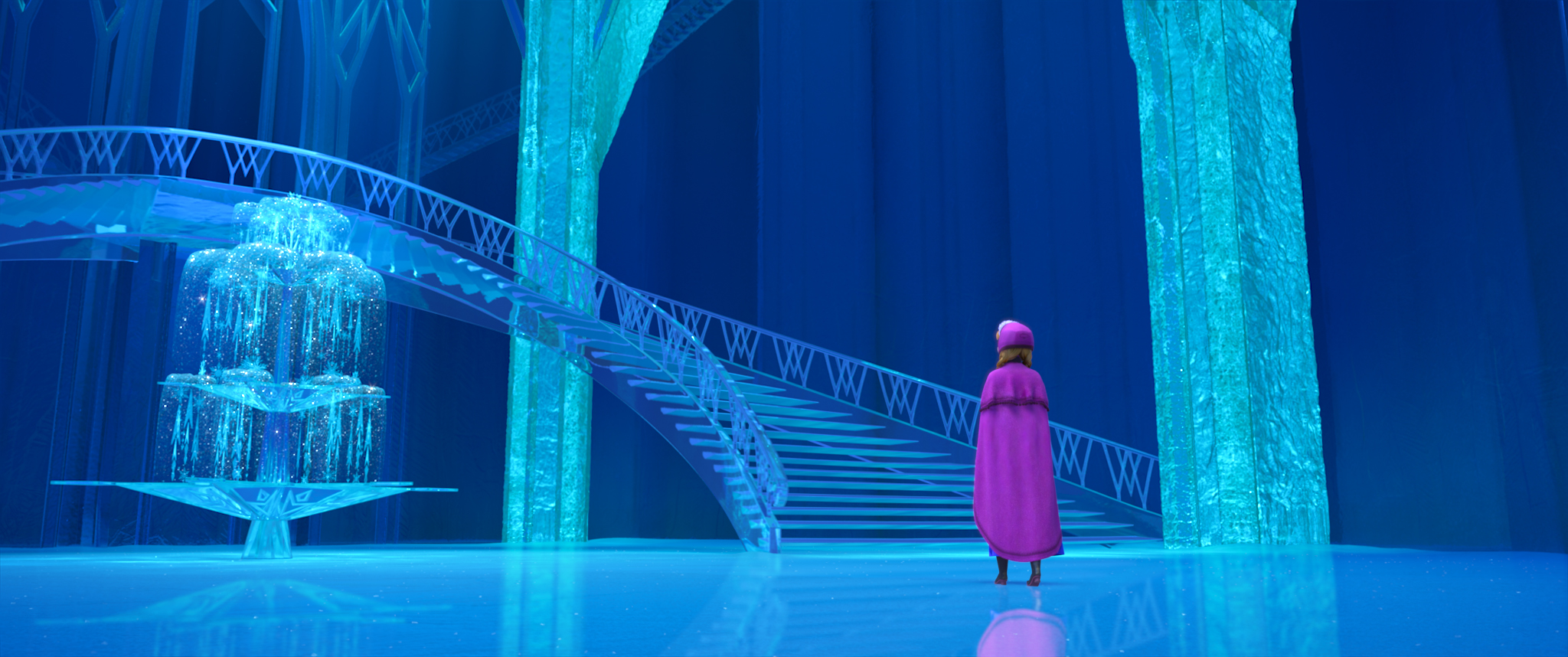
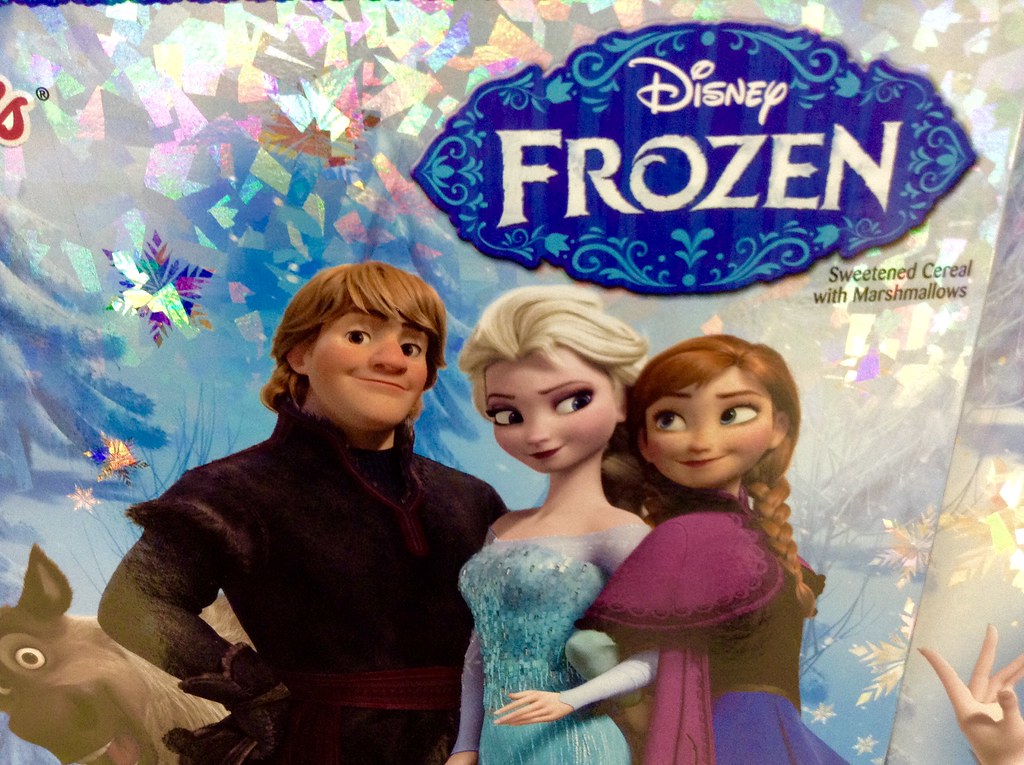
Since the 1940s, the world's most iconic animation studio has tried it darndest to adapt Hans Christian Andersen's classic fable The Snow Queen, but not even the great Walt Disney could get it right. Finally, in 2013, the Magical Kingdom has nailed it with their 53rd animated classic Frozen, which had the largest ever opening weekend for a Disney animation in the studio's history. It's ironic that Frozen has been brewing behind the scenes for over 70 years, as it's the first film to capture the magic of classic Disney since The Lion King. Co-directors Chris Buck (Tarzan) and Jennifer Lee (Wreck-It Ralph) oversee the
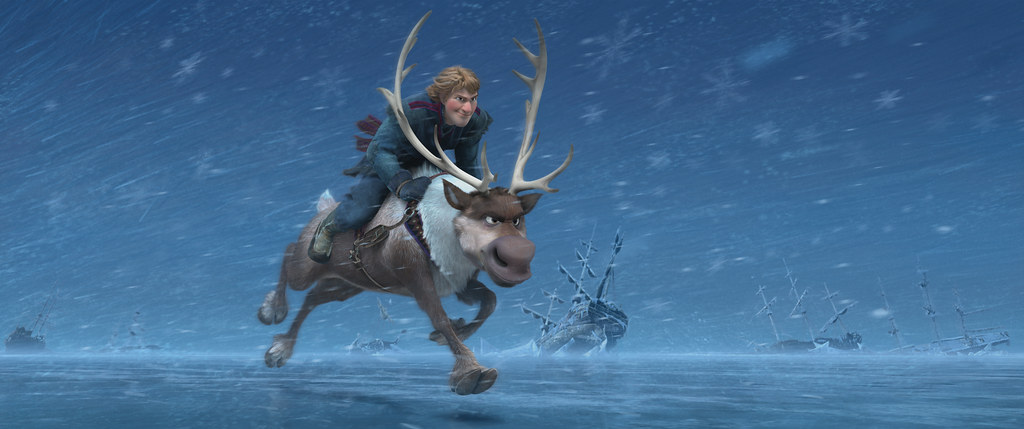
story of two sisters who clash when Elsa (Idina Menzel) accidentally reveals her ability to control snow and ice, plunging their kingdom into an eternal winter as she retreats into exile. As Anna (Kristen Bell) races to find her sister and restore order to Arundell, she is joined by Kristoff (Jonathan Groff), a charmingly rugged ice harvester who travels with a trusty reindeer companion and Olaf (Josh Gad), a surprisingly likable snowman brought to life by Elsa's magic. So far so Disney right? True, Frozen does
contain many of the ingredients common to most Disney films - beautiful princesses, dashing princes, comedy sidekicks - but what their latest offering excels at is turning these conventions on their head without ramming it in your face. Not like a certain green skinned ogre we all know and love then... Take the lead character for example. Sure, Anna is a pretty princess searching for love but once her character is established, the script takes delight in confounding the audiences expectations. Despite a royalupbringing, Anna lacks the grace and finesse of other Disney princesses, making mistakes along the way as she fights to save her sister. That's right guys; love may be in the air but once shit hits the fan, the Princess becomes more concerned with saving her family and kingdom then shacking up with the first Prince she meets. Feminist film critics will have a field day dissecting exactly what this now means for the future of princesses in Disney animation but apparently, this forward thinking representation of women
wasn't shared by all members of the creative team. One animator has been controversially quoted as saying that female characters are harder to animate as they need to be kept pretty while expressing emotions... Ironically, the real villain of the piece is less clearly defined, demonstrating a new and more mature approach to storytelling, the likes of which we have never seen before from Disney. Is the Duke of nearby Weselton (Alan Tudyk) after the throne of Arrundel for himself? Is Prince Hans (Santino really
as Fontana) clean cut as he seems? Or is Elsa the real villain of the piece, holed up in her enchanted castle of ice as the population starve around her, caught in the snowstorm she created? It's refreshing to watch a Disney animation that doesn't dumb itself down for younger audiences. Instead, Frozen remains relevant through it's fresh humour and feisty lead characters who don't try too hard to be edgy, unlike the ill fated protagonists of Treasure Planet and even Lilo & Stitch. Love or hate it, all Disney characters
have an almost psychotic need to express their emotions in a loud and unabashed Broadway style number. Things are no different here, but while many animated films feel clunky when singing is introduced, this has always been a huge strength of Disney animation and I'm happy to say that after some forgettable tracks from Tangled, the studio is back on top form with a songbook created by the husband and wife songwriting team of Robert Lopez and Kristen Anderson-Lopez... they worked together
on The Book of Mormon and Avenue Q. Obviously! Menzel is clearly the big talent in the singing stakes and her show stopping number Let It Go is destined to become a Disney classic, bravely turning what could have been a villainous moment into an anthem of empowerment. Bell surprisingly holds her own against the Broadway powerhouse and Groff brings a likable charm to love interest Kristoff but the surprise for me was Gad, whose rendition of In Summer explores what it's like to long for sunshine when
you're made of snow. Frozen is a magnificent film, one that will be loved by generations to come, so it's fitting that the short film preceding it pays homage to what came before. Get A Horse! is a Mickey Mouse short drawn in the style of Disney movies from the 1920s which plays with our preconceptions of animation in a beautifully simplistic way, continuing the impressive streak started by Paperman last year. While the CGI of Frozen is absolutely stunning, Get A Horse! made me hanker still for traditionally hand-drawn animation. Hell, I could write a 1000 word review just on the short alone! But that's not what we're
here for...Not only is Frozen a million times better than the latest Pixar films, it's also a huge improvement on both Princess & The Frog and Tangled, two films I already held in high regard. Ladies and gentlemen, forget Dreamworks. Pixar's had it's day. The second Disney Renaissance has finally arrived in full force and I feel like an over excited 6 year old all over again, eagerly waiting with bated breath to see what will come next from the Disney studios. Source: Article, Image: flickr.com, photobucket.com
By James Bjorkman: Show business legend Julie Andrews needs no introduction. Since at least the time of "Mary Poppins" in the early 1960s, Andrews has retained her relationship with Disney. Here, Julie Andrews is portrayed as the Blue Fairy from "Pinocchio," along with Abigail Breslin representing a fairy-in-training. In the series of images, Dame Julie, 72, is seen with "Little Miss Sunshine" star Abigail
Breslin, 11, as Fira from the Disney Fairies. Dame Julie, who has a long-standing relationship with Disney and played Mary Poppins in 1964, said: "It's a symbolic photograph of all the wonderful Disney images. "It's pixie dust, magic and anointing a new little fairy in the form of Abigail. It was just a charming concept." Source: http://animatedfilmreviews.filminspector.com
In this classic shot for the "Disney Dream Portrait Series," Annie Liebovitz shot Julianne Moore as Ariel from The Little Mermaid, along with Michael Phelps portraying a merman. The whole concept behind this shot, which was shot in a giant fish tank, is a little wacky. However, Moore is fabulous, and, even though you can barely tell that it is Olympic Champion Phelps in the foreground, he helps give the shot some,
shall we say, creative dissonance. The others in the background are there because Annie Liebovitz wanted them there, as they also are Olympians or other top swimmers. Perhaps Liebovitz had Olympic fever or something. In any event, the shot turned out fine and, most importantly of all, Ariel the has her distinctive red hair. Source: Article
Reviewed By London-City-Nights: How do you judge the success of a children's film? I saw it with a cinema full of kids who laughed (though not uproariously) at the jokes, shut up for the emotional parts and I didn't see any particularly miserable children on the way out. There's certainly a convincing argument to be made that if a film aimed at children succeeds in entertaining them then it's a success. So what separates, say, Finding Nemo and Shark Tale? What's the quality that makes Kung-Fu Panda so much fun to watch and Bee Movie so dire? To young children the difference is intangible, but even so, deep down they must sense the difference in quality. Why else would films like Wall-E be so beloved and Robots (by the same director as Epic) be so forgotten? Epic firmly lands on the Shark Tale and Bee Movie side of this argument. It's an aggressively generic animated film by numbers, populated by stereotypes with the vaguest possible emotional motivation, comedy animal sidekicks and a yawning void when you search for
So um, here are your characters. It pretty much goes from left to right in terms of 'wackiness'.
any thematic meat to bite into. The plot: war in fairyland. Deep within the forest there's a conflict going on between the good hearted and pure Leafmen and the sinisterly degenerate Boggans. This goes on unnoticed by the human world due to the fact that they're so small and because they move much faster than humans. Thrown into this turmoil is the 17 year old Mary Katherine, who gets shrunken, saddled with the task of delivering the blossom of power to the mystical caterpillar tree and must go on a voyage of personal growth where she learns that... Huh. An hour after the film I can't remember. It's a meaningless. platitude like 'be who you are' or 'love your Dad' Something like that. You know the drill. I like to think it's possible to detect when a film has been created with passion and intelligence rather than to make money. In Pixar's best films you detect a distinct artistic vision that everybody involved in the film is working towards. I don't want to come across as some Pixar snob though, when it comes to 3D animated films though, both Dreamworks and Disney have deeply impressed in fantastic films like How to Train You
Queen Tara (Beyonce Knowles)
Dragon and Wreck-It Ralph. Unfortunately there is no inspiration whatsoever in Epic, you could feed these plot elements into a computer and have it spit out a rough simulacrum of what happens in this film. It's somehow especially more tragic for a big budget, mainstream animated release to be so bland. The people making this film had the budget and the means to put their wildest, most original fantasies on screen, but what you end up with is a jumble of imagery appropriated from other films; namely Disney's Tinker Bell series and 1992's Ferngully: Secret of the Last Rainforest. Throughout I found myself
wondering what the film would have been like if there'd been someone with a distinct artistic vision behind it, or a script that subtly raised issues even slightly more complex than growth = good and decay = bad. One of my favourite recent trends in films aimed at children is the absence of unambiguous evil. My favourite example is Pixar's Ratatouille, where villain Anton Ego undergoes a total transformation purely through the talent and good nature of the protagonists. More complex examples are found throughout the work of Hayao Miyazaki, with films like Princess Mononoke presenting multiple sides of a conflict in world populated with characters with actual reasons behind their actions other than that they're
The villainous and two-dimensional Mandrake (Christoph Waltz)
intrinsically 'good' or 'bad'. There's none of this in Epic. The entirety of the villain's society is presented as irredeemably corrupt and everyone involved in it is under a presumptive death sentence, including, presumably, the soldiers' offscreen wives and children. It's deeply unattractive to see our heroes crowing in joy as they watch someone get eaten alive by a dog purely by dint of them being born on the wrong side of a conflict. What makes feel even ickier is that the villain's philosophy that the forest needs rot and decay is absolutely correct. Without decomposition where are the nutrients in the soil to allow our heroes
to live in their sunny tree houses? But all of this this is swept neatly under the rug in favour of a dull Manichaean conflict that has no tension, no intelligence and no thought behind it. Perhaps this would be tolerable if Epic was at least entertaining to look at, but you've seen this all before. When you consider the leap forward in animation techniques that Brave represented last year, it even looks slightly dated, especially in regards to character design (specifically their hair). There are some interesting elements in the action scenes, one chase scene that exploits the difference in time between the fairy world and the human race approaches a low level of fun, and the brief scenes where the shrunken Mary Katherine
Professor Bomba (Jason Sudekelis) and Mary Katharine (Amanda Seyfried)
learns she can jump higher are vaguely exhilarating, but this just isn't enough to carry a film. If you like animated films with personality, artistic vision and intelligence don't go and see Epic. I'm sure Blue Sky are perfectly capable of putting out some fantastic work but the more money this makes, the more it'll encourage them to continue in this dire vein. Epic is the very definition of inconsequential, the cinematic equivalent of fast food, bland and completely lacking in nutrition. Audiences, adult and child alike, deserve cinema a hell of a lot better than this. Source: http://www.londoncitynights.com/
The animation looks pretty good and even if the target of these fairies movies are obviously little girls the fact that the story happen at Neverland might interest boys and men too! Here is the synopsis: "When a misunderstood dust-keeper fairy named Zarina steals Pixie Hollow's all-important Blue Pixie Dust and flies away to join forces with the pirates of Skull Rock, Tinker Bell and her fairy friends must embark on
the adventure of a lifetime to return it to its rightful place. However, in the midst of their pursuit of Zarina, Tink's world is turned upside down. She and her friends find that their respective talents have been switched and they have to race against time to retrieve the Blue Pixie Dust and return home to save
Pixie Hollow. With Switched Talents - The Pirate Fairy Clip on Disney Video comedy, heart and epic thrills for the whole family, On A Review A Day it is Rated by 4/5 ratio and said The and her friends as they set out to find Zarina, a fairy outcast who has stolen the all important blue pixie dust and taken it
back to her band of wayward pirates. Will Tinker Bell get the dust back in time? Will the pirates' devious plan come to fruition? Will Disney ever stop milking the cash cow and show us how Tink ended up with Peter Pan? Well, the last question remains to be seen, but for the first two, watch the movie. I must say
The evil wizard Gargamel creates a couple of mischievous Smurf-like creatures called the Naughties that he hopes will let him harness the all-powerful, magical Smurf-essence. But when he discovers that only a real Smurf can give him what he wants - and only a secret spell that Smurfette knows can turn the Naughties into real Smurfs - Gargamel kidnaps Smurfette and takes her to Paris, where he has been winning the adoration of millions as the world's greatest sorcerer. It's up to Papa, Clumsy, Grouchy and Vanity to return to our world, reunite with their human friends Patrick and Grace Winslow, and rescue her!
Will Smurfette, who has always felt different from the other Smurfs, find a new connection with the Naughties Vexi and Hackus - or will the Smurfs convince her that their love for her is True Blue? The Smurfs 2 (2013) - Only for Fans Reviewed And Posted byJames Bjorkman: The original film in the Smurfs series, "The Smurfs (2011)," was not a favorite of the critics. It did, however, do good business, especially overseas where the classic comic strip originated. When an animated film grosses over $500 million, you can pretty much expect a sequel, so Sony Pictures Animation didn't hesitate. It quickly rolled out the unoriginally titled "The Smurfs 2" (2013). Directed again by Raja Gosnell and written by J. David Stem, David N. Weiss, Jay Scherick, David Ronn and Karey Kirkpatrick, this sequel does have a certain charm. That may simply be due to the fact that it is a relief to find an animated film that isn't yet another Superhero or action film that follows directly in the footsteps of every other Superhero or action film. There's no Batman or Superman! So, we're
off to a great start. That said, "The Smurfs 2" is unlikely to win many awards for brilliant filmmaking. Like the original, it is split between animation and live-action scenes, which can be jarring. It isn't particularly funny for a comedy, and it has dark elements that seem weirdly out of place in light summer fare. However, the animation is good and the characters often endearing. If you are a fan of the original film, you probably will like this one as well, as it continues the narrative with the same actors and characters while throwing in just enough new plot twists to keep things interesting. Smurfette (Katy Perry) is worried
Katy Perry having some fun promoting "The Smurfs 2"
that the other Smurfs are shunning her for some reason. Her birthday is approaching, and, unbeknownst to her, the other Smurfs are working hard to keep their plans for a surprise party quiet. Too quiet, as it turns out. Combined with recurring nightmares she has been having about her betraying the village to Gargamel (Hank Azaria), Smurfette becomes paranoid and leaps to the conclusion that the other Smurfs are suspicious of her and no longer want her around. Gargamel, meanwhile, is using his Smurf essence to entertain Parisians with magical sorcery. Unfortunately for him, he is running low on the essence and
Circle of Smurfs
doesn't know the formula. He creates the "Naughties," Vexy (Christina Ricci) and Hackus (J.B. Smoove), to open a portal to the Smurf village using the Eiffel Tower as a gateway. The plan is to go to Smurf Village and kidnap Smurfette, getting the formula for the Smurf essence from Papa Smurf (Jonathan Winters) as ransom. Everything works as planned, but the portal turns out to be so small that only Vexy can fit through it. Vexy goes through and grabs Smurfette, bringing Smurfette back to Paris to become Gargamel's hostage. Another Smurf sees Vexy kidnapping Smurfette, and he quickly tells Papa Smurf. Papa creates magic crystals that will enable a band of Smurfs to return to New York City and enlist the
Hank Azaria plays Gargamel, watches Smurfette use her wand
help of their friend, Patrick Winslow (Neil Patrick Harris), to retrieve Smurfette. Clumsy (Anton Yelchin), Grouchy (George Lopez) and Vanity (John Oliver) wind up using the crystals through an accident, and they, along with Papa Smurf, travel to Winslow's apartment. There, they reunite with the affable Winslows and meet Patrick's stepfather Victor Doyle (Brendan Gleeson). They all, including Patrick's wife Grace (Jayma Mays), travel to Paris in order to confront Gargamel. Finding Gargamel at his stage show, Patrick and Grace distract him while the Smurfs search for Smurfette. Smurfette, though, escapes on her own, chased by Vexy and Hackus. They catch Smurfette and return her to Gargamel's apartment, where
Papa Smurf, voiced by Jonathan Winters
Gargamel charms her with the gift of a dragon magic wand and falsely claims that he, not Papa Smurf, is her father. The Naughties are losing substance due to the diminishing Smurf essence, so Smurfette gives Gargamel the secret formula. Gargamel uses it to turn the Naughties into real Smurfs, then places them into his Smurfalator to power up his own dragon wand. Papa, Grouchy, Vanity and Clumsy, meanwhile, are still trying to find and rescue Smurfette. Gargamel captures them, though, and adds these Smurfs to the Smurfalator. Patrick and Victor then find Gargamel and destroy the Smurfalator, ruining the Smurf
The Naughties and Smurfette
essence in the process but rescuing their Smurf friends. Gargamel has grown stronger due to the Smurfalator, but Vexy and Hackus team up with the other Smurfs and use their own magic wand to fight him. They send him flying through Paris, ultimately causing a firewords explosion for all of Paris to enjoy. The storyline of "The Smurfs 2" is fairly clever in finding a way to work the engaging Neil Patrick Harris into the storyline once again. There is a satisfying conclusion, as Gargamel gets his inevitable comeuppance,





 upbringing, Anna lacks the grace and finesse of other Disney princesses, making mistakes along the way as she fights to save her sister. That's right guys; love may be in the air but once shit hits the fan, the Princess becomes more concerned with saving her family and kingdom then shacking up with the first Prince she meets. Feminist film critics will have a field day dissecting exactly what this now means for the future of princesses in Disney animation but apparently, this forward thinking representation of women