The Oscars are usually a mess, but this year’s Best Picture nominees are strong. Here’s who should win

Ari Mattes, University of Notre Dame Australia

Film critics – myself included – love to bemoan the death of high-quality cinema in the age of streaming, pointing to mediocre Best Picture Oscar nominees as evidence that the production of great (or even good) films is on the wane.

But perhaps things are changing. Are people sick of being inundated with short videos on TikTok and Youtube, and once again hankering for a cinematic experience? The quality of this year’s nominees suggests they are.

For the first time in a while, most of the nominated films are excellent – and nearly all of them are watchable.

My top pick: Sentimental Value

Joachim Trier’s Sentimental Value is my pick for the Best Picture Oscar. It’s the kind of meticulously crafted film in which the naturalism seems effortless.

The narrative follows acclaimed filmmaker Gustav Borg (Stellan SkarsgĂ„rd), a quintessential Euro-auteur, who comes back into the lives of his estranged daughters Nora (Renate Reinsve) and Agnes (Inga Ibsdotter Lilleaas) following their mother’s death.

Gustav is making a new film, and wants his daughter Nora – an acclaimed theatre actress who has her own demons to battle (stage fright among them) – to star in it.

Nora assumes it’s a cynical manoeuvre for funding on her father’s part and refuses. So Gustav casts American star Rachel Kemp (Elle Fanning) instead, who is immediately out of her depth.

The drama unfolds around the family home in Oslo, interweaving narratives of the home’s history across generations with the tensions plaguing its current inhabitants.

Sentimental Value has a strikingly lyrical quality. Some may say it’s overdone, but every element is so perfectly executed that it doesn’t come across as pretentious or laboured. It is, in many respects, thoroughly sentimental – yet never feels like it’s performing this as some kind of effect.

Despite its considerable formal and narrative complexity, it plays in a starkly simple fashion, thanks to the light touch of Trier, coupled with stunning cinematography by Kasper Tuxen Andersen.

The lead performances by Reinsve, Lilleaas and SkarsgÄrd are extraordinarily convincing and, perhaps more surprisingly, Fanning is awesome as the uncomfortable American trying to please the European artiste.

Sentimental Value brilliantly weaves a sense of European social and cultural history with carefully observed character moments, becoming, by the end, a kind of treatise on the affirmative potential of art to transcend and transform interpersonal barriers.

Despite the difficulties of life, the detritus of broken promises and hearts, and the disappointments minor and not so minor, we can still come together – beautifully and wholeheartedly – through the practice of that abstract dream that is called art.

Other excellent contenders

There are a few other strong contenders – films which, any other year, would have stood out above the pack.

Bugonia

Yorgos Lanthimos is one of the most acclaimed filmmakers of the past decade, and yet his films have been hit and miss. After his last great film, the 2015 black comedy The Lobster, Bugonia marks a return to form.

The film follows bumbling paranoiac conspiracy nut Teddy (Jesse Plemons) as he and his half-witted cousin Don (Aidan Delbis) kidnap Michelle Fuller (Emma Stone), the CEO of pharmaceutical company Auxolith.

Fuller is the kind of ruthless business leader who appears on the cover of Forbes magazine with the caption “Breaking Barriers” and who spouts endless nonsense about diversity while her company wreaks havoc on the planet and the people around them.

According to Teddy, she is also an “Andromedon” alien sent to Earth to enslave and exploit the human population, bringing death to humans as it has been brought to the bees.

The brilliance of the film largely revolves around its manipulation of our identification with the two leads. At times Teddy seems like a lunatic serial killer, and Fuller a heroic victim. At times we empathise with Teddy, while Fuller looks like a manipulative, cold-hearted sociopath.

The whole thing builds up to an immensely satisfying resolution, suitably nihilistic and absurd in equal measure.

As is often the case with Lanthimos’ films, the figures are caricaturish, but the comedic timing – and the oscillation between humour and discomfort for the viewer – is spot on, so it works.

Sinners

Ryan Coogler’s Sinners is a great yarn: a well-executed rock ‘n’ roll fable slash vampire siege, full of electrifying music.

It’s 1932. Twin gangster brothers Smoke and Stack (a dual role played by Michael B. Jordan) return from working for Al Capone in Chicago to Clarksdale, Mississippi, to open up a juke joint.

Their cousin Sammie (Miles Caton), a cotton picker and bluesman – with Charley Patton’s guitar – steals the show at the hugely successful opening night, fulfilling the legend of a musician who can play so well the barriers between the living and the dead come down. Everything seems to be going well – until some redneck vampires decide to assail the venue.

The whole thing is rather gaudy and silly. But like its forebear From Dusk Till Dawn (1996) – it’s so energetically (and pleasurably) handled that it doesn’t matter.

Michael B. Jordan is brilliant in the two roles, and the end result is a muscular, satisfying film that feels like a good pulp novel or comic book – capped off with a Buddy Guy jam session in the final moments.

Sinners is a delicious dream. It’s unlikely to win Best Picture; there was a time, not so long ago, when this kind of genre film wouldn’t have made it into the mix. But it’s well worth its more than two-hour runtime.

Marty Supreme

It would be hard to think of a stupider premise for a movie. In the 1950s, fast-talking entrepreneurial New York hustler Marty Mauser (Timothée Chalamet) has to raise money so he can make it to Japan to beat world number one Koto Endo (Koto Kawaguchi) in the table tennis showdown of the century.

Yet, director/co-writer Josh Safdie treats the premise with enough seriousness that we end up with a high octane sports film to rival Rocky IV. This is helped by the stunning cinematography by Darius Khondji. Shot on 35mm film, the images have a rich colour and texture rarely matched in digital cinematography.

There’s also a dynamite score from Daniel Lopatin, and an anachronistic soundtrack featuring several stellar 1980s pop tunes from the likes of Public Image Limited, New Order and Tears for Fears, to name a few.

Despite Marty’s arrogance, sweet-talking, womanising, con-artistry and generally bad behaviour, Chalamet invests the character with enough pathos and humour that he comes across as a thoroughly loveable – or at least likeable – rogue.

He is a crackpot whose self-belief and willingness to do anything to achieve his dream tricks the viewer into becoming equally invested in his absurd quest as he (and the film) bounce around New York and the world like a bright ping pong ball.

Marty Supreme is an odd – and oddly arresting – film capturing something of the madness at the heart of the American dream. Mauser does whatever he can to make it to Japan. And after several escapades – and some downright brutal scenes featuring cult director Abel Ferrara as an ageing gangster – he does make it.

The rest

Unusually for the Oscars, the pack of 2026 nominees is rounded out by several other good films.

Although not as good as some of his other films, such as Neighbouring Sounds (2012) and Bacurau (2019), Brazilian director Kleber Mendonça Filho’s The Secret Agent is a rollicking political thriller. Set in the 1970s, it features a standout performance by Wagner Moura as a dissident academic evading persecution from a brutal dictatorship.

Paul Thomas Anderson’s One Battle After Another is a wacky comedy occasionally masquerading as a serious political action thriller. It follows the burnt out leftist Pat Calhoun (Leonardo DiCaprio) as, with his daughter Willa (Chase Infiniti), he evades capture by police and a militia led by the moronic Steven J. Lockjaw (Sean Penn). The whole thing is pretty silly, but like its inspiration – Thomas Pynchon’s 1990 novel Vineland – it is fun nonetheless.

F1 is likewise good. This finely wrought racing flick follows all of the delightfully dumb cliches of the genre. Hard-boiled and burnt-out old timer Sonny Hayes (Brad Pitt) makes it to Formula One for the first time, and contends with a new era of racing epitomised by his nemesis, the brash young gun Joshua Pearce (Damson Idris).

It’s hard to imagine such a film being nominated for Best Picture in any other era; Tony Scott’s Days of Thunder (1990) is equally stupid, but better made, and has been universally lampooned by critics. But people seem to be craving (and appreciating) big screen popcorn films in an era where streaming and second-screen viewing has all but destroyed commercial narrative cinema.

Only three nominees stick out as dreary

Clint Bentley’s Train Dreams is an earnest but visually unappealing Netflix film, following a ho-hum period love story about class, racism and the American Dream. Joel Edgerton is solid as usual, and the film is watchable enough, but the whole thing seems rather tired. And the digital video look really doesn’t work with the kinds of exterior, panoramic images that dominate the film.

In Frankenstein, director Guillermo del Toro takes one of the duller, more proselytising novels in the Gothic canon and gives it a suitably ponderous treatment. Oscar Isaac hams it up in full actor mode as Dr Frankenstein. Jacob Elordi is ridiculous as the monster. And Christoph Waltz as Harlander delivers such humdingers as “Can you contain your fire, Prometheus, or are you going to burn your hands before delivering it?” (in case you didn’t know, the novel’s subtitle is The Modern Prometheus).

Made for Netflix, Frankenstein tries hard to look sumptuous with period dĂ©cor, but it can’t mask the sterility of its digital images. While the novel, at least, has a simple elegance to it, del Toro’s version is meandering, gaudy and cheap-looking.

It is difficult to treat Hamnet – the unbearably pretentious latest film from director Chloe Zhao – seriously, because the filmmakers do it for you. Though there are some things to like – Paul Mescal, for instance, is nice to watch, the cast are generally proficient, and the score is fine – this self-satisfied nonsense plays more like an Instagram video performing its own seriousness than a genuinely engaging feature film.

7 hits out of 10

As usual, the best films of 2025 haven’t been nominated for Best Picture (where’s SirĂąt, Redux Redux, or Harvest?). Nonetheless, most of this year’s nominees are films that warrant watching more than once for a variety of reasons: pleasure, complexity, nuance.

Perhaps Hollywood is starting to make good films again after decades of superhero trash. Or, at least, the Academy has started to recognise them.The Conversation

Ari Mattes, Lecturer in Communications and Media, University of Notre Dame Australia

This article is republished from The Conversation under a Creative Commons license. Read the original article.

Read More........

Gene Hackman will be remembered as the Hollywood actor’s actor

Will Jeffery, University of Sydney

Gene Hackman, an acting titan of 1970s and ‘80s Hollywood with more than 80 screen credits to his name, has died at 95. He was found dead in his home with his wife, pianist Betsy Arakawa, and his dog.

Hackman had a rugged, dominating and commanding presence on screen, known for his emotionally honest, raw and fierce performances. Always the tough guy, never the romantic lead, off camera he was shy and enjoyed the quiet life.

I first saw Hackman as a child in The Poseidon Adventure (1972). My dad put the film on for the upside-down ocean liner disaster sequences, but it was Hackman who left a lasting impression. I vividly remember being so moved by his final speech berating God for deserting the ship’s passengers and crew while he hangs from a pressure valve door over flames.

There is no actor who comes close to conveying authority with such humanity and reserve.

He was often referred to as the actor’s actor and mentioned by Hollywood A-listers such as Kevin Costner as the best actor they’ve ever worked with. Clint Eastwood, once Hackman retired, described him as “too good not to be performing”.

Hackman will leave a legacy to be studied and appreciated for years to come.

Finding a foot in show business

Born in San Bernardino, California, on January 30 1930, Hackman’s family moved to Danville, Illinois, when he was three. Hackman’s father left when he was 13, which he described to James Lipton on Inside the Actors Studio as his father “driving by with a casual wave goodbye”.

Hackman joked to Lipton the departure of his father at an early age made him a better actor.

Hackman left Danville at the age of 16 to join the marines, where he spent roughly four years. He was a rebellious child, but as Peter Shelley detailed in his biography of Hackman, the marine corps was the first time he gave in to authority.

After the marine corps, Hackman moved to New York wanting to become an actor, telling people he was inspired by tough guy James “Jimmy” Cagney.

In New York, Hackman struggled making a living as an artist while waiting for his breakthrough (his uncle told him to give up and get an honest job). Moving to California, he became friends early on with Dustin Hoffman (they finally appeared opposite each other in Hackman’s penultimate film, 2003’s Runaway Jury).

After struggling for years, Hackman landed his first credited screen role in 1964’s Lilith at the age of 34. He played a small part opposite upcoming star Warren Beatty.

As Hackman recounted to Lipton, Beatty told director Arthur Penn how great Hackman was in a scene they did together. That landed Hackman his breakthrough role playing Buck Barrow opposite Beatty and Faye Dunaway in the 1967 hit Bonnie and Clyde, earning him an Oscar nomination for best supporting actor.

Breaking through in the 1970s

It wasn’t until the 1970s that Hackman began his leading role career, starring in The French Connection (1971) as the unforgettable hard-boiled New York detective Jimmy “Popeye” Doyle. This role earned him his first Academy Award, for best actor.

He was to wait more than 20 years for his second and final Academy Award, for playing the ruthless Little Bill Daggett opposite Clint Eastwood in Unforgiven (1992).

Throughout the 1970s, Hackman was gaining huge popularity on screen, sharing records with the likes of Robert Redford and Harrison Ford as the highest grossing stars at the box office.

There are too many great Hackman performances to mention, but my favourites are Unforgiven, The French Connection, The Poseidon Adventure, The Conversation (1974), Hoosiers (1986), Mississippi Burning (1988) and The Royal Tenenbaums (2001).

The French Connection’s director, William Friedkin, said in an interview Hackman was anti-authority and anti-racism because of his upbringing in an area known for its large Ku Klux Klan presence, and his absent father.

Hackman almost pulled out of The French Connection one week into shooting because he didn’t like “beating on people” for a four-month shoot. He told Friedkin “I don’t think I can do this,” but Friedkin refused to let him go.

Hackman recalled he was eternally grateful Friedkin didn’t, as it was “the start of [his] career”.

Hackman said his character Popeye Doyle was a “bigot, an antisemitic, and whatever else you wanted to call him”, and he famously struggled to say the N-word in one key scene. He initially protested the line but eventually went with it, believing “that’s who the guy is […] you couldn’t really whitewash him”.

Hackman often played the character who had the greatest authority on the surface but slipped up, whether he was playing the hero or the villain. Even for a role such as Reverend Scott in The Poseidon Adventure, in which Hackman played a self-righteous preacher onboard the capsized SS Poseidon, he questions his religion as he leads the entire band of escapees to safety.

A life after acting

Hackman retired from acting in 2004 at age 74.

There are many stories about why he retired, like, as Shelley writes, not wanting to play Hollywood “grandfathers” and his “heart wasn’t in shape”, but his life after acting gives a strong hint: he had other interests.

Over the past 20 years, Hackman wrote three historical fiction novels, was a keen painter, and enjoyed exercise such as cycling. Married to classical pianist Arakawa from 1991 until their death, they lived in Santa Fe, New Mexico, where he designed his own home (yes, he also loved architecture!).

A man of many talents who played a kaleidoscopic range of authoritative roles, Hackman will almost certainly be remembered mainly for his tough-guy performance in The French Connection – though many will also remember him as the Hollywood actor’s actor.The Conversation

Will Jeffery, Sessional Academic, Discipline of Film Studies, University of Sydney

This article is republished from The Conversation under a Creative Commons license. Read the original article.

Read More........

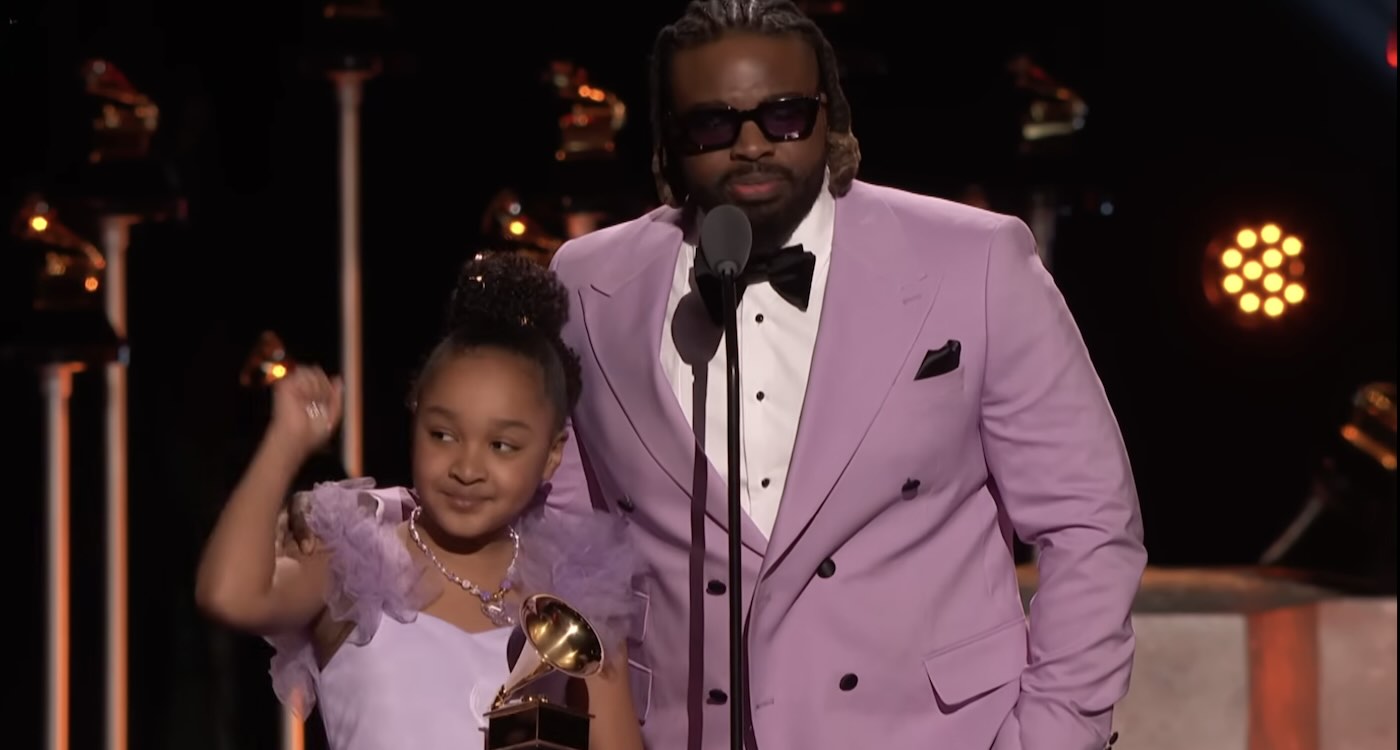
8-Year-Old Maryland Girl Becomes Youngest Grammy Winner Ever with Daddy-Daughter Album

Aura V and her father Fyutch winning 2026 Grammy for Best Children’s Music Album – Broadcast screenshot via Recording Academy / GRAMMYs / YouTube

An 8-year-old Maryland girl and her dad have made history with an album that’s the musical equivalent of sunshine.

Aura V. and her father, whose recording name is FyĂŒtch, won a Grammy this month for Best Children’s Music Album for their LP Harmony.

The triumph makes Aura the youngest Grammy winner in the organization’s history, eclipsing Blue Ivy, who won an award at 9.

“It is an honor to be here today,” Aura said in her acceptance speech on national television. “I was not expecting us to go this far.”

Indeed, Aura and FyĂŒtch’s musical journey has traversed a number of generations. Aura’s great-grandfather played trumpet in the Army band. Her grandfather played saxophone and even contributed his talents to the album.

FyĂŒtch joined a band as a teenager, and after college worked as an arts teacher. But one day, he got frustrated with the lack of educational music for his students. That problem became an inspiration for his own musical career—and the duo’s videos eventually went viral.

“I just started making stuff and putting it up on YouTube and showing it in my classes,” FyĂŒtch told the Washington Post. “I didn’t realize there was such a need. Teachers were searching for content like that.”

Soon afterward, FyĂŒtch became a father and started working as a musician. Aura began attending his shows and became bold enough to appear on stage. They first collaborated on a song when Aura was 4 years old—a track titled “I Am a Cool.”

Then, the duo worked together on the Harmony LP—with song titles like I Am Love, I Am Light and My Daddy—and they won the Grammy Award.

“In 2017, she burst on the scene,” FyĂŒtch raps on My Daddy. “When I held you in my arms, my firstborn, my whole world. I don’t care how old you get, you still daddy’s girl…”

The rest of the songs follow a similar pattern, equal parts uplifting and empowering. The whole album is a perfect blend of dad and daughter, with a hopeful, harmonious message that seems ideally suited for these turbulent times.

“Now more than ever, we need positive vibes in our music, in our culture, in our media,” FyĂŒtch told WMAR. “I see the purpose in it, and the beautiful part is that we get to do it together.”

Similar sentiments of peace and love can be found all throughout the Harmony album, especially on the title track. After a couple choruses featuring dad and daughter, Aura V. takes over.

The lyrics are an inspiring vision for the future—and she can now sing them with the confidence that comes with being the youngest Grammy winner ever.

“Peace, positivity, love, and empathy
This is the recipe for life in harmony…
Can you imagine what this place would be
Read More........

Aamir Khan’s big screen comeback, Sitaare Zameen Par, features an all-star neurodivergent cast – a Bollywood first

Yanyan Hong, University of Adelaide

Bollywood star Aamir Khan’s return to the big screen after a three-year hiatus has been far from ordinary. Sitaare Zameen Par (2025) which translates to “stars on Earth”, is the first major Bollywood production to feature a mostly neurodivergent cast.

A remake of the 2018 Spanish film Campeones, the story follows a mouthy, knuckle-headed basketball coach, Gulshan (Aamir Khan), who is put in charge of a team of players with intellectual disabilities.

The film slowly grows into itself, much like its characters, but ultimately delivers what the trailer promises: a heartwarming, humorous and uplifting celebration of our individual differences.

In an era of blockbuster spectacles, Aamir Khan Productions brings back a kind of Bollywood storytelling we haven’t seen in a while – something sincere, gentle and quietly revolutionary.

Who is Aamir Khan?

Aamir Khan was born in Mumbai in 1965, and started his acting career as a child actor in his uncle’s film Yaadon Ki Baaraat (1973).

Khan is now one of Bollywood’s most enduring and respected figures. He is one of the iconic “three Khans”, alongside Shah Rukh Khan and Salman Khan (the three are unrelated), who have dominated Indian cinema since the 1990s.

But unlike his Khan counterparts, Aamir Khan has carved a unique career path built on both commercial success and socially-driven storytelling.

He is known for championing social causes through cinema. In one 2015 article, media studies professor Vamsee Juluri referred to him as a “national conscience figure”.

Khan’s films don’t just entertain; they challenge norms and often spark national conversations on important issues.

From producing Lagaan: Once Upon a Time in India (2001), India’s Oscar-nominated colonial-era sports epic, to his directorial debut Taare Zameen Par (2007), a moving portrait of a child with dyslexia, Khan’s work often brings underrepresented stories to the mainstream.

His film PK (2014) challenges religious dogma. Meanwhile, Dangal (2016) is a boundary-pushing film based on real-life female wrestlers from rural India, and is also Bollywood’s highest-grossing film of all time.

Beyond the box office, Khan has hosted the TV show Satyamev Jayate (2012–14), which is also the national emblem of India, meaning “truth alone triumphs”.

This show tackles various topics considered taboo in Indian societies, including female feticide, domestic violence and caste discrimination. It has reached millions of households, and even ignited parliamentary debates.

Khan is also popular in other countries, including China, where his films 3 Idiots (2009), Dangal (2016) and Secret Superstar (2017) were massive hits that resonated with audiences for their universal themes.

Sitaare Zameen Par marks his return following the commercial underperformance of Laal Singh Chaddha (2022), an Indian remake of Forrest Gump (1994).

Sitaare (stars) who make the film shine

Directed by R.S. Prasanna, Sitaare Zameen Par enjoyed a strong opening weekend at the box office.

It stars ten individuals with special needs as they prepare for a basketball tournament under the direction of their coach (Khan). This plot alone makes the film a significant entry to Indian cinema, which often ignores or misrepresents disability.

Despite early online trolling and negativity, the film depicts its neurodivergent characters not as victims, or “inspirations”, but simply as people with dreams, struggles and joy.

One line captures this beautifully: “Everyone sticks to their own normal. We each have our own normal.”

Aamir Khan, now 60, plays a key role in the film, but doesn’t dominate it. Instead, his younger co-stars shine. The result is a healing film that celebrates inclusion, while being full of joy and humanity.

Stories that matter

No film is perfect. But it’s hard to dislike a film made with so much compassion.

Bollywood as an industry has increasingly leaned into action-packed blockbusters, as well as nationalist and Hindu-centred narratives (such as in the 2022 film Brahmāstra).

While many of these offer thrills, few deliver the kind of emotional and social depth that once defined Hindi cinema’s global appeal. Much like Taare Zameen Par – a spiritual prequel to the new release – did 18 years ago, Sitaare Zameen Par invites the audience to slow down and reflect.

It prompts neurotypical viewers to see people with Down’s syndrome as part of the same emotional universe as them – and to laugh with, not at them.

In an interview, Khan explains how the film goes further than just neurodivergent representation, to participation:

In [Taare Zameen Par], it’s the teacher, Nikumbh, a supposedly neuro-typical person, who helps the child with dyslexia. In this film, ten neuro-atypical people are helping the coach, Gulshan. I feel Sitare takes the discourse of the first film ten steps ahead, especially in our country where people need to be sensitised to the topic of neurodivergence.

Last week, India’s president, Droupadi Murmu, attended a special screening and met the cast. The visit sent a clear messsage: stories like this matter.

With Sitaare Zameen Par, Aamir Khan returns to what he does best: using film as both a mirror and message for Indian society. While it won’t change the world overnight, it will make viewers see the world, and each other, a little differently.The Conversation

Yanyan Hong, PhD Candidate in Communication, Media and Film Studies, University of Adelaide

This article is republished from The Conversation under a Creative Commons license. Read the original article.

Read More........

Ne Zha 2: the ancient philosophies behind China’s record-breaking new animated film

On the surface, Ne Zha 2: The Sea’s Fury (2025), the sequel to the 2019 Chinese blockbuster Nezha: Birth of the Demon Child, is a high-octane, action-packed and visually stunning animated spectacle, full of hilarious moments and thrilling fight scenes.

But beneath all that, it’s something much deeper: a bold re-imagining of Chinese traditional mythology, cultural history and philosophies.

Unlike Hollywood’s classic hero’s journey, Ne Zha 2 is rooted in Chinese thought, weaving together ideas from Buddhism, Confucianism, Daoism, Mohism, Legalism and more.

Through the story of a baby-faced warrior god who battles demons, it channels centuries of Chinese tradition into something refreshing, relevant and undeniably global.

The film’s success speaks for itself. Directed by Yang Yu (aka Jiao Zi), Ne Zha 2 has shattered multiple global box office records, pulling in more than US$1 billion in China in just one week.

It has entered the top 10 highest-grossing films of all time, and has become the highest-grossing animated film – outperforming Inside Out 2 (2024).

But what makes Ne Zha 2 so compelling beyond its visual spectacle? At its heart, it’s an inspiring story about identity, free will, self-determination and rebellion – ideas that resonate far beyond China.

A child hero forged in myth and philosophy

Ne Zha is a rebellious deity in traditional Chinese folklore – a boy born with immense superpower, who defies both divine and social expectations.

Most people who know of Ne Zha will trace his legend back to Fengshen Yanyi, or Investiture of the Gods, a Ming Dynasty novel that blends mythology with historical elements.

Ne Zha’s true origins, however, trace back to India.

“Ne Zha” is a shortened transliteration of the Sanskrit Nalakuvara (or NalakĆ«bara), an Indian mythological figure who appears in Buddhist and Hindu mythology.

As Buddhism spread to China during the Tang Dynasty, Ne Zha evolved from an intimidating guardian deity into the rebellious, fire-wheeled warrior we know today.

In Ne Zha 2, this “fighting spirit” against authority and hierarchy is taken even further, turning the story into a deeper philosophical exploration of morality, fate, self-worth and power.

Good and evil – a Daoist perspective

One of the most thought-provoking aspects of Ne Zha 2 is how it challenges the idea of good and evil.

In Daoist philosophy, evil and good, often known as Yin and Yang, are not absolute, but are rather shifting, interconnected forces.

Through its two protagonists: the “Demon Pill” (Ne Zha) and his noble dragon prince buddy, “Spirit Pearl” (Ao Bing), the film beautifully reflects this Daoist idea of balance and self-discovery.

Their merging further blurs the line between hero and villain and brings to life a core concept from the 2,400-year-old text Dao De Jing (Tao Te Ching), written around 400 BC by Chinese philosopher Laozi (also called Lao Tzu).

Laozi emphasises that righteousness and villainy aren’t always what they seem. “When the world knows beauty as beauty, there arises ugliness,” he says.

Those we assume to be noble may turn out to be dark inside, while those deemed evil might be fighting for what is right.

Ne Zha’s character in the film embodies this Daoist philosophy. Echoing the Xisheng Jing, The Scripture of Western Ascension, he declares, “My fate is up to me, not the Heaven.”

He is the demon child who is willing to die fighting for his own destiny, proving that even the smallest, most underestimated individual can change the world.

Beyond family bonds: rebirth of Confucianism

In one scene, Ne Zha is struck by the “heart-piercing curse”, a brutal spell that covers his body in ten thousand thorns, causing unbearable pain and keeping him under control by targeting his heart. Ne Zha’s human mother, Lady Yin, clings to him as his thorns pierce her skin – yet she refuses to let go.

It’s a moment of heartbreak, parental love and inner awakening. As his mother takes her final breath, in Ne Zha’s grief, his body shatters into a million pieces. And then, he is reborn.

This is the film’s emotional climax, in which the so-called demon child awakens to “RĂ©n” (benevolence), a core Confucian virtue.

Confucianism teaches that true morality isn’t imposed by rules but arises naturally from within. Ne Zha doesn’t just seek revenge, he awakes to fight for those who have been oppressed, embracing his identity with unwavering resolve.

But perhaps the most profound transformation comes from the dragon prince Ao Bing. As the last hope of his people, burdened by centuries of expectation, he finally makes a choice, not for legacy, not for his ancestors, but for himself.

In this moment, his once-imposing father Dragon King releases his grip: “Your path is yours to forge.”

The weight of tradition gives way to something new, reflecting a changing China where younger generations are defining their own paths.

Wisdom of Legalism and Mohism

Beyond Daoist and Confucian ideals, Ne Zha 2 also weaves in Legalist reform and Mohist resistance. These philosophies challenge rigid hierarchies (or in Ne Zha’s case, “divine order”) and advocate for collective justice.

Across Ne Zha’s three major trials and the climactic celestial-demon war, a brutal truth emerges: those deemed unworthy – whether groundhogs, mystical beings, or ordinary humans – are sacrificed to uphold the elite’s rule.

Take the small groundhogs. Dressed in patched clothes, surviving on pumpkin porridge. They’ve never harmed anyone. Yet, they are mercilessly crushed in the name of celestial balance.

Then there’s Shiji Niangniang, or Lady Rock, a recluse who harms no one. She indulges only in her own beauty and speaks to her enchanted mirror. Yet the heavens brand her a demon, sealing her fate.

A similar cruelty befalls the Dragon Clan and the people of Chentangguan, all caught in a war where they are mere pawns on a celestial chessboard.

Even the last battle is not just Ne Zha’s fight, but a battlefield showing the Chinese spirit of collectivism. Dragons, shrimp soldiers, crab generals, octopus warriors, humans and millions of goblins stand side by side to rewrite destiny.

The celestial-demon war itself plays out like a lesson in Sun Tzu’s Art of War, which states that “All warfare is based on deception.” War is about strategy, resilience and the unstoppable will to rise.

Ne Zha carries the weight of Eastern cultural essence: Daoist balance, Confucian ethics, Mohist resistance, Legalist reform and the strategic wisdom of The Art of War. It is a truly Chinese story, igniting next year’s Oscar buzz and sparking a global awakening to Eastern culture.

Just as Ne Zha is reborn in flames, so too does Chinese animation rise, not by breaking from its past, but by forging a bold future. The Conversation

Yanyan Hong, PhD Candidate in Communication and Media Studies, University of Adelaide

This article is republished from The Conversation under a Creative Commons license. Read the original article.

Read More........

When does an actor stop, and AI begin? What The Brutalist and Emilia Pérez tell us about AI in Hollywood

The Brutalist has drawn attention this week for its use of artificial intelligence (AI) to refine some of the actors’ dialogue.

Emilia PĂ©rez, a musical crime comedy, also used AI to extend lead star Karla SofĂ­a GascĂłn’s vocal range. Her singing voice was blended with that of French popstar Camille, who co-wrote the film.

Earlier this month, Adrien Brody won the Golden Globe for best male actor for The Brutalist for his portrayal of the fictional Hungarian-Jewish Holocaust survivor Låszló Tóth. He is a favourite to win the award at the Oscars, and Emilia Pérez is also a strong contender this awards season.

But should actors be eligible for awards if AI was used to refine a performance?

Can AI make ‘perfect’ possible?

The Brutalist’s editor, DĂĄvid JancsĂł, was the first to discuss the film’s use of AI. A native Hungarian speaker, JancsĂł wanted the Hungarian language dialogue to sound flawless, “so that not even locals will spot any difference”.

Director Brady Corbet has been quick to clarify exactly how AI was used, emphasising the performances of Brody and his co-star Felicity Jones are their own.

In a statement, Corbet explained an AI tool from Ukrainian software company Respeecher was used only to edit the Hungarian language dialogue, “specifically to refine certain vowels and letters for accuracy”.

Corbet insists Brody’s and Jones’ performances in The Brutalist haven’t been replaced. Instead, they consented to a process of their voices being merged with dialogue recorded by JancsĂł to ensure accurate Hungarian pronunciation. Their English dialogue remains untouched.

For Emilia PĂ©rez, the film’s re-recording mixer Cyril Holtz said the process of extending GascĂłn’s range required collaboration from multiple artists.

AI in the film and television industry was a major concern of the 2023 SAG-AFTRA strike – and the fight for protections in the industry is far from over.

While the use of AI here may be limited to refining language portrayal, or extending a singer’s vocal range, it raises broader questions: what level of authenticity and accuracy are we comfortable with? If AI makes “perfect” possible, are we setting “perfect” as the new standard?

The role of the accent coach

Brody and Jones worked with accent coach Tanera Marshall to hone their Hungarian accents for The Brutalist. This accent is used in their English dialogue, which comprises the majority of the film.

As a voice and accent coach, my work involves training and supporting an actor’s voice to meet the demands of performance spaces, character and script. This includes building stamina for healthy, sustainable vocal use and equipping actors with skills to learn different accents.

By working with an accent coach, actors develop a dexterity key for mastering new accents and sustaining them throughout a performance.

Voice and accent work is central to a transformation into a character. Accents aren’t merely about modifying vowels and consonants. They involve rhythm, intonation, melody, and resonance. These elements inform and are informed by the life of the character.

For Brody and Jones, learning a Hungarian accent would have been integral to their process. The accent is inseparable from the portrayal of their characters.

It’s standard practice for actors to re-record some dialogue in automated dialogue replacement (ADR) during post-production. This can address background noise, minor script changes or accent slips. The accent coach typically accompanies the actor in the sound studio to ensure consistency.

However, according to JancsĂł, even ADR wasn’t enough to perfect the Hungarian dialogue in The Brutalist. That’s when AI was introduced.

Accents are expressions of cultural identity, conveying as much about a character as their appearance. There is always a degree of variance as the actor makes the accent and performance their own. That’s part of creating a believable performance.

Unfortunately, filmmakers sometimes overlook the importance of accurate accent portrayal, opting instead for what they perceive as more universally accessible or commercially viable accents, or prioritising other elements of production like pacing or visual effects over linguistic precision.

The Brutalist’s commitment to linguistic precision is commendable. But are we comfortable with AI being the solution?

And the award goes to … AI?

The editing process revealed by The Brutalist and Emilia Pérez may be more common than we realise.

Rami Malek’s singing as Freddie Mercury in the biopic Bohemian Rhapsody (2018) was a mix of Queen master tapes, recordings by Canadian Christian rock singer Marc Martel (known for sounding like Mercury) and Malek’s voice.

Malek still won the best actor Oscar for his performance, even though the vocals were a blend. They were just one element of Bohemian Rhapsody, in the same way the Hungarian dialogue is just one aspect of The Brutalist.

In September 2024, Screen Australia released key principles to guide its approach to AI, prioritising human talent, transparency, ethical design, diversity, equity and inclusion, fairness and responsibility.

Much like these guidelines suggest, in The Brutalist and Emilia PĂ©rez, the actors gave their consent, their talent was prioritised, and the filmmakers were transparent about the process. There’s even an argument that The Brutalist’s dedication to accurate Hungarian representation promotes inclusivity for an underrepresented language in Hollywood.

But it’s a slippery slope. When does refining turn into creating an entire voice through AI? And if accents and vocal ranges become easily modifiable, how long before actors themselves are at risk of redundancy?

The Brutalist is an exploration of complex themes around artistic integrity. Ironically, it may lean on technology that risks undermining the authenticity it strives to achieve. This paradox is worth reflecting on. In perfecting the portrayal of the human experience, are we losing some of its essence?The Conversation

Amy Hume, Lecturer In Theatre (Voice), Victorian College of the Arts, The University of Melbourne

This article is republished from The Conversation under a Creative Commons license. Read the original article.

Read More........

6 reasons why people enjoy horror movies

The creeping shadows and haunting decorations transform the everyday into something eerie at Halloween. And you might be thinking about scaring yourself with a good horror movie.

Grotesque imagery, extreme violence, startling jump scares and menacing characters are common elements, making viewers feel fear, dread and disgust.

We generally aim to avoid these negative emotions in our everyday lives.

So why would some people seek them out, and enjoy them, in horror movies?

1. Fear can be thrilling

There is lots of overlap between the emotions of fear and excitement. In both, stress hormones are released that can produce physical symptoms such as increased heart and breathing rates, sweating and muscle tension. People also feel more alert and “on edge”.

Research has consistently shown people with personalities that crave intense emotional experiences, including fear and excitement, tend to enjoy horror movies.

But for more fearful people, the jump scares and violent scenes can be too intense. This can result in coping behaviours such as looking away or putting their hands over the ears, especially if they are highly immersed in the movie.

Although, if they also happen to enjoy intense emotion, they may still enjoy the thrill of the ride.

Movie makers work hard to get these ‘jump scares’ just right. And viewers enjoy the thrill.

2. There’s a sense of relief

People may enjoy horror movies because of a sense of relief after a scary moment has passed.

Watching a horror movie can be a bit of an emotional rollercoaster, with distinct peaks and troughs of fear and relief over the course of the film.

For example, in the 2017 movie It the main protagonists survive a series of scary encounters with a demonic clown. The scary moments are separated by calmer scenes, prompting a rollercoaster of emotions.

In the classic 1975 movie Jaws, viewers experience relief from the scary moments, only to be scared again and again.

Jaws is a rollercoaster of emotions.

3. They satisfy our morbid curiosity

Many horror movies feature supernatural themes and characters such as zombies, werewolves and vampires. So horror movies can help satiate a morbid curiosity.

The violence, death, destruction and grotesque elements can provide curious people a safe space to explore things that are not safe (or socially appropriate) in the real world.

Horror movies can help people satisfy their curiosity about death. But why are they curious in the first place?

4. We can work out our limits

Horror movies can reflect our deepest fears and prompt introspection about our personal thresholds of fear and disgust.

So some people may enjoy watching them to get a better understanding of their own limits.

Watching horror might also be a way to push personal boundaries to potentially become less fearful or grossed out by things in real life.

In a study one of us (Coltan) conducted, horror movie fans reported less psychological distress during the early months of the COVID pandemic compared with people not identifying as a horror movie fan.

5. They can be social

Some people say the social aspect of watching horror movies with others is a big part of their appeal.

Watching with others might help some people feel safer. Alternatively, this might help amplify the emotional experience by feeding off the emotions of people around them.

Horror movies are also a common pick as a date night movie. Being scared together gives a good excuse to snuggle and take comfort in each other.

6. They give us pleasure in other people’s misery

Horror movies can provide the pleasurable emotion we feel when witnessing the misfortune of others, known as schadenfreude. This occurs most when we feel the person experiencing misfortune deserves it.

In many horror movies the characters that suffer a gruesome fate are only side characters. Much of the time these unfortunate souls are made out to be unlikeable and often make foolish choices before their grisly end.

For example, in the 1996 teen witch movie The Craft, the character Chris Hooker is portrayed as being cruel to women. Then he dies by being blasted out of a window.

Despite the grisly nature of horror movies, a study by one of us (Coltan) found horror fans seem to have the same levels of empathy as anyone else.

In The Craft, viewers enjoy witnessing the misfortune of others, particularly if the character is a ‘baddy’.

What do I make of all this?

Horror movies allow us to confront our deepest fears through the safety of make-believe.

People enjoy them for lots of different reasons. And the precise combination of reasons differs depending on the specific movie, and the person or people watching it.

What is certain though, is the increasing popularity of horror movies, with many to choose from.The Conversation

Shane Rogers, Lecturer in Psychology, Edith Cowan University; Coltan Scrivner, Behavioral Scientist, Arizona State University, and Shannon Muir, Lecturer in psychology, Edith Cowan University

This article is republished from The Conversation under a Creative Commons license. Read the original article.

Read More........

I watched some 40 films at this year’s Sydney Film Festival. Here are my top five picks – and one hilarious flop

This year’s Sydney Film Festival’s rich offerings of films more than compensated for the minor technical issues that led to some screenings being interrupted.

Out of the 40-odd films I saw, here are my top five, along with some notable mentions and three disappointments (including a genuine dud).

1. The Girl with the Needle

Cowritten and directed by Swedish filmmaker Magnus von Horn, The Girl with the Needle is loosely based on the story of notorious early-20th century serial killer Dagmar Overbye.

But this is no procedural true crime film, painstakingly attempting to recreate crimes with historical accuracy. It’s a stylish Danish nightmare dazzling with cinematic acrobatics right from the opening sequence, in which black and white faces hideously morph, looking at the viewer like deranged figures from a hellish circus. It is, indeed, one of the most terrifying films I’ve seen.

The narrative follows the struggles of new mother Karoline (Vic Carmen Sonne) as she gives her baby to Dagmar’s informal adoption agency and begins working with her as a wet nurse, unaware of what’s really going on.

Sonne is as self-assured as ever – and none of the actors put a foot wrong here. Seasoned Danish film star Trine Dyrholm is exceptional in bringing nuance to what could have become a caricaturishly evil role as Dagmar. And Besir Zeciri endows Peter, a war-wounded veteran who can only find employment in a circus freakshow, with an unexpected warmth and tenderness.

The Girl with the Needle features some of the most distressing sequences one could find in a commercial film. Its meticulously rendered shades of German expressionism never distract from its smorgasbord of horrors, offering an almost unbearably bleak vision of the world in the aftermath of the Great War. If only all films were this good!

2. Dying

I’d normally suppress a yawn if you told me I had to sit through a three-hour social realist drama about the everyday difficulties of a bourgeois German conductor and his family. Yet writer-director Matthias Glasner’s Dying is a near perfect film (no surprise it won four prizes at the German Film Awards).

The film is complex and engrossing – deeply sad in places and hysterical in others – formally controlled, but underpinned by an anarchic sensibility. It is life-affirming without any skerrick of sentimentality.

Lars Eidinger is astonishingly good as maestro Tom, who is trying to keep his career on track as his family life crumbles around him. He is matched by Lilith Stangenberg, mesmerising as his unhinged sister Ellen. Robert Gwisdek is equally exceptional as the highly strung composer and friend Bernard, while Corinna Harfouch anchors the film’s first section as Tom’s far from maternal mother, Lissy.

At one point, Ingmar Bergman’s 1982 period film Fanny and Alexander is playing on the TV (Tom watches it every Christmas). Even though Dying feels like a contemporary film committed to interrogating the difficulties of being in the modern world, there’s something of late Bergman here as it unfolds across its epic length.

It is a three-hour film about middle-class life, but like a great 19th-century novel, it never feels long. The fact that nothing particularly extraordinary happens is testament to how well-made the film is.

3. Kill

Director Nikhil Nagesh Bhat’s Indian action film Kill is cheesy, sentimental and at first seems remarkably silly.

Commando Amrit, played by beefy TV star Lakshya, is travelling to New Delhi by train with his buddy, fellow commando Viresh (Abhishek Chauhan). His true love Tulika (Tanya Maniktala) is also on board and has recently become engaged to another man through an arrangement by her wealthy father, Baldev Singh Thakur (Harsh Chhaya), who happens to own the train company. When a group of 30-plus bandits led by the charming but ice-cold Fani (Raghav Juyal) move to rob the train, Amrit must defend Tulika, her family and the rest of the passengers.

When the title card appears 40 minutes into the film, suddenly emblazoned on the screen, it seems like a distracting quirk at first. But it begins to make sense as the train rolls on. All of the violence and bone-crushing action of the first section is mere preamble, leading to a point of transition from an extremely violent but fun action film, to a much darker – and bloodier – revenge film.

Kill is an exceptionally well-wrought genre film. The kinetic and balletic action recalls the golden era of Hong Kong action cinema, but with hammers, daggers and sickles instead of guns and the frenetic staging of hand-to-hand combat instead of poetic slow-motion footage. It is also a great example of a film being more than the sum of its parts. No element is perfect, yet they come together to transcend these limitations, its flow reaching sublime levels by the end.

There’s also an undercurrent of sadness throughout. We see an India of haves and have-nots, of families of bandits struggling to survive and of the supreme violence sustaining the social and political order. As Fani says to Amrit near the end: “Who kills like this? I killed four of your people. You finished off 40 of my family. You’re not a protector. You’re a monster. A fucking monster.” The title says it all.

4. Super/Man: The Christopher Reeve Story

Biographical films about celebrities inevitably feel gossipy. Ian BonhĂŽte and Peter Ettedgui’s Super/Man: The Christopher Reeve Story is no exception. But it is so well made (and well-resourced, one would imagine, as it’s produced by DC) that it moves beyond its tabloid-like qualities.

Interviews with Reeve’s friends and colleagues, including Susan Sarandon, Glenn Close and Jeff Daniels, are interspersed with home footage shot by Reeve and his family throughout his career and during his recovery from the near-fatal riding accident that left him paralysed and breathing through a respirator for the rest of his life.

Reeve’s close friendship with “brother” Robin Williams assumes central importance, with the film implying the two men were so emotionally dependent on each other that Williams would probably still be alive if Reeve hadn’t died in 2004.

But the most interesting parts of the film involve carefully assembled archival footage looking at how Reeve’s decision to play Superman negatively impacted his career and personal life. He never starred in another profitable film, and his father and colleagues such as William Hurt loathed his decision to play a comic book character.

This is counterpointed with his post-accident career as a director and disability advocate. Interviews with Reeve’s children add a genuinely tragic sense of pathos to this slick, well-made and emotionally exhausting “true Hollywood” story. It’s everything one could want from such a documentary.

5. Kneecap

Cowriter-director Rich Peppiatt’s Kneecap is a riotous, irreverent biopic following the career of Belfast drug-dealers MĂłglaĂ­ Bap and Mo Chara as they team up with high school music teacher DJ PrĂłvai to become the first Irish-language rap group, Kneecap.

The real Kneecappers cowrote the film and play themselves and, given none of them are actors, do so remarkably well. They’re joined by Irish heavyweights Josie Walker, playing the detective who has it in for them, and Michael Fassbender, playing MĂłglaĂ­’s father, an old-school Irish radical who has been on the run for the past few decades.

The film depicts their hedonistic drug use and anarchic disregard for the law in the context of their radical political motivation to speak Irish against the colonial English. And while it may be a bit cartoonish in its presentation of Belfast’s history and the struggle to keep Gaelic alive, it is a music biopic after all.

Kneecap is violent, coarse and laced with infectiously good humour – a genuinely fun film, buoyed by its charismatic stars and lively style. Only the most stringent moralist wouldn’t enjoy this one!

Notable mentions

It’s extremely difficult to pick a top five when 15 or so of the films I saw were standouts. And this is testament to the quality of the festival’s selection.

It was a pleasure watching heavyweight Sean Penn go head-to-head with Dakota Johnson in writer-director Christy Hall’s Daddio, even if the story takes an uninteresting turn in the final third. Despite the banality of the premise – a New York cabbie chats with a passenger – and the inanity of some of the dialogue, this romantic ode to urban life in all its alienated, fluoro-lit techno glory is so well crafted that we happily go along for the ride.

Equally affective is the melancholic and beautifully performed Puan, a restrained comedy set in a University faculty in Buenos Aires. Puan could easily make my top five, as could AndrĂ© TĂ©chinĂ©’s My New Friends), an offbeat French melodrama starring Isabelle Huppert as a disillusioned police officer who becomes friends with an anti-cop activist in the suburbs.

Poor performers

Of the lot, I only found three films disappointing.

The first, Among the Wolves, is a Belgian-French documentary in which a photographer and illustrator lie waiting in a tiny, makeshift building to encounter wild wolves. While some of the footage is striking, the film is let down by its scientific inaccuracy, such as references to the “alpha male” wolf – a term and concept that has long been discredited. Such innacuracy is a cardinal sin for a documentary, which is supposed to inform the viewer.

Though critically acclaimed, Hollywood horror film The Substance – a story of an ageing entertainer who turns to a mysterious substance to stay young (with unsurprisingly horrific ramifications) – feels neither new nor particularly interesting. And while it’s great to see Demi Moore and Dennis Quaid back on the big screen, their caricaturish characters make the whole thing seem like a boring joke: an inflated short film that is both irritatingly silly and painfully didactic.

But rarely does a film so resolutely reaffirm a sense of the absurd hubris of humans as Francis Ford Coppola’s self-financed mega-flop, Megalopolis. This cartoonish, incoherent mess set in a dystopian version of the United States, “New Rome”, is howlingly bad in places.

Imagine the worst parts of The Hunger Games and Fellini Satyricon (1969) crossed with Ayn Rand’s Atlas Shrugged and The Fountainhead and you begin to get a sense of the kind of self-indulgent, heavy-handed nonsense that is Megalopolis.

Side-splittingly funny moments come courtesy of bad dialogue (“Utopias become dystopias,” actor Giancarlo Esposito says at one point with a straight face). And stilted acting by Adam Driver and Aubrey Plaza had the (remaining) audience in stitches. Megalopolis is like one of the great fiascos from days gone by – the 21st century’s Heaven’s Gate – and there is definitely something delightful about the existence of this US$120 million (roughly A$180 million) flop.

But as a dud, Megalopolis is the outlier. And in a year following Barbie, Oppenheimer, Napoleon and Poor Things (talk about heavy-handed cinema), much of the menu of this year’s Sydney Film Festival once again proves there are still good filmmakers out there making good films.The Conversation

Ari Mattes, Lecturer in Communications and Media, University of Notre Dame Australia

This article is republished from The Conversation under a Creative Commons license. Read the original article.

Read More........

The steamiest movie of the year has almost no sex in it. How did Challengers do it?

At the crux of the critical response to Luca Guadagnino’s new movie Challengers is one word: “sexy”.

The film charts a love triangle between three up-and-coming tennis players: Tashi (Zendaya), and her dual (and duelling) admirers. Art (Mike Faist) and Patrick (Josh O'Connor) are close friends, and vying for the attention of the same woman has its risks. Tashi tells us more than once she is “not a homewrecker” – though she seems to enjoy the power that comes with being desired.

It’s surprising that, in an age when pornography has never been so readily accessible, saucy movies can still create such a buzz. It’s perhaps even more surprising Challengers all but eschews sex entirely, yet every frame feels laden with it. The film is full of kinetic energy, but it’s not between character’s bodies.

So why is Challengers causing such a stir?

The state of play

For starters, Challengers is riding a welcome wave of rebellion.

As film expert Barry Forshaw points out, sex has been on a sharp decline in mainstream cinema in recent decades. Reasons include pressure to export to markets even more conservative than the United States (most notably China).

Hollywood has also been gravitating towards huge-budget superhero franchise films rather than mid-budget dramas that might be more likely to tell romantic stories. #MeToo has also been cited as a cultural phenomenon that has seen sex and nudity in high-grossing US film decline almost 40% since 2016.

But the tide is changing. Psychosexual thriller Saltburn (2023) and Frankenstein fantasy Poor Things (2023) generated a buzz for their sex scenes. Kristen Stewart’s performance in steamy lesbian crime thriller Love Lies Bleeding (2024) has reminded audiences what it feels like to be hot under the collar.

With this raft of films, some are speculating Hollywood’s latest era of chastity may be over.

But where these films are comparatively explicit, in Challengers, sex is illusive – it’s interrupted, elided, or happens off-screen.

So what makes a film ‘sexy’?

No, it’s not just sex. And not all film sex is sexy.

As film scholar Linda Williams points out, it’s complicated. “Sex in movies is especially volatile: it can arouse, fascinate, disgust, bore, instruct, and incite,” she writes.

Or, as Claes Bang and Elisabeth Moss’ painfully awkward encounter taught us in Ruben Östlund’s The Square (2017) – it can make us cringe. In one of the most unsexy scenes imaginable, the pair’s one night stand is deliberately choreographed to make it as unflattering (and hilarious) as possible. Östlund draws out the discomfort even after the sex is finished.

Paul Verhoeven’s Razzie Award winning romp Showgirls (1995) is also evidence there is more to “sexy” than beautiful people and a dash of desire.

As famous for its absurdity as for its explicitness, the movie about an exotic dancer’s rise to stardom in Las Vegas has all the ingredients of a sexy film.

But the finished product is more likely to elicit laughter than fireworks. In one memorable scene, Kyle MacLachlan and Elizabeth Berkley share an evening of passion in the pool so strenuous fans have playfully dubbed it “when flipper meets stripper”.

On the other hand, when the right balance is struck, a sex scene can be iconic. Some readers will recall the rumours that scene in Don’t Look Now (1973) was a little too convincing. Others may remember George Clooney and Jennifer Lopez in the sequence paying homage to it in Out of Sight (1998).

When Ryan Gosling looks at Emma Stone in Crazy Stupid Love (2011) or La La Land (2016), we believe it. When Andrew Scott holds Paul Mescal in his gaze in All Of Us Strangers (2023) or when Barry Keoghan looks at, well, anyone in Saltburn, embers ignite. It is testament to her talent as a performer that Scarlett Johansson’s smouldering voice is enough to keep us enthralled in Her (2013) even though she never appears on screen.

Chemistry is essential, but it’s hardly a paint-by-numbers exercise.

Does a film need sex to be ‘sexy’?

The response to Challengers certainly suggests not. Guadagnino, whose previous films include A Bigger Splash (2015) and Call Me By Your Name (2017), has built a reputation for sensual cinema.

Those familiar with his work will know it doesn’t take on-screen hanky-panky to make a film alluring. The camera’s caress in I Am Love (2009) is enough to make Tilda Swinton eating a prawn feel erotically charged.

With Challengers, Guadignino does for the erotic drama what The Texas Chain Saw Massacre (1974) did for horror. He promises the audience everything but knows power is in suggestion. Challengers’ achievement is in capturing the dynamics of sexual tension. It traces the power plays, negotiations, mistrust and rivalry in which an exchange of looks feels as graphic as what those looks imply.

Then, when the pressure is at fever pitch but unrealised, characters must channel it into their game. Cinematographer Sayombhu Mukdeeprom shoots tennis matches with an intimacy rivalling any sex scene. Vivid close ups, slow motion, sweat-soaked: these matches are proximate, tense – and the closest Challengers gets to letting off steam.

In an era when online pornography leaves nothing to the imagination, audiences have not lost their appetite for sexy movies. These films create cultural moments people love to feel a part of.

In the 1990s it was Sharon Stone’s famous leg-crossing in Basic Instinct. Today’s audiences have Keoghan’s scandalous bath scene in Saltburn.

Our conversations about these movies, the sex and what that sex means, are more likely to occur on TikTok than around the water cooler.

But it’s precisely because movies are fantasies we experience collectively that we continue to need them.The Conversation

Alison Taylor, Assistant Professor, Bond University

This article is republished from The Conversation under a Creative Commons license. Read the original article.

Read More........

From Deewana to the success of Pathaan: the global impact of Bollywood’s enduring king, Shah Rukh Khan

In the ever-evolving landscape of Indian cinema, where movie stars rise and fall, one name has remained etched in the hearts of millions for more than three decades – Shah Rukh Khan, also known as “SRK”.

Fondly known as the King of Bollywood, Khan’s cinematic influence on Indian cinema is a story that transcends borders and generations.

As people celebrate his remarkable return to the silver screen in 2023 after a four-year hiatus, marked by the resounding global success of Pathaan, it’s the perfect time to embark on a journey through his illustrious career.

Here, I explore the timeless Indian classics that catapulted him to stardom and look at the excitement surrounding his latest release, Jawan (in cinemas now), and the highly awaited Dunki.

So, for those who may not be familiar, what is Bollywood?

Bollywood, India’s cinematic powerhouse based in Mumbai, is where the majority of Hindi-language films are made. It’s like India’s own Hollywood.

But Indian cinema isn’t just about Bollywood. Regional film production centres across India like Kollywood (the Tamil film industry) and Tollywood (Telugu film industry) add their unique colours. India is now the global leader in film outputs, with an astonishing 1,500 to 2,000 films released each year in more than 20 different languages.

And the 57-year-old King Khan has been a pillar of Bollywood ever since he broke through with the 1992 film Deewana.

SRK’s cinematic influence on Indian cinema

To truly grasp SRK’s impact on Indian cinema, let’s rewind to the 1990s – a golden era of Bollywood brimming with iconic Indian films and unforgettable performances.

During this time, a young man without any industry connections in a world built on family ties was about to shape the future of Indian cinema.

In 1995, Dilwale Dulhania Le Jayenge hit the screens. Directed by the legendary Aditya Chopra, this film told a captivating love story transcending all boundaries.

SRK’s portrayal of Raj wasn’t just a character, it was emotion.

With its enchanting music and a storyline that captured the essence of young love and tradition, the film became a sensation within and beyond India, uninterruptedly running for more than two decades (it’s still running today!) in Mumbai’s Maratha Mandir theatre.

Dilwale Dulhania Le Jayenge’s staggering success made SRK a star, or perhaps it was the other way around: SRK made DDLJ.

His later films like Dil Se (1998), Kuch Kuch Hota Hai (1998) and others solidified his status as the king of romance. These timeless classics not only tugged at heartstrings, but also paved the path for his incredible cinematic journey.

In the 2000s, he continued to shine with family and romantic hits like Kabhi Khushi Kabhi Gham (2001) and Kal Ho Na Ho (2003). He experimented with versatile roles in films like Swades (2004) and Chak De India (2007), while venturing into film production with his own Red Chillies Entertainment Limited.

As the years rolled on, SRK represented Indian cinema globally with films such as Jab Tak Hai Jaan (2012) and Chennai Express (2013). However, he faced a challenging period in the late 2010s when his films Jab Harry Met Sejal (2017) and Zero (2018) failed miserably at the box office, leading many to wonder if his time had passed.

The return of the king

Jump to 2023. After a four-year hiatus from the big screen, the king returned with three promised films in one year, and audiences worldwide eagerly awaited to see if his magic still held sway.

Pathaan, with its phenomenal dance, didn’t just meet expectations – it smashed them. It broke box office records and earned global acclaim, showcasing SRK’s unparalleled star power.

This action thriller has become India’s highest-grossing Hindi film ever, and the first Bollywood film to earn more than US$100 million (A$155 million) without a release in China.

Pathaan’s success was a testament to the love fans hold for SRK, reaffirming his charisma as irresistible as ever.

Anticipation for Jawan and Dunki

Jawan, which premiered in Australia on Sept. 7, became the first Indian film ever to claim the top spot in both the Australian and neighbouring New Zealand box offices on its first day. Trailers for the film amassed millions of views, and fans dissected every snippet, making the buzz around it electrifying.

And then there is Dunki, directed by the acclaimed Indian director Rajkumar Hirani (whose 2009 film 3 Idiots happens to be my personal favourite). The mere announcement of this collaboration sent ripples through the industry.

Love beyond borders

Beyond the box office figures and his countless film awards, SRK’s films carry a profound cultural significance. They often delve into deeper social and emotional themes, resonating not just with Indian audiences, but worldwide.

Dear Zindagi (2016) explores mental health and personal growth, breaking stereotypes about therapy and self-discovery.

My Name Is Khan (2010) addresses the complexities of racial profiling and discrimination in the post-9/11 world. Its iconic line “My Name is Khan, but I am not a terrorist” transcended national borders and touched hearts across the globe.

In Swades (2004), SRK’s heartfelt portrayal of a NASA scientist’s return to his homeland mirrors the Indian diaspora’s yearning for roots and ignited a dialogue on the duty of reconnecting with one’s homeland.

Calling himself a dream seller who peddles love to millions of people in his 2017 TED talk, Khan’s influence is proof to the enduring power of storytelling, and the ability of cinema to connect people across cultures.

He is one of Time’s 100 most influential people of 2023. His fans even set a Guinness World Record for the most people performing his iconic pose.

Many have labelled SRK’s 2023 as a comeback, but the superstar himself seems not to believe in this notion. Quoting a line from the Hollywood film Gattaca (1997), SRK tweeted, “I never saved anything for the swim back”.

As fans eagerly flock to see Jawan and await Dunki, it’s a reminder he continues to “move forward” and redefine what it means to be a superstar, not just in Bollywood, but on the globe stage. He shows us the magic of cinema knows no boundaries, and neither does the allure of Bollywood’s king.The Conversation

Yanyan Hong, PhD Candidate in Communication and Media Studies, University of Adelaide

This article is republished from The Conversation under a Creative Commons license. Read the original article.

Read More........