Mom Priyanka Chopra receives a special gift from daughter Malti
Kim Kardashian 'doesn't believe' in giving kids homework
.jpg)
Juhi Chawla shares son’s birthday with throwback pictures, plants 500 trees for his well being
Johnny Depp opens up about his relationship with his kids
Cameron Diaz: You’re a different person after you have children
Laxmi aayi hai’: B-Town congratulates Ranveer, Deepika on arrival of their 'queen'
Be Free: A child’s prayer for freedom and life
“Be Free” – a testimonial song by Lemuel J Philip was released on Monday evening in his YouTube channel @LemuelJPhilip. This is Lemuel’s first song.


Frozen offered a new way to look at Disney princesses. But the best leader was the villain
The recent release of Frozen in te reo Māori, along with the film’s impending ten-year anniversary, is putting Elsa and Anna back into focus.
Frozen’s 2013 release marked a significant shift in the way Disney told stories about princesses to explore modern gender values and a richer mix of personal anxieties.
Driven by their personal turmoil, Anna and Elsa forget to lead the people of Arendelle. That job falls to the film’s villain, Hans, who provides the best, albeit self-serving, example of a good leader.
Flipping the script
Unlike the Disney princesses of earlier films, Frozen flipped the audience’s expectations of the genre.
Queen Elsa did not need a romantic male partner to complete her journey and Princess Anna’s handsome Prince Hans turned out to be a villain. Love at first sight is shown to be an illusion, replaced by the power of sisterly love and self-acceptance.
Elsa’s need to break free from parental and societal expectation has found resonance in communities as diverse as those with eating disorders and Japanese kyariaūman (career women).
The LGBTQ+ community identified strongly with Elsa’s struggle and celebrated the movie’s queer subtext. In contrast, it was decried by some Christian conservatives.
Absent leaders
While the story retained many of the elements of Disney’s canon – royalty, magic and Anna’s romance – it also expanded the emotional experiences of Disney’s princesses to be more directly relatable to a modern global audience.
Yet Elsa and Anna’s story moves so far beyond the traditional elements of a Disney fairytale that their status as royalty is almost irrelevant to the narrative.
From the perspective of leadership, Elsa and Anna provide questionable role models.
Elsa is so afraid of what people will think of her she runs away from her own coronation. Anna’s impulsiveness is so apparent even Kristoff openly questions her judgment.
Elsa is convinced she cannot help anyone but herself. Anna gives both her hand in marriage and control of the kingdom to a man she just met.
Most of the male characters offer similarly poor examples of leadership. The Duke of Weselton is presented as a snivelling villain with a Napoleon complex. King Agnarr is a well-meaning parent but raises his daughters in isolation from their subjects and from each other.
Self-interested prince as the best ruler
The best depiction of leadership is provided by Prince Hans.
When Elsa’s magic generates an eternal winter, it is Hans who ensures the people are warm and fed. When he finds Elsa, he implores her to be better than the henchmen sent by Weselton to kill her.
Given the existential threat to the kingdom and having exhausted all other options, Hans’s decision to kill Elsa in the hope of breaking the spell and saving the kingdom is not unreasonable.
Of course, his motivations are revealed to be sinister. His good deeds were intended to fool Anna and the audience. He does not love Anna and leaves her for dead.
Hans’s downfall comes once Anna is found alive and Elsa learns how to break the spell of winter herself. His motivations are certainly not good, but this is irrelevant from the perspective of the people of the kingdom.
Unlike Elsa and Anna, Hans is focused on the danger to the kingdom. Elsa and Anna abdicate their responsibilities in favour of their personal needs, whereas Hans tries to fulfil his personal needs by leading the kingdom.
Only when Hans is proven to be dishonest do the officials and foreign dignitaries reject him. We are not shown what the kingdom’s ordinary people think of his actions.
Inexplicably, the people of Arendelle accept Elsa’s return despite the fact she ran away and almost killed them all with her magic.
The Machiavellian approach to leadership
Hans is Machiavellian in the way most understand the term: a leader willing to do anything to achieve their goals.
However, Niccolò Machiavelli’s The Prince (1532) did not advocate for totally amoral and underhanded leadership. Instead it warned against perfectly virtuous leadership.
The early modern Italian diplomat argued successful leaders should be virtuous, but may also need to be flexible in their principles as the perfectly good will be undone by those who are not good.
[…] the way we live is very different from how we ought to live, and he who abandons the way things are done for how they ought to be done brings about his own downfall rather than his preservation: that man who wishes to be at all times good must come to grief amongst so many who are not good.
Such ideas are certainly too morally grey for a children’s story, but there are elements of successful leadership children can understand: difficult choices are inherent in life.
Real queenship (or kingship) involves personal sacrifice and a duty to the people. Disney has made princesses more than simply destined for marriage to a handsome prince, but it still needs to show princesses can truly rule as queens.![]()
David Belgrave, Lecturer in Politics and Citizenship, Massey University
This article is republished from The Conversation under a Creative Commons license. Read the original article.
Ahmedabad International Children Film Festival Celebrates Its 5th Edition
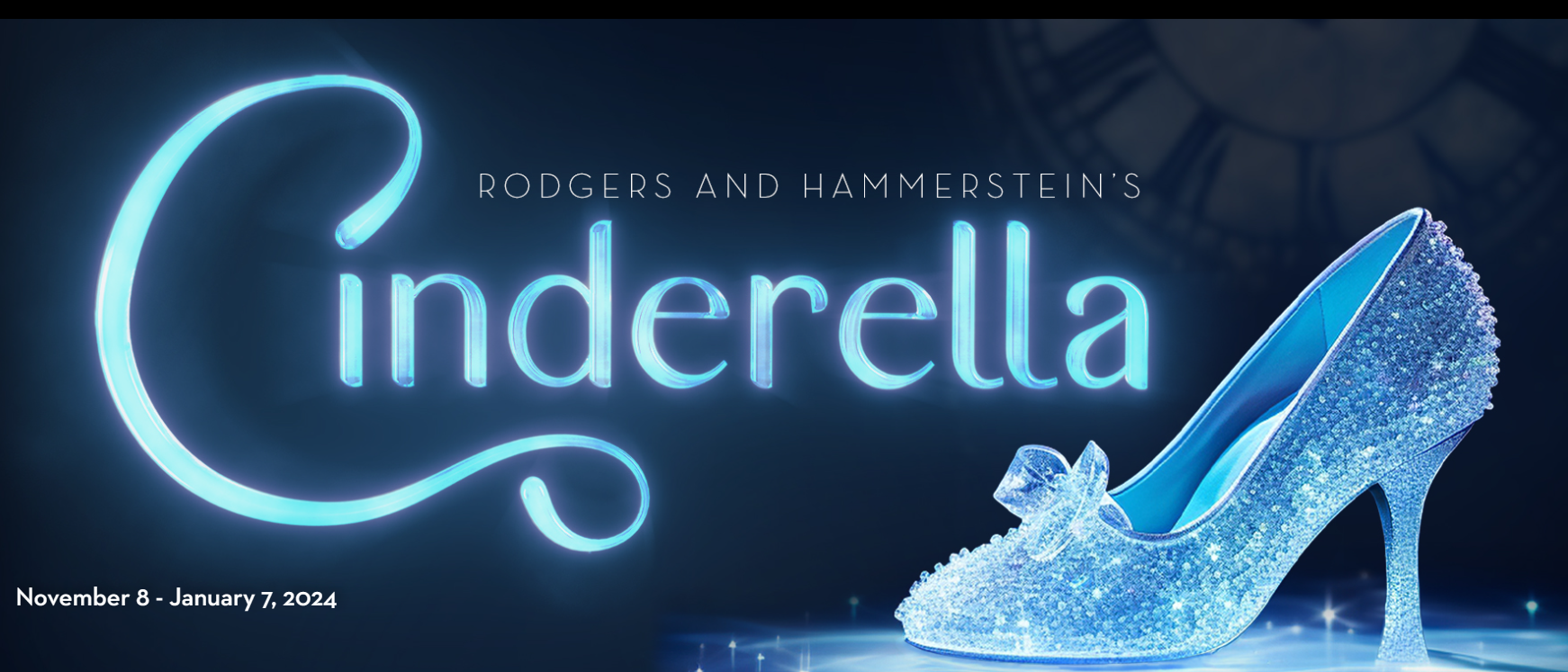
Cinderella – The Musical at Drury Lane Theatre, a Chicagoland Staple!
‘Harry Potter And The Sorcerer’s Stone’ crosses $1B mark

Sumeet Vyas, Ekta Kaul blessed with baby boy
Managing screen time while kids are home

Space Animation: Sentinel-1a from Operation Copernicus
Soha Ali Khan paints school wall for child education
Disney's Frozen Review 2013, has Disney finally reclaimed its crown?

story of two sisters who clash when Elsa (Idina Menzel) accidentally reveals her ability to control snow and ice, plunging their kingdom into an eternal winter as she retreats into exile. As Anna (Kristen Bell) races to find her sister and restore order to Arundell, she is joined by Kristoff (Jonathan Groff), a charmingly rugged ice harvester who travels with a trusty reindeer companion and Olaf (Josh Gad), a surprisingly likable snowman brought to life by Elsa's magic. So far so Disney right? True, Frozen does

contain many of the ingredients common to most Disney films - beautiful princesses, dashing princes, comedy sidekicks - but what their latest offering excels at is turning these conventions on their head without ramming it in your face. Not like a certain green skinned ogre we all know and love then... Take the lead character for example. Sure, Anna is a pretty princess searching for love but once her character is established, the script takes delight in confounding the audiences expectations. Despite a royal


as Fontana) clean cut as he seems? Or is Elsa the real villain of the piece, holed up in her enchanted castle of ice as the population starve around her, caught in the snowstorm she created? It's refreshing to watch a Disney animation that doesn't dumb itself down for younger audiences. Instead, Frozen remains relevant through it's fresh humour and feisty lead characters who don't try too hard to be edgy, unlike the ill fated protagonists of Treasure Planet and even Lilo & Stitch. Love or hate it, all Disney characters
have an almost psychotic need to express their emotions in a loud and unabashed Broadway style number. Things are no different here, but while many animated films feel clunky when singing is introduced, this has always been a huge strength of Disney animation and I'm happy to say that after some forgettable tracks from Tangled, the studio is back on top form with a songbook created by the husband and wife songwriting team of Robert Lopez and Kristen Anderson-Lopez... they worked together
on The Book of Mormon and Avenue Q. Obviously! Menzel is clearly the big talent in the singing stakes and her show stopping number Let It Go is destined to become a Disney classic, bravely turning what could have been a villainous moment into an anthem of empowerment. Bell surprisingly holds her own against the Broadway powerhouse and Groff brings a likable charm to love interest Kristoff but the surprise for me was Gad, whose rendition of In Summer explores what it's like to long for sunshine when

you're made of snow. Frozen is a magnificent film, one that will be loved by generations to come, so it's fitting that the short film preceding it pays homage to what came before. Get A Horse! is a Mickey Mouse short drawn in the style of Disney movies from the 1920s which plays with our preconceptions of animation in a beautifully simplistic way, continuing the impressive streak started by Paperman last year. While the CGI of Frozen is absolutely stunning, Get A Horse! made me hanker still for traditionally hand-drawn animation. Hell, I could write a 1000 word review just on the short alone! But that's not what we're

here for...Not only is Frozen a million times better than the latest Pixar films, it's also a huge improvement on both Princess & The Frog and Tangled, two films I already held in high regard. Ladies and gentlemen, forget Dreamworks. Pixar's had it's day. The second Disney Renaissance has finally arrived in full force and I feel like an over excited 6 year old all over again, eagerly waiting with bated breath to see what will come next from the Disney studios. Source: Article, Image: flickr.com, photobucket.com
Julie Andrews as the Blue Fairy
Breslin, 11, as Fira from the Disney Fairies. Dame Julie, who has a long-standing relationship with Disney and played Mary Poppins in 1964, said: "It's a symbolic photograph of all the wonderful Disney images. "It's pixie dust, magic and anointing a new little fairy in the form of Abigail. It was just a charming concept." Source: http://animatedfilmreviews.filminspector.com
Julianne Moore and Michael Phelps for "Ariel the Little Mermaid"

shall we say, creative dissonance. The others in the background are there because Annie Liebovitz wanted them there, as they also are Olympians or other top swimmers. Perhaps Liebovitz had Olympic fever or something. In any event, the shot turned out fine and, most importantly of all, Ariel the has her distinctive red hair. Source: Article
Priyanka Chopra wows in aviator chic at the premiere of ‘Planes’
After launching her celebrity milkshake Exotic at the famous Millions of Milkshake in LA and hobnobbing with the American Idol judge Randy Jackson and singer Paula Abdul, the actress was seen setting the red carpet ablaze with her glam look at the premiere of her Disney film Planes.
get-up was her vintage styled side-parted wavy pinup hairdo. Though there are fashionistas who may think that her retro hair didn’t complement the dress, for us the hairstyle took her simple jumpsuit look to a new level, and suited her personality to a T. Not to be missed her berry lips -- subtle as well as
The Epic' (2013) Movie Review
cinema full of kids who laughed (though not uproariously) at the jokes, shut up for the emotional parts and I didn't see any particularly miserable children on the way out. There's certainly a convincing argument to be made that if a film aimed at children succeeds in entertaining them then it's a success. So what separates, say, Finding Nemo and Shark Tale? What's the quality that makes Kung-Fu Panda so much fun to watch and Bee Movie so dire? To young children the difference is intangible, but even so, deep down they must sense the difference in quality. Why else would films like Wall-E be so beloved and Robots (by the same director as Epic) be so forgotten? Epic firmly lands on the Shark Tale and Bee Movie side of this argument. It's an aggressively generic animated film by numbers, populated by stereotypes with the vaguest possible emotional motivation, comedy animal sidekicks and a yawning void when you search for

wondering what the film would have been like if there'd been someone with a distinct artistic vision behind it, or a script that subtly raised issues even slightly more complex than growth = good and decay = bad. One of my favourite recent trends in films aimed at children is the absence of unambiguous evil. My favourite example is Pixar's Ratatouille, where villain Anton Ego undergoes a total transformation purely through the talent and good nature of the protagonists. More complex examples are found throughout the work of Hayao Miyazaki, with films like Princess Mononoke presenting multiple sides of a conflict in world populated with characters with actual reasons behind their actions other than that they're

to live in their sunny tree houses? But all of this this is swept neatly under the rug in favour of a dull Manichaean conflict that has no tension, no intelligence and no thought behind it. Perhaps this would be tolerable if Epic was at least entertaining to look at, but you've seen this all before. When you consider the leap forward in animation techniques that Brave represented last year, it even looks slightly dated, especially in regards to character design (specifically their hair). There are some interesting elements in the action scenes, one chase scene that exploits the difference in time between the fairy world and the human race approaches a low level of fun, and the brief scenes where the shrunken Mary Katherine