Ne Zha 2: the ancient philosophies behind China’s record-breaking new animated film

On the surface, Ne Zha 2: The Sea’s Fury (2025), the sequel to the 2019 Chinese blockbuster Nezha: Birth of the Demon Child, is a high-octane, action-packed and visually stunning animated spectacle, full of hilarious moments and thrilling fight scenes.

But beneath all that, it’s something much deeper: a bold re-imagining of Chinese traditional mythology, cultural history and philosophies.

Unlike Hollywood’s classic hero’s journey, Ne Zha 2 is rooted in Chinese thought, weaving together ideas from Buddhism, Confucianism, Daoism, Mohism, Legalism and more.

Through the story of a baby-faced warrior god who battles demons, it channels centuries of Chinese tradition into something refreshing, relevant and undeniably global.

The film’s success speaks for itself. Directed by Yang Yu (aka Jiao Zi), Ne Zha 2 has shattered multiple global box office records, pulling in more than US$1 billion in China in just one week.

It has entered the top 10 highest-grossing films of all time, and has become the highest-grossing animated film – outperforming Inside Out 2 (2024).

But what makes Ne Zha 2 so compelling beyond its visual spectacle? At its heart, it’s an inspiring story about identity, free will, self-determination and rebellion – ideas that resonate far beyond China.

A child hero forged in myth and philosophy

Ne Zha is a rebellious deity in traditional Chinese folklore – a boy born with immense superpower, who defies both divine and social expectations.

Most people who know of Ne Zha will trace his legend back to Fengshen Yanyi, or Investiture of the Gods, a Ming Dynasty novel that blends mythology with historical elements.

Ne Zha’s true origins, however, trace back to India.

“Ne Zha” is a shortened transliteration of the Sanskrit Nalakuvara (or NalakÅ«bara), an Indian mythological figure who appears in Buddhist and Hindu mythology.

As Buddhism spread to China during the Tang Dynasty, Ne Zha evolved from an intimidating guardian deity into the rebellious, fire-wheeled warrior we know today.

In Ne Zha 2, this “fighting spirit” against authority and hierarchy is taken even further, turning the story into a deeper philosophical exploration of morality, fate, self-worth and power.

Good and evil – a Daoist perspective

One of the most thought-provoking aspects of Ne Zha 2 is how it challenges the idea of good and evil.

In Daoist philosophy, evil and good, often known as Yin and Yang, are not absolute, but are rather shifting, interconnected forces.

Through its two protagonists: the “Demon Pill” (Ne Zha) and his noble dragon prince buddy, “Spirit Pearl” (Ao Bing), the film beautifully reflects this Daoist idea of balance and self-discovery.

Their merging further blurs the line between hero and villain and brings to life a core concept from the 2,400-year-old text Dao De Jing (Tao Te Ching), written around 400 BC by Chinese philosopher Laozi (also called Lao Tzu).

Laozi emphasises that righteousness and villainy aren’t always what they seem. “When the world knows beauty as beauty, there arises ugliness,” he says.

Those we assume to be noble may turn out to be dark inside, while those deemed evil might be fighting for what is right.

Ne Zha’s character in the film embodies this Daoist philosophy. Echoing the Xisheng Jing, The Scripture of Western Ascension, he declares, “My fate is up to me, not the Heaven.”

He is the demon child who is willing to die fighting for his own destiny, proving that even the smallest, most underestimated individual can change the world.

Beyond family bonds: rebirth of Confucianism

In one scene, Ne Zha is struck by the “heart-piercing curse”, a brutal spell that covers his body in ten thousand thorns, causing unbearable pain and keeping him under control by targeting his heart. Ne Zha’s human mother, Lady Yin, clings to him as his thorns pierce her skin – yet she refuses to let go.

It’s a moment of heartbreak, parental love and inner awakening. As his mother takes her final breath, in Ne Zha’s grief, his body shatters into a million pieces. And then, he is reborn.

This is the film’s emotional climax, in which the so-called demon child awakens to “Rén” (benevolence), a core Confucian virtue.

Confucianism teaches that true morality isn’t imposed by rules but arises naturally from within. Ne Zha doesn’t just seek revenge, he awakes to fight for those who have been oppressed, embracing his identity with unwavering resolve.

But perhaps the most profound transformation comes from the dragon prince Ao Bing. As the last hope of his people, burdened by centuries of expectation, he finally makes a choice, not for legacy, not for his ancestors, but for himself.

In this moment, his once-imposing father Dragon King releases his grip: “Your path is yours to forge.”

The weight of tradition gives way to something new, reflecting a changing China where younger generations are defining their own paths.

Wisdom of Legalism and Mohism

Beyond Daoist and Confucian ideals, Ne Zha 2 also weaves in Legalist reform and Mohist resistance. These philosophies challenge rigid hierarchies (or in Ne Zha’s case, “divine order”) and advocate for collective justice.

Across Ne Zha’s three major trials and the climactic celestial-demon war, a brutal truth emerges: those deemed unworthy – whether groundhogs, mystical beings, or ordinary humans – are sacrificed to uphold the elite’s rule.

Take the small groundhogs. Dressed in patched clothes, surviving on pumpkin porridge. They’ve never harmed anyone. Yet, they are mercilessly crushed in the name of celestial balance.

Then there’s Shiji Niangniang, or Lady Rock, a recluse who harms no one. She indulges only in her own beauty and speaks to her enchanted mirror. Yet the heavens brand her a demon, sealing her fate.

A similar cruelty befalls the Dragon Clan and the people of Chentangguan, all caught in a war where they are mere pawns on a celestial chessboard.

Even the last battle is not just Ne Zha’s fight, but a battlefield showing the Chinese spirit of collectivism. Dragons, shrimp soldiers, crab generals, octopus warriors, humans and millions of goblins stand side by side to rewrite destiny.

The celestial-demon war itself plays out like a lesson in Sun Tzu’s Art of War, which states that “All warfare is based on deception.” War is about strategy, resilience and the unstoppable will to rise.

Ne Zha carries the weight of Eastern cultural essence: Daoist balance, Confucian ethics, Mohist resistance, Legalist reform and the strategic wisdom of The Art of War. It is a truly Chinese story, igniting next year’s Oscar buzz and sparking a global awakening to Eastern culture.

Just as Ne Zha is reborn in flames, so too does Chinese animation rise, not by breaking from its past, but by forging a bold future. The Conversation

Yanyan Hong, PhD Candidate in Communication and Media Studies, University of Adelaide

This article is republished from The Conversation under a Creative Commons license. Read the original article.
Read More........

Chinese American actresses Soo Yong and Anna May Wong: Contrasting struggles for recognition in Hollywood

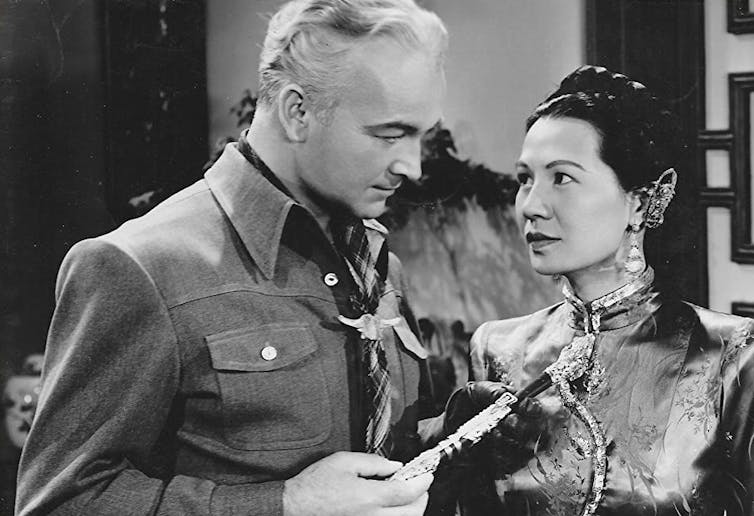
Soo Yong and William Boyd in a still from the film ‘The Secret of the Wastelands’ (1941). (Paramount Pictures) Gao Yunxiang, Toronto Metropolitan University

The recent Netflix series Hollywood creates a make-believe 1948 ceremony in which the noted Chinese American actress Anna May Wong wins an Oscar. In reality, an Oscar eluded Wong during her four-decade film career. Wong, who was born in Los Angeles in 1903, was famously passed over for the lead role of O-lan in the 1937 classic hit, The Good Earth. Instead, Austrian-born white actress Luise Rainer was cast — and for her work, won her second Oscar for best actress. Hollywood’s Motion Picture Production Code (known informally as “the Hays Code”) explicitly forbade depiction of screen intimacy between people of different races. Wong was reportedly heart-broken about the decison.

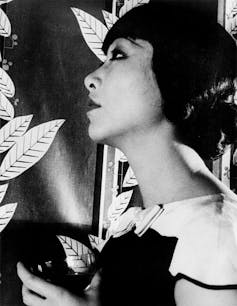
Anna May Wong, 1932 portrait by Carl Van Vechten. (Carl Van Vechten/Library of Congress/Wikimedia Commons)

The desire to posthumously grant Wong recognition as seen in the series Hollywood should also alert audiences to the significant contributions of the other actors of Asian descent who appeared in The Good Earth. One of those actors was Soo Yong. Yong had campaigned for the lead role but she was also passed over. Yong eventually accepted two supporting roles in the movie, one of the most influential Hollywood films on China. Yong’s journey to Hollywood and the way her career contrasted Wong’s reveals much about Hollywood’s racist casting decisions and the racial barriers faced by Chinese American actresses. Yong’s career also reflects the dynamic and shifting development of 20th-century Chinese-American relationships: When contrasted with Wong, Yong’s calculated path towards a “respectable woman” reveals much about how both American Hollywood and Chinese popular culture wanted to depict Chinese women.

Alternative to familiar stereotypes

Yong’s profile aligned with the concept of the Chinese New Woman promoted by the Chinese Nationalist government that emphasized education, chastity and patriotism. Yong strove to present a dignified and educated Chinese womanhood on screen and stage, an alternative to the familiar binary stereotypes of the subservient China doll and the vicious dragon lady. She showcased an aristocratic and intellectual style of sophistication and glamour, void of over-sexualization. Hollywood filmmakers were entranced by her talents and assured by favourable Chinese attitudes toward her as China was a significant market.

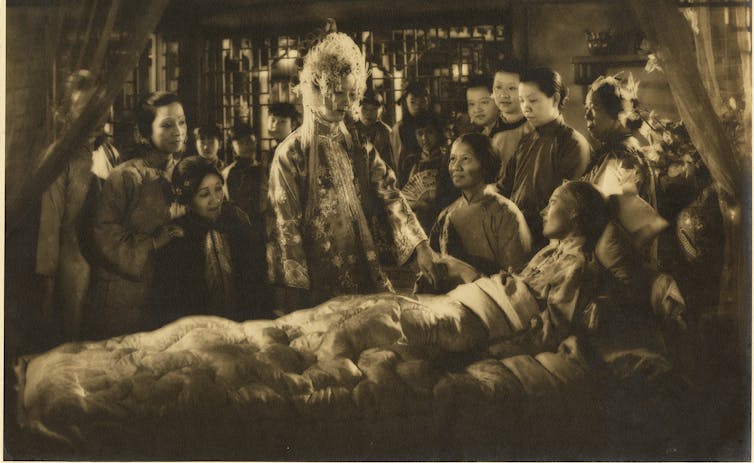
Soo Yong, seen seated facing the bride, in a supporting role in the 1937 film ‘The Good Earth.’ (Metro-Goldwyn-Mayer)

Circle of Chinese intellectuals

Born in Hawaii to Chinese immigrant parents in about 1903, Yong was orphaned as a child, and largely raised by her sister, Harriet, who was later a force in Hawaiian politics. After graduating from the University of Hawaii, Yong ventured to mainland United States in 1926 to earn her master’s degree at Teachers College, at Columbia University. She was one of 50 women of Chinese descent in American colleges at that time, and one of the very few in graduate programs, who became recognizable figures in China’s intellectual life. Yong was a student of noted educator John Dewey. She grew close to other students who also studied with him, including Zhang Pengchun, a distinguished dramatist and professor from Nankai University, and Chih Meng, the future director of the China Institute in New York City. Yong became involved in the transpacific modern drama movement initiated by Zhang and Meng. After starring in plays written by Zhang, she began an acting career with bit parts in Broadway productions.

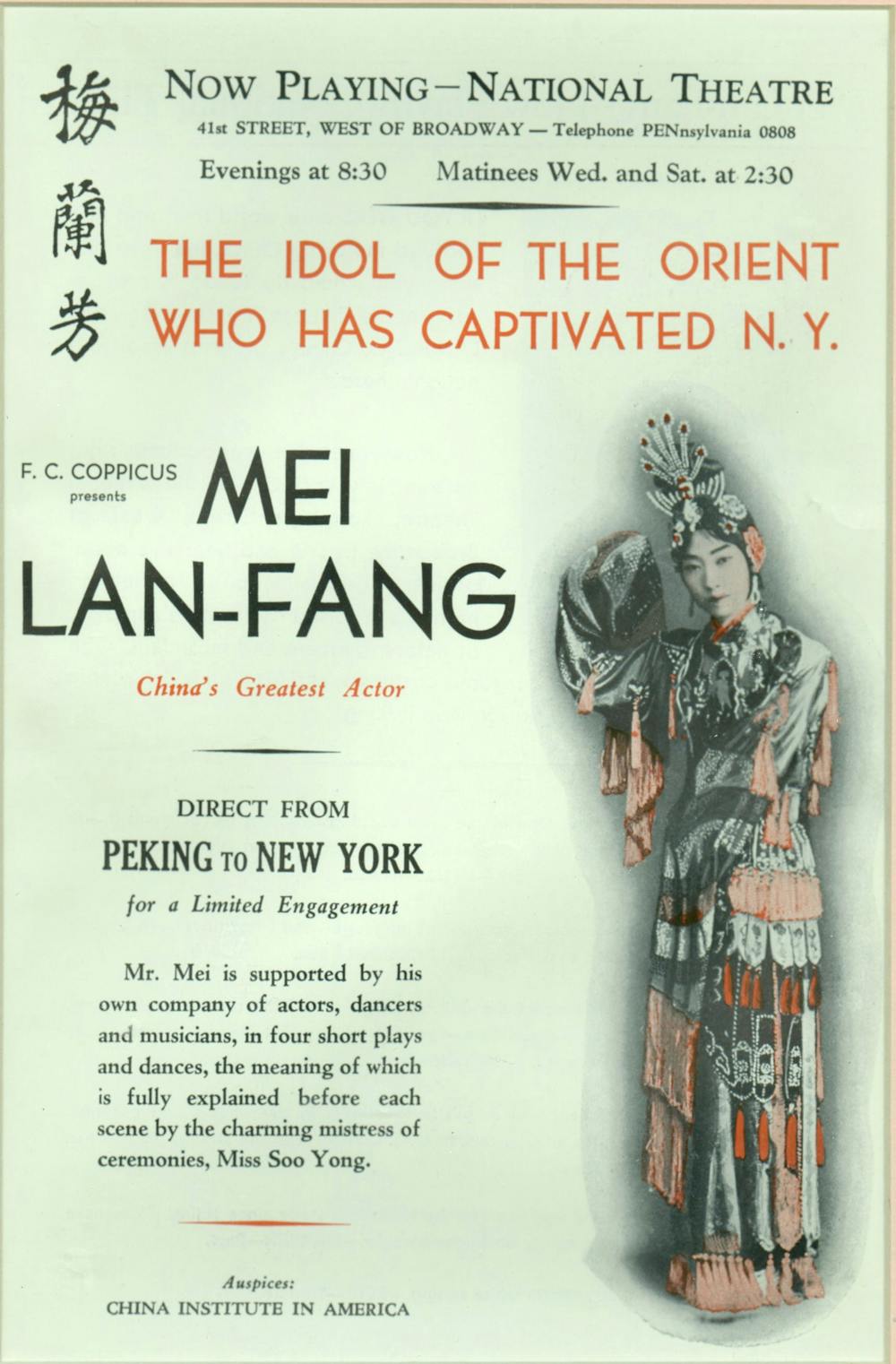
Soo Yong’s name was prominently mentioned in the poster advertising Mei Lanfang’s performance on Broadway, 1930. (Yunxiang Gao), Author provided

Yong on Broadway and in Hollywood

Yong’s big break came in 1930 when she was hired to interpret the performances of Mei Lanfang, the famous Chinese theatrical personality, sponsored by the China Institute. Yong enrolled in a doctoral program at the University of Southern California between 1933 and 1936. She said her ambition was to be a great actress with a PhD. In the eyes of the public, her desire for advanced education helped to distinguish her from Chinese immigrants. It also positioned her as an equal to elite Chinese and American intellectuals.

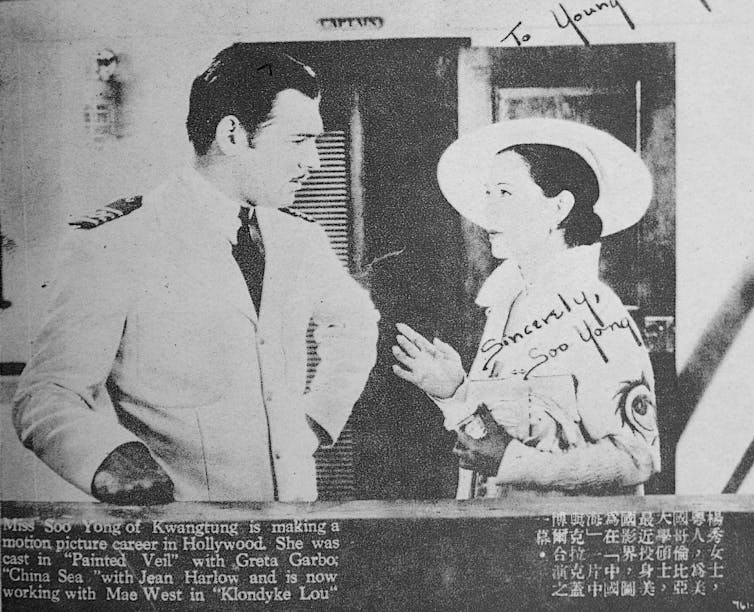
Photo showing Soo Yong and Clark Gable in a still from the film ‘China Seas.’ Yong autographed it to ‘The Young Companion Pictorial,’ in November 1935, a popular magazine in the Republic of China. (Yunxiang Gao)

Hollywood casting agents chose Soo Yong for visible roles in films produced by major studios, starring Hollywood icons like Clark Gable, Greta Garbo, Mae West, Gary Cooper, John Wayne and Marlon Brando. Despite her generally limited screen time, Yong frequently occupied within the first 10 spots on billing — the list of names at the bottom of an official poster — which testified to her respectability, popularity and great negotiation skills. She worked up to the highest level of Hollywood stardom allowed for a non-white actress.

Chinese ‘New Woman’

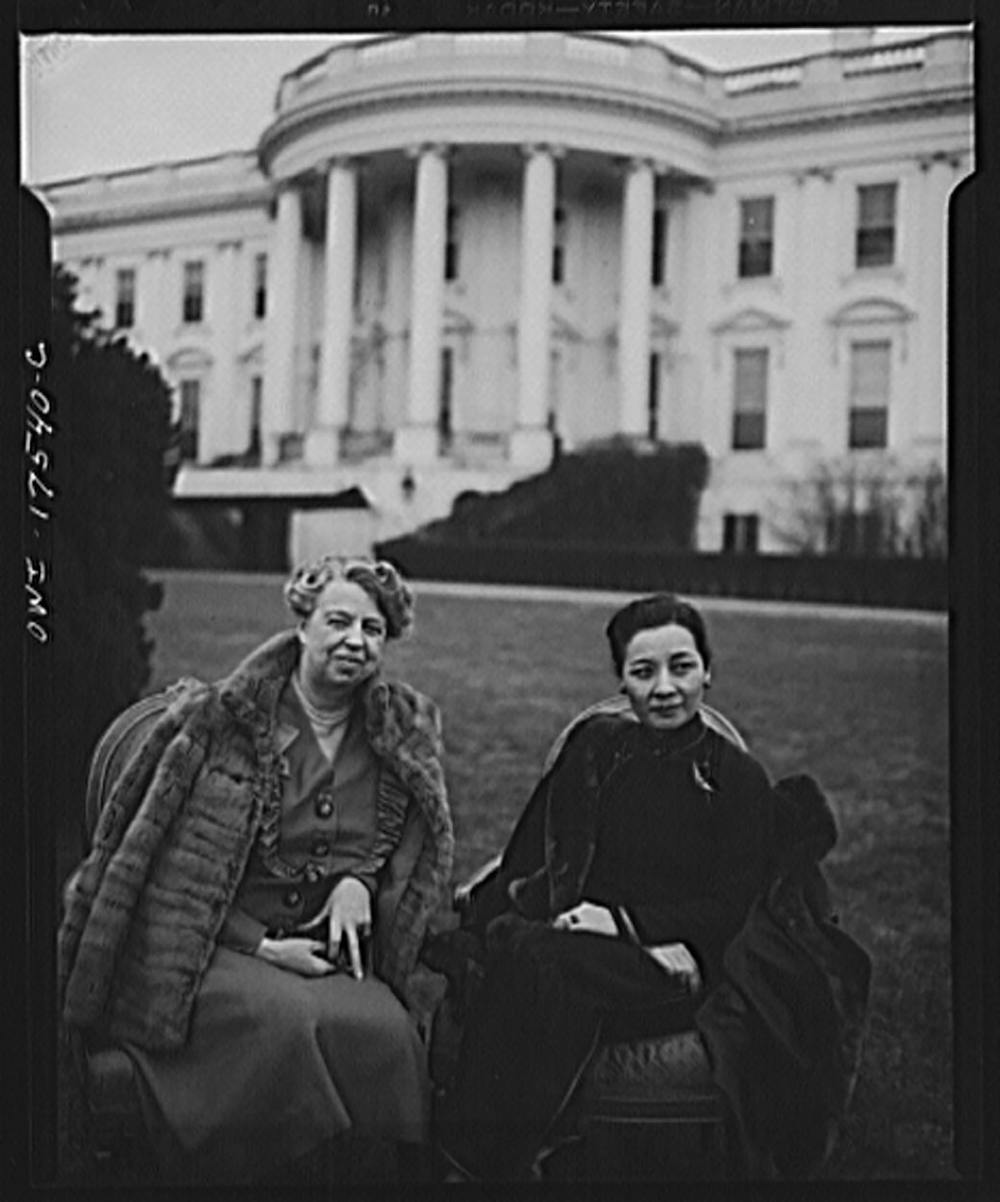
Eleanor Roosevelt and Madame Chiang Kai-shek in February 1943 in Washington. (Library of Congress)

The highly influential 1943 visit to the United States by Madam Chiang Kai-shek, the American-educated first lady of the Republic of China, dominated the contentious process of representing Chinese womanhood. Yong embodied Madam Chiang’s brand of glamour, defined by jewellery, high fashion, perfect English, advanced education, sophistication and a happy marriage. In 1939, The Chinese Digest, the leading English-language Chinese publication in the United States, said Yong belonged to “Madame Chiang’s school” of women. In 1941, Yong married C.K. Huang (黄春谷), a businessman who lived in Winter Park, Fla., after changes in immigration law enabled her to marry a Chinese citizen without losing her U.S. citizenship. With Huang, Yong ran the Jade Lantern, a successful Chinese novelty shop. Customers shopped there for a lifestyle associated with her glamour and were served by the star they recognized.

White Hollywood smitten

White Hollywood was smitten by Yong. She developed an educated, middle-class persona that contrasted with how Hollywood cast Wong. Unlike Wong, who often had to display bare skin and perform sexualized roles, Yong was always fully clothed and displayed sophisticated glamour in her roles. And unlike Wong, Yong never played parts that involved physical abuse or death. Wong’s film persona, created for her by racist Hollywood casting decisions, irritated China’s Nationalist government. Yong’s screen roles presented a softer orientalism that allowed ethnic dignity and did not offend her Chinese American audience or her nationalist friends in China. The Huangs visited China in 1948, recording two rare Cantonese operas while there (released on Folkways Records in 1960 and 1962). The Huangs lived in Winter Park until 1961, when they returned to Hawaii. That year, they were awarded the Rollins College Decoration of Honor for their community contributions. After a series of smaller roles in 1950s Hollywood classics including Sayonara, Yong made a cameo in the 1961 film Flower Drum Song, a Hollywood milestone with a largely Asian cast. Yong secured small parts in four episodes of Hawaii Five-O between 1971 and 1978, in which her husband also appeared. She also appeared in two episodes on Magnum P.I. in 1981 when she was 78. Huang died in 1980; Yong passed away in 1984. The couple’s estate established scholarship funds at the University of Hawaii and at Rollins College. Yong rejected western racist attitudes that associated being Chinese with ignorance and servitude and instead showed a cosmopolitan “Chinese woman at her best.” This is an updated version of a story originally published on April 25. It clarifies the preferred order of names for Zhang Pengchun in the customary Chinese way.The Conversation Gao Yunxiang, Professor, Department of History, Toronto Metropolitan University This article is republished from The Conversation under a Creative Commons license. Read the original article.
Read More........

​Chinese film market rebounds during Spring Festival

Cinemas in China excitedly welcomed back flocks of moviegoers to see movies on the big screen during the recent Spring Festival holiday, with the box office total reaching the second highest in history.

A woman walks past movie posters during the Spring Festival holiday at a cinema in Hangzhou in east China's Zhejiang province, Jan. 27, 2023. [Photo/VCG]

Due to COVID-19's negative impact last year, China's film market has suffered numerous blows over a prolonged period of time. But after restrictions were removed when the Chinese government adopted new pandemic prevention policies at the end of last year, the much-anticipated lucrative Spring Festival film season eventually arrived, and soared.

The holiday box office sold 129 million tickets from Jan. 22-27, generating a staggering revenue of 6.76 billion yuan ($996 million), according to big data entertainment platform Beacon. The earnings overtook that of the same holiday last year, making this year's Spring Festival holiday the second highest-grossing to date in history, only second to that of 2021.

Six new domestic titles were released during the holiday. Zhang Yimou's period suspense thriller "Full River Red," a twist-filled plot mixed with comedy, was the biggest winner during the Spring Festival, raking in 2.61 billion yuan and accounting for 38.6% of the holiday's box office total. Its takings have made it the biggest film in Zhang's already legendary career and it looks to continue to accumulate a stunning box office total in the coming weeks.

Frant Gwo's Chinese sci-fi film "The Wandering Earth 2," a prequel to the blockbuster's first installment in 2019, also delivered phenomenal box office performance during the holiday, taking a haul of 2.16 billion yuan, accounting for 32% of the box office total. Its momentum will continue after the holiday, with the cast and crew announcing they will embark on a national meet-and-greet tour to promote the film. The film, praised by the audience and critics as a new milestone in Chinese sci-fi filmmaking, also had a limited opening in some countries around the world during the Chinese Lunar New Year, including the United States, the United Kingdom, Australia, and Malaysia.

The animated film "Boonie Bears: Guardian Code" took third place on the box office chart. The ninth installment in one of China's longest-running movie franchises grossed 748 million yuan, pushing the franchise's total box office takings to over 5 billion yuan.

Other high-performing films included Cheng Er's spy-action thriller "Hidden Blade" starring Tony Leung Chiu-Wai, which grossed 493 million yuan; "Deep Sea," a critically-acclaimed animated fantasy from Tian Xiaopeng, the helmsman of "Monkey King: Hero is Back," which grossed 359 million yuan; and "Five Hundred Miles," a romantic comedy starring comedian Zhang Xiaofei, best known for her part in the 2021 dark horse "Hi, Mom," which grossed 290 million yuan.

Even "Avatar: The Way of Water" grossed a remarkable 49.5 million yuan during the holiday. The film has extended its run in China until Feb. 14, but its screening arrangements were mostly cut on the first day of the holiday to give way to China's new blockbuster releases. However, more and more cinemas started to put it back into schedule over the few days following, with many of its showings in large premium formats sold out. The film's total China takings have now surpassed 1.62 billion yuan, making it the best-performing foreign film during the pandemic era. Its worldwide total has grossed more than $2.07 billion, making it the fourth highest-grossing film of all time.

Theaters supporting large premium formats did quite well during the holiday. For example, IMAX China reported that it collected 231 million yuan from its IMAX screens, which is the best Spring Festival performance for IMAX ever, accounting for 8.22% of the total box office takings in China from only 1% of all screens in the market. The IMAX version of "The Wandering Earth 2" led the way, grossing 178 million yuan across the IMAX network. Of the top 10 Chinese cinemas to make the most profit, eight had IMAX screens.

There was also a little drama during the holiday, with the sports film "Ping-pong of China," directed by Deng Chao and Yu Baimei and starring Deng himself, delaying its release until Jan. 24 from its originally planned release of Jan. 22 due to some last-minute changes to the film. The distributors then found that there was so little room and potential for the film to thrive during the highly competitive season that they decided to delay its wide release to Feb. 17. Nevertheless, after screening for just two days, the film grossed 38.14 million yuan.

Rao Shuguang, president of the China Film Critics Association, said the movie frenzy made him feel that Chinese films are off to "a new start towards a better future" after being hampered by COVID-19 for years. There have been calls from critics for more quality films to be made to draw more moviegoers back to cinemas, citing their significance to the recovery of the film industry overall.Notable new releases in the coming weeks include the much-anticipated crime film "Where the Wind Blows," directed by Philip Yung and starring Hong Kong megastars Aaron Kwok and Tony Leung, which will hit Chinese screens on Feb. 5. Disney and foreign film companies will also put out new releases in China soon, including "Black Panther: Wakanda Forever" and "Ant-Man and the Wasp: Quantumania," which will be released in China on Feb. 7 and Feb. 17, respectively, and marks the first Marvel Cinematic Universe titles to enter the Chinese market since 2019. Warner Bros/DC's "Shazam! Fury of the Gods" will also be released in China, adding to the line-up of foreign blockbuster films making their way to Chinese theaters. Source: China.org.cn

Read More........

Peppa Pig to teach China's Lunar New Year traditions through film

A poster of the movie "Peppa Celebrates Chinese New Year" [Photo provided to China Plus]
Peppa Pig's movie adaptation, composed of live action and animation, is scheduled to hit Chinese theatres on Feb. 5th.

The movie "Peppa Celebrates Chinese New Year" shrouds the main characters in a Spring Festival atmosphere, including having a New Year's Dinner Party with her family and friends, a big part of Chinese New Year traditions.

Peppa Pig, the British porcine phenomenon that's taken kids by storm all around the world, was first introduced to China in 2015. Now the movie adaptation will celebrate the coming of 2019, which is the Year of Pig according to the Chinese Zodiac.
A poster of the movie "Peppa Celebrates Chinese New Year" [Photo provided to China Plus]  
Read More........

China Movie Channel and HBO to present new kung fu films

Executives and filmmakers pose for a group photo at a press conference to announce the launch of two new martial arts productions they co-produced – "Master of the White Crane Fist: Wong Yan-Lam" and "Master of the Nine Dragon Fist: Wong Ching-Ho" in next year, in Beijing, Dec. 24, 2018. [Photo courtesy of China Movie Channel]

China Movie Channel and HBO Asia announced on Monday in Beijing that new co-produced martial arts films – "Master of the White Crane Fist: Wong Yan-Lam" and "Master of the Nine Dragon Fist: Wong Ching-Ho" – will debut early next year on both platforms.

The two films are the latest installments in China Movie Channel's martial-arts movie series in partnership with HBO Asia. Previously they had cooperated on, "Master of the Drunken Fist: Beggar So" and "Master of the Shadow-less Kick: Wong Kei-Ying", winning good ratings and reviews after their debuts on China Home Cinema and HBO Asia simultaneously on Christmas Day in 2016.

This was also the first time Chinese and foreign TV networks have had simultaneous broadcasts, covering more than 20 countries and regions. During the Spring Festival of 2017, China Movie Channel, also known as CCTV-6, reaching more than 1.2 billion viewers, and HBO Asia's RED by HBO rebroadcast the two films simultaneously. 

The two productions were broadcast later on HBO's Cinemax and the European channels of HBO later in 2017. They were also released on Apple's on-demand video service, numerous airline inflight entertainment service, and in Blu-ray and DVD versions.
A poster of "Master of the White Crane Fist: Wong Yan-Lam" [Image courtesy of China Movie Channel & HBO]

The success of the first co-productions led to the continued cooperation between the two home entertainment giants. Zhang Ling, a top executive of China Movie Channel, told Monday's press conference in Beijing that the collaboration with HBO not only builds a new model of TV movies for foreign networks, but also is a powerful implement for Chinese culture to be spread across the world. 

Guo Jianyong directed "Master of the White Crane Fist: Wong Yan-Lam", which tells how kung fu master Wong disguises himself and cracks down on an opium-trafficking gang. The Si Xiaodong-directed "Master of the Nine Dragon Fist: Wong Ching-Ho" relates how the Nine Dragon Fist master turns enemies into friends and leads local martial arts heroes in Guangzhou to fight illegal British opium dealers. 

The producers said the two films show the world Chinese culture and martial arts morals and spirit.

"The global audience's demands for action films have risen to a higher level, I hope my new film could do better than the previous two," director Guo said. 

Si added: "Martial art is a universal body language that is liked and accepted by foreign audiences. I hope to put more traditional Chinese cultural elements into the film production to allow more people know something about the essence of Chinese kung fu."
A poster of "Master of the Nine Dragon Fist: Wong Ching-Ho" [Image courtesy of China Movie Channel & HBO]
In this cooperation, the two parties said they continued to adhere to the principle of integrating international production resources, and focusing on efforts to perfect the productions rather than lavishing money on big movie stars and ostentation. "Master of the White Crane Fist: Wong Yan-Lam" and "Master of the Nine Dragon Fist: Wong Ching-Ho" will be released on China Movie Channel and HBO Asia on Feb. 20 and 21, 2019. Source: China.org.cn
Read More........

Disney sorry for 'Avengers 3' China event fiasco

Directors Joe and Anthony Russo as well as actors Robert Downey Jr., Tom Hiddleston, Mark Ruffalo and Tom Holland pose for photos onstage with fans offstage in the background at the Chinese premiere of "Avengers: Infinity War" held at the Shanghai Disney Resort, Thursday, April 19, 2018. [Photo courtesy of Walt Disney Pictures]

An executive at the Walt Disney Studios, China on Monday admitted "big mistakes" to disappointed Chinese fans for an event held at the Shanghai Disney Resort last week to promote the much-anticipated film "Avengers: Infinity War."

Marvel Studios' parent company, Walt Disney Studios Motion Pictures, summoned local media and fan club leaders on Monday in Shanghai for a media briefing to explain the situation, apologize and listen to fans' suggestions.

The executive, who asked to remain anonymous, said the event was held with good intentions to "expand the influence of the Marvel Cinematic Universe," but many aspects of the premiere spiraled out of control and the event "didn't live up to Disney’s standards." He admitted the company made mistakes during the organizing process, and committed to studying and learning lessons from the fiasco in order to prevent such situations from happening again in the future.

He promised to listen to and communicate with fans more in the future, and said he will try to find more "appropriate ways" to promote their films. 

Directors Joe and Anthony Russo as well as actors Robert Downey Jr., Tom Hiddleston, Mark Ruffalo and Tom Holland appeared at the Chinese premiere of "Avengers: Infinity War" on Thursday to sign autographs and pose for photos, but later found Chinese fans flocking to their social media accounts to apologize. Source: China.org.cn
Read More........

Domestic films take lead at China's 2018 box office

The Chinese film market has been booming in the first quarter of 2018. [Photo/CGTN]

The Chinese film market has been booming in the first quarter of 2018, with the general box office currently standing at 20.2 billion yuan (3.2 billion US dollars), rising by 39.82 percent compared with last year's 14.4 billion yuan (2.28 billion US dollars), breaking several records in the process.

Domestic films have contributed 15 billion yuan (2.38 billion US dollars), accounting for 74.2 percent of the first quarter's box office, while last year, the contribution was 7.76 billion yuan (1.23 billion US dollars), accounting for 53.7 percent.

Aside from grabbing the majority of the box office in a single quarter, the first three months also saw new records for single-day, -week and -month box office as well as record breaking totals for the first day of Lunar New Year and Spring Festival.

More noticeably, the quality of the films finally became proportionate with their box office success, as most of the blockbusters were winners with the audience as well as the box office.

A total of 27 films were released in the first quarter, including 13 domestic films and 14 imported ones, and those domestic films contributed to at least 74 percent of the box office. In fact, among the top 10, seven were Chinese.

The big winner was "Operation Red Sea", an action film directed by Dante Lam, which is the followup to 2016's blockbuster "Operation Mekong." Much like that film, "Operation Red Sea" was based on the real evacuation of Chinese nationals from Yemen back in 2015 during the country's civil war. It made 3.6 billion yuan (570 million US dollars) overall.

The film wcored 8.5 out of 10 points on douban.com, China's Rotten Tomato-esque review aggregator for film, music and literature.

"Forever Young", which was produced to mark the 100th anniversary of Tsinghua University, has made over 700 million yuan (110 million US dollars) after its debut on Jan. 12. The movie, which depicts four generations of Tsinghua University students during a time span of 100 years, got 7.7 points from the audience.

Compared with their Chinese peers, the performances of the imported movies in the first quarter were not so good as expected, despite the fact that most of them have either won the industry's top awards or lead the North American box office.

Indian movie "Secret Superstar" topped the imported movies at the Chinese box office with 746 million yuan (118 million US dollars). However, it didn't achieve the success of a predecessor, "Dangal", which took 1.29 billion yuan (200 million US dollars) in 2016.

Disney's "Black Panther" barely reached 600 million yuan (95 million US dollars), and "Pacific Rim: Uprising" earned only 548 million yuan (86.8 million US dollars) and 5.8 points on douban.com, even though it starred several Chinese actors including superstar Tian Jing. Many Chinese viewers complained that the film had weak logic, bad pacing and a stereotypical plot.

The box office of the Oscar winning "The Shape of Water" barely exceeded 100 million yuan (15.8 million US dollars), and "Three Billboards Outside Ebbing, Missouri", despite a 8.7-point high score on Douban, only ended up with about 60 million yuan (9.5 million US dollars). Source: China.org.cn
Read More........

Jackie Chan awarded Lifetime Achievement Oscar

Chinese actor Jackie Chan receives an Honorary Award from the Academy of Motion Picture Arts and Sciences on Nov. 12, 2016. [Photo / China.org.cn]

The Academy of Motion Picture Arts and Sciences presented an Honorary Award to Chinese actor Jackie Chan on Saturday night for his lifetime contributions to the film industry,making him the first Chinese person to receive such a honor.

The honors were presented at the eighth annual Governors Awards ceremony at the Ray Dolby Ballroom at Hollywood & Highland Center.

"The Honorary Award was created for artists like Jackie Chan, Anne Coates, Lynn Stalmaster and Frederick Wiseman -- true pioneers and legends in their crafts," Cheryl Boone Isaacs, president of the Academy of Motion Picture Arts and Sciences, said, "The Board is proud to honor their extraordinary achievements."

Chan, as an actor, writer, director and producer, has been performing since the age of eight, appearing in dozens of martial arts films in Hong Kong before becoming an international film star. He charmed audiences with his dazzling athleticism, inventive stunt work and boundless charisma.

Since "Rumble in the Bronx" in 1996, he has gone on to enormous worldwide success with the "Rush Hour" movies, "Shanghai Noon", "Shanghai Knights", "Around the World in 80 Days", "The Karate Kid" and the "Kung Fu Panda" series of animated films.

Wearing a typical Chinese gown, Chan said with his golden Oscar statuette, "I still can't believe I am standing here. It's a dream."


"Twenty-three years ago, I saw this little thing (Oscar statuette) in my friend's house. I touched it, kissed it, and smelled it; I believe there are still my finger prints on it," Chan joked.

"After 56 years in the film industry, making more than 200 films, and broke so many bones, finally, this is mine," he said, "I want to thank Hong Kong, an incredible city, my hometown. (Thank) who made me, China, my country, I am proud to be Chinese."

"Millions of thanks to all my friends, fans around the world, because you I have a reason to continue to make movies, jumping out of a window, kicking and punching and breaking my bone, thank you so much!" he added.

The Governors Awards ceremony attracted lots of celebrities in the film industry. Tom Hanks, a two-time Oscar winner, said Chan's movies had combined serious and comedic factors together.

"It is especially gratified to be able to acknowledge Jackie's enormous creativity, his great gift for physical performance, and incredible dedication to his work," Hanks said.

Aaron Eckhart, who starred Harvey Dent in "The Dark Knight", said Chan deserves the award.

"He is an artist, I mean the passion which he does his jobs. He is so creative, he always has a smile on his face, he is a great role model, he is a legend, he is an icon," he said.

The Honorary Award, an Oscar statuette, is given to honor extraordinary distinction in lifetime achievement, exceptional contributions to the state of motion picture arts and sciences, or for outstanding service to the Academy.

This award could date back to 1929 when the Academy honored Warner Bros. and Charlie Chaplin. Since 2009, the Honorary Award has been presented at the annual Governors Awards rather than at the Academy Awards. Source: China.org.cn
Read More........

Marilyn Monroe's belongings on display in Beijing

A number of personal items belonging to Marilyn Monroe went on display in Beijing on Tuesday, September 27th for a private viewing by Chinese collectors. The event has come ahead of an auction in the U.S. in November. Among the items featured in the exhibition were dresses the actress wore in the 1959 film "Some Like It Hot" and the 1956 film "Bus Stop." Shoes, jewelry and photos were also on display, as well handwritten notes and letters from Monroe. Around 800 items are to be auctioned in Los Angeles in November with most coming from the private estate of Lee Strasberg, an American acting coach who became a father figure to Monroe. Martin Nolan of Julien's Auctions in Beverly Hills, the auction's executor, is optimistic about the upcoming sales. "This would be highly sought after, something that people will want, again an important piece of our pop culture history but it's also a representation of Marilyn's life and speaks to Marilyn all the responsibility she had. She passed away at age 36, she never knew her father, she supported her mother, she only met her half-sister when she was 19, she had three failed marriages and yet, 54 years since she passed we are talking about her here today and showing off to the world all these amazing items still representing her amazing life and career." The auction will also include other items from the collection of British collector David Gainsborough-Roberts, who is believed to have the largest private collection of Monroe's costumes. Julien's will carry out the auctions between November 17th to 19th in Los Angeles. Source: China.org.cn
Read More........

3D war film 'Brothers' due for release today


Actor Li Dongxue (left) and Taiwan singer-actor Peter Ho (right) made an appearance at a promotional news conference in Beijing on Wednesday noon, May 18, 2016. [Photo: CRIENGLISH.com]
A 3D film "Brothers", or Gang-Dao in Chinese, is a vivid presentation of the cruelty of a war. It's due to hit theatres on Friday. In the film, up-and-coming Chinese actress Xia Zitong plays the role of a pianist. At a promotional news conference in Beijing, actor Ethan Li Dongxue joked that Xia was actually playing for two. "In fact, she plays melodies for both of us." The "Us" refers Li Dongxue and Taiwan singer-actor Peter Ho, who play once inseparable brothers, who are torn apart by war, and who later cross swords in a ruthless way. When being asked if the film contained similar elements to Captain America, another war film of sorts released this month, Peter Ho explained the unique features of the upcoming production. "I've watched Captain America. I feel that film is totally unlike our film. That film is based on heroes people are familiar with. But the characters we have built up are all new to audience members, and also our film highlights the emotional relationship between characters, much more than Captain America." The 3D film "Brothers" marks a big change for director A Gan, who is best known in China for a number of thrillers, including the 2002 film 'Ghosts' and the 2004 movie 'Xiong Zhai You Ling', translated as The Game of Killing. Follow China.org.cn on Twitter and Facebook to join the conversation. Source: China.org.cn
Read More........

'Star Wars 7' releases special Chinese trailer

A new Chinese poster of "Star Wars: The Force Awakens" released on Dec. 10, 2015. [Photo/China.org.cn]
"Star Wars: The Force Awakens," the most-anticipated science fiction epic of 2015, is being promoted through an exclusive Chinese trailer and six character-based posters that were released on Thursday. The seventh installment is directed by J. J. Abrams and involves a reunion of some of the big namesfrom the original episodes like Harrison Ford (Han Solo), Carrie Fisher (Princess Leah) and Mark Hamill (Luke Skywalker), along with an all-star cast including Adam Driver, Daisy Ridley, John Boyega, Oscar Isaac, Lupita Nyong'o, Andy Serkis, Domhnall Gleeson, Anthony Daniels, Peter Mayhew, and Max von Sydow. It will open in China on Jan. 9, 2016, three weeks after its American release. The 
A new Chinese poster of "Star Wars: The Force Awakens" released on Dec. 10, 2015. [Photo/China.org.cn]
trailer, especially made for the Chinese market, has an introduction by China's teen idol, actor and singer Lu Han. The content of the trailer includes exciting spaceship and light-saber battles and footage showing new characters as Rey, Finn and the droid BB-8, as well as a crash of Millennium Falcon, that had
Read More........

Music:'Gangnam Style' is Collins dictionary's word of the year

After becoming the most-watched video ever on YouTube, Korean singer Psy's pop sensation "Gangnam Style" has now booked a place in popular culture with recognition from a renowned British dictionary. "Gangnam Style" has been named among the Collins dictionary's words of the year along with "mummy porn", "fiscal cliff" and "Romneyshambles". Psy's song was the dictionary's word for November - when his horse dance video became YouTube's most popular clip, 'Mirror News' reported. "Mummy porn" became April's word of the year as the erotic novel 'Fifty Shades of Grey' was published during that month and became an instant bestseller. Defeated presidential candidate Mitt Romney made in it July after critics branded his visit to London a "Romneyshambles". "Jubilympics" was June's word, while "Games Makers" was August's due to the volunteers who made the Olympic event in UK a success. Each word was submitted by the public to the on-line dictionary at www.collinsdictionary.com/submission. However, the publishers said not all 12 words had the staying power to make it to the print edition. "We are astounded by how quickly new trends form. Choosing one word for 2012 didn't match the pace of change," Ian Brookes, consulting editor at Collins, said. "Choosing just one word for 2012 didn't match the pace at which our language is changing, so we selected one popular word to represent each month from the whole range of those submitted," he said. Words that made it the dictionary this year are 'Broga' for January, 'Legbomb' in February, 'Eurogeddon' (March), 'Mummy Porn' (April), 'Zuckered' for May. 'Jubilympics' was word of the year for June, 'Romneyshambles' for July, 'Games Makers' for August, '47 per cent' in September, 'Superstorm' (October), 'Gangnam Style' for November and 'Fiscal cliff' for December. Source: Current news
Read More........

Around the World in 80 Days

Jules_Verne's famous novel of a daring man who takes on the greatest voyage in history is once again adapted for the big screen in this adventure comedy. In 1872, eccentric British inventor Phileas Fogg (Steve_Coogan) has come up with any number of gadgets to help people travel with greater speed and ease, and is working on plans for a flying machine. In a lively discussion with  Kelvin (Jim_Broadbent), the Lord  head of the Royal Academy of Science, Fogg states his belief that it's possible for someone to travel around the globe in a mere 80 days. Kelvin, who makes no secret of his belief that Fogg is a crackpot, challenges him to do just that, and adds a wager to the bargain to make things interesting: if
Read More........

Jackie Chan To Star In 'Expendables 3,' 'Rush Hour 4' A Possibility

Jackie Chan has revealed he's going to star in the third installment of the ensemble action series The Expendables. In fact, he was invited to make an appearance in Expendables 2, but he was too busy. "Sly had invited me to be in 'Expendables 2' but I was too busy filming CZ12 and couldn't make a commitment to the film. But he did extend his invitation to the third movie, which I agreed on the condition that I will be appearing as more than just a minor role with a few scenes," Chan revealed during a press junket for Chinese film CZ12. There is also a possibility of a Rush Hour 4. TotalFilm reports Chris Tucker is considering a buddy comedy flick currently titled Skip Tracer, but he accepts it appears the film will be changed into the fourth Rush Hour film. "The script is currently viewed by Chris Tucker. Personally, I feel that if he were to pick it up, it would be better if we turned it into Rush Hour 4 but I do think that three movies for the franchise is a perfect ending. It would be better to start a new buddy movie with someone new," said Chan. © 2012 Starpulse.com, Photo Credits: PR Photos, Source: Starpulse.com
Read More........

Jackie Chan: Pulling new punches

Jackie Chan realizes he isn't getting any younger and is searching for young talent to replace him as Chinese action film's new icon. Jackie Chan was on the set of his latest film Chinese Zodiac 12. He was supposed to jump through a picture frame hanging from the ceiling but got stuck. He crashed to the floor and injured his waist. The crew was shocked into silence. Before anyone moved to help him, he said: "I'm not dead. Don't be so quiet." He slowly got up and walked toward the corner of the room, blood oozing from his back. Chan recovered soon after. But the incident made him think. "I told myself I can't be so
Jackie Chan (third from left) leads a group of young actors in his latest film Chinese Zodiac 12.
 lucky every time," Chan says. "I have to admit, I'm not a young man anymore. That was when I decided Chinese Zodiac 12 would be my last major action film. That means I will still make action films but not on this scale." Chinese Zodiac 12 is also Chan's 101st film. The danger of filmmaking is frightening but fascinating at the same time, motivating the 58-year-old to write, direct and lead the action comedy to be released on Dec 20. "You may not believe it, but I still panic before shooting actions scenes," he tells China Daily. "But not many people have the chance to have an entire road blocked for them to fly above. And when shooting Police Story, I fell off the roof of a building. When I was descending, I saw surprised girls standing in front of the window with their mouths wide open. It was fun." He also enjoys innovative choreography. In Chinese Zodiac 12, he wears a rollerblading suit in a chase scene filmed on zigzagging mountain roads, tries to fly without an engine and rides a log that tumbles downhill. Everyday objects,
such as sofas and paintings, become weapons. Chinese Zodiac 12 won Chan two Guinness World Records. One is for the "most stunts by a living actor". The award notes: "No insurance company will underwrite Chan's productions in which he performs all his own stunts." The star formed the Jackie Chan Stuntmen Association, training stuntmen and paying their medical bills out of his own pocket. The film also earned him the record for the "most credits in one movie". Chan assumed 15 roles in the film, including director, producer, actor and choreographer. The star has no plans to retire. He says the best way to end his career would be to suddenly die on the set. "Think of Bruce Lee and James Dean - the way they died made them eternal legends," he says. "I really can't think out a better way to end my life and career. I don't want people to see a weak and frail Jackie Chan onscreen. But I don't want to quit
Jackie Chan is interviewed at the press premiere of his action film "CZ12" in Beijing, capital of China, Dec 11, 2012. "CZ12", a work of Hong Kong-based actor and director Jackie Chan, will be released in China on Dec 20. [Photo/Xinhua]
filmmaking, either. So, the best thing is to die suddenly while I still look strong onscreen." Chan finalized his will 15 years ago. He'll leave his entire fortune, estimated at $340 million, to his wife and charity but not his children. The kung fu star is known for his unconventional views about life and death. He was devastated by his father's death but doesn't visit his tomb or burn paper money (a Chinese mourning tradition). "What matters is how I treated him when he was alive," Chan says. "What I do after his passing is pointless. I know he can't receive the paper money." He doesn't celebrate Valentine's Day, or his wife's or son's birthdays. Chan was angry when his son, Jaycee, called him on Father's Day. "I told him, don't only call me on my birthday and Father's Day. Pay more attention to me on regular days. I got his calls twice a year before, and now I get none," he says, jokingly. He does not worship the sky or sacrifice pig heads, as most Hong Kong filmmakers do before filming. He curses the heavens if it rains when it's not needed for the scene. "Call me anti-tradition, but I am not superstitious at all. I believe in real efforts," he says. He leads a group of young actors in the film, performing the same stunts as them and more dangerous ones. As with most of his films, there are few special effects. He has nothing against technology, though, he says. Actually, he wants to act in films like Batman or Superman because it's easier, he explains. "Putting on a mask, posing in front of a green screen and getting the same pay - who wouldn't want to do that? But we can't compete with Hollywood in terms of visual effects. We can't fly in ways more dazzling than Batman or Spiderman. What we can really excel at is still real kung fu performed with fists and feet." Chan hopes to find a younger version of himself but realizes this is something he can't do on his own. "People would like to invest 150 million yuan ($24 million) in a film starring me but wouldn't put up 100 million yuan for one starring three young actors," he says. "They only believe in big names." So he has been casting young actors in his films, including Daniel Wu, who starred in many of his movies, such as New Police Story and Shinjuku Incident. In his 2010 film, Little Big Soldier, he cast Xu Dongmei, a total newcomer who stood out from Disciples of Jackie Chan, a TV competition Chan initiated to find potential action stars."It would be pathetic if, many years later, Jackie Chan is still Chinese action films' most famous icon," he says. Source: China.org.cn
Read More........

'Gangnam style' Rapper Psy to collaborate with 2 Chainz and diplo

Psy
Rapper Psy, who is known for his massive global hit 'Gangnam Style', has teamed up with rapper 2 Chainz and British DJ-producer diplo for his next music effort. The collaboration will see one of the oddest and unexpected trio line-ups in modern pop world and diplo took to Twitter account to announce the same, reported Ace Showbiz. "No lie I just finished something with Psy and 2 chainz the mayan calendar predicted this," he tweeted. PSY, whose real name is Park Jae Sang, has reached global fame with his viral clip "Gangnam Style", which now nears one billion views on YouTube. The collaboration is expected to hit the charts next year. Source: Screen IndiaImage: flickr.com
Read More........

UN Secretary General Ban Ki-moon loves Psy's Gangnam Style


UN  Secretary  General  Ban Ki  -  moon  is   amazed  but  likes   the  South  Korean  rapper Psy's global hit Gangnam Style. "I'm very proud that his performance has been loved and enjoyed by more than 400 million people. It is amazing," Ban Ki-moon said. He says music is a force for world peace. "There are no languages required in the musical world. That is the power of music that is the power of the heart. Through this promotion of arts we can better understand the culture and civilizations of other people. In this era of instability and intolerance we need to promote better understanding through the power of music," he added. Ban Ki-moon who has been the face of Korea for years has been recently displaced as the best-known Korean after the emergence of chubby rapper's catchy video But the 68-year-old is delighted by the astonishing success of the song and he himself has seen it several times. The Gangnam style video has been viewed more than 400 million times. (with inputs from ANI),  Source: News Track IndiaImage: flickr.com
Read More........

Jolin Tsai explores the arts in new album


Pop singer Jolin Tsai promotes her new album "Muse" at the China Central Academy of Fine Arts in Beijing on Thursday, September 13, 2012. Tsai explains that the title "Muse" was chosen in order to show that the album is a combination of the arts and pop music. The album will hit shelves on September 14. Tsai is slated to perform a solo concert in Beijing on September 15, the date of her 32nd birthday. [Photo: ent.sina.com.cn] Source: China.org.cn
Read More........

100 years before the birth of Doraemon

The exhibition of the "100 Years Before the Birth of Doraemon" is held in Hong Kong, China, from August 14 to September 16. Doraemon is a famous character of a Japanese animation. His date of birth is on3, September 2112. A great number of Doraemon fans attended the celebrations. [China.org.cn], *** Source: China.org.cn
Read More........

Animation set to join elite after wowing audiences

1 2 3 4 5 Next
A poster of "Yugo & Lala" [China.org.cn]
A home-made Chinese CGI animated film last week became a surprise hit and will soon join other original Chinese animated works as a member of the 10 million yuan club, the animation's director revealed in an exclusive interview with China.org.cn. "Yugo & Lala," directed by Wang Yunfei for the ITS CARTOON Animation Studio, hit Chinese cinema on August 10. Its release coincided with the release of animations "The Adventures of Jinbao," "Save the 365th Day (3D)," and live action/animation "I Love Wolffy" a cinematic sequel to China's hottest cartoon series "Pleasant Goat and Big Big Wolf". Meanwhile, imported animated blockbuster "Ice Age: Continental Drift" and "The Lorax" are still showing. China's summer holiday film season has been dominated by animated films, and the industry is now bracing itself for the late August heavyweight clash between Hollywood giants Batman and Spider-Man, which has triggered a wave of rescheduling among film production companies. Explaining the scheduling of the film, Wang said: "We first set the release date on August 10, but they later all decided to release their films on the same day. As all of our releases are original Chinese cartoons, so we are all competitors. We need, and welcome, fair competition. Many friends have asked us to retreat, but we chose to stand firm."  He
continued:"The summer film season is definitely boom time for animations, and this is true in any country with a healthy animation industry, it's a good sign. But there also must be a cruel sacrifice. I'm looking forward to it, and will participate in it. In any battle, there are two outcomes: Win or lose. But before 'Yugo & Lala' hit screens I told my colleague that we must be ready for any outcome, and we must be clear about whether and why we win or lose. So far, it appears that the outcome has been positive for Wang and his team. According to his statistics, his film made 9.7 million yuan (US$1.52 million) at box offices in only 3 days and purely through 2D screenings. Cinemas were packed with parents and kids alike, which caused cinema managers to rapidly add extra screening times due to the film's unexpected popularity. Source: China.org.cn
Read More........